Summit Bike Share Achieves Record 23,700 Rides in 2025, Expanding Eco-Friendly Transit
Summit Bike Share saw a record 23,700 rides in 2025, highlighting a significant increase in eco-friendly transit in Utah.
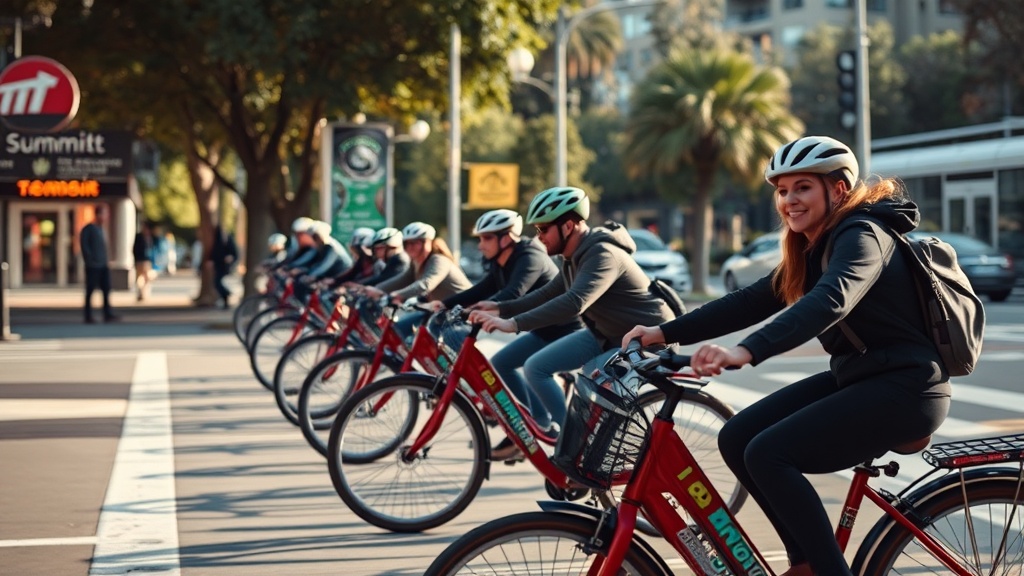
Summit County, UT — The Summit Bike Share program marked a significant achievement in 2025, providing over 23,700 rides from May to November, nearly tripling its ridership since the initiative launched in 2017. This remarkable growth reflects an increased interest in sustainable transportation options and is attributed to an extended riding season, thanks to unseasonably mild weather conditions in the Wasatch Back area.
According to an end-of-year report released by the county, riders collectively traveled approximately 69,415 miles, burning nearly 4 million calories and offsetting almost 29 tons of carbon dioxide emissions. The average ride duration was just under 30 minutes, with riders covering an average distance of about 3 miles. This data not only highlights the physical benefits of cycling but also underscores the program's positive environmental impact.
In its ninth year of operation, Summit Bike Share successfully attracted nearly 6,000 additional riders compared to 2024, marking a substantial 32% increase. This surge is particularly notable when juxtaposed with the program's inaugural season in 2017, which recorded just over 8,000 rides, representing an impressive 186% increase in ridership over the years.
The most frequented bike station was the Canyons Transit Hub, which saw 6,309 riders throughout the year, while the Upper Main Street station in Park City recorded the lowest usage, with only 1,705 riders. Other popular rental stations included Slopeside at Canyons, the Old Town Transit Center, and Park Avenue, demonstrating a diverse range of locations appealing to users.
The report also acknowledged critical contributions from the Park City Chamber/Bureau and Intermountain Health, both of which sponsored the program. Their support facilitated the installation of two new bike stations, one at the Park City Visitor’s Center and another at the Park City Hospital, along with a third station at the courthouse in Coalville. These expansions are part of a broader effort to enhance accessibility and convenience for riders.
In a bid to make biking more accessible, the county introduced two dozen free or reduced-price days, coinciding with community events such as Park Silly Market, Savor the Summit, and the Kimball Arts Festival. Funded through a restaurant tax grant, these initiatives aimed to engage a wider audience and promote cycling as a viable transportation option.
The demographic breakdown of riders revealed that a significant portion, about 33%, were local residents from Summit County, while 26% hailed from other areas within Utah. Notably, 41% of riders were visitors from out of state, indicating that the program is not only popular among locals but has also become an attractive option for tourists.
Despite these successes, the program fell short of several key objectives for 2025. While it met targets related to ridership, operational days, and sponsorships, it struggled to reduce operational costs compared to the previous year. Additionally, the program aimed for 50% of its riders to be from Summit County, a goal that was not achieved, as the proportion of local riders dipped slightly from 37% in 2024.
Another goal that was narrowly missed was the target of having 250 reliable bicycles available by year-end; the program concluded 2025 with 243. The report did not specify how 'reliable' bicycles were defined or the criteria used for measuring this reliability.
Operational changes included a reduction in the cost of a season pass to $50, a move intended to enhance affordability and drive participation. The program also relocated to a county-owned warehouse, which is anticipated to lower operational costs once ongoing capital improvement projects are completed.
Looking ahead, Summit Bike Share has outlined ambitious goals for 2026, which include launching a permanent equity access program aimed at providing discounted passes to low-income residents. Continued partnerships with local resorts and transit providers are also a priority, alongside seeking new revenue sources to extend ride times without increasing base membership fees.
Additionally, the program plans to improve navigation through mobile-based mapping, transition to a new software platform, and acquire next-generation bicycles intended to enhance reliability. Expanding partnerships with housing providers and social service organizations to facilitate direct enrollment for participants is also on the agenda.
For more information about Summit Bike Share and to read the full recap of the 2025 season, visit summitbikeshare.com. The program's ongoing commitment to promoting eco-friendly transportation and community engagement looks set to foster even greater success in the years to come.