Preparing Students for an AI-Driven Future in Herriman Schools
Herriman schools are equipping students for an AI-driven future through innovative teaching methods and critical thinking skills.
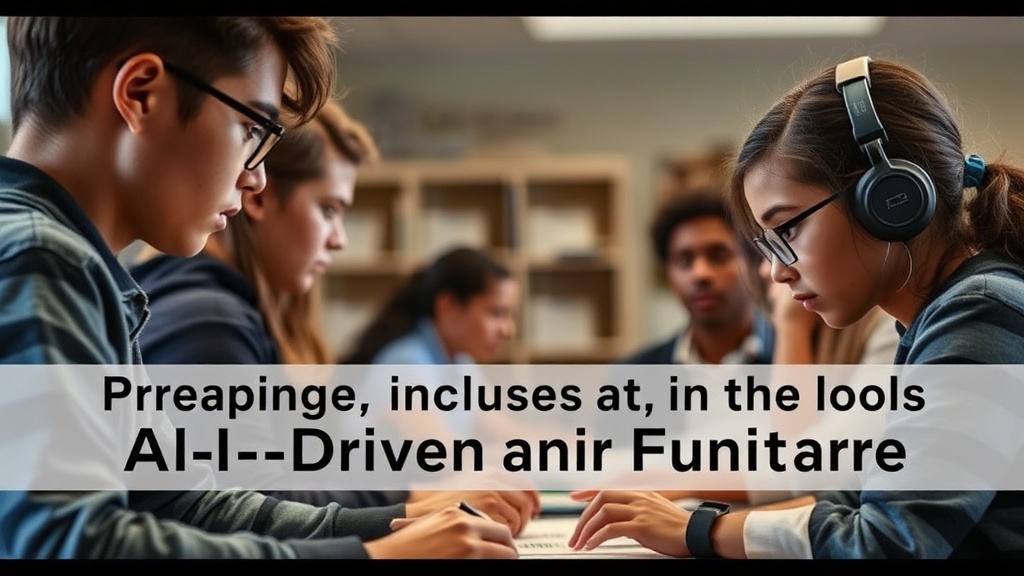
In an era defined by rapid technological advancements, artificial intelligence (AI) has permeated various facets of daily life, transforming not only industries but also education. The Jordan School District in Utah is taking proactive steps to equip its students with the skills needed to navigate this evolving landscape. By introducing innovative AI tools and fostering a culture of critical thinking, the district aims to prepare students for the future while ensuring they can ethically engage with technology.
The integration of AI into education is not merely a trend; it's a necessity in today’s digital world. In classrooms across the Jordan School District, educators are prioritizing the safe and effective use of AI technologies. Troy Jensen, an Advanced Placement (AP) government teacher at Herriman High School, is at the forefront of these efforts. He emphasizes that while he traditionally employs direct instruction methods, he recognizes the potential benefits of AI in enhancing the learning experience.
"Jordan School District has been great with the wild west of AI," Jensen stated, highlighting the district's commitment to embracing new technologies. The district's pioneering partnership with School AI in 2023 marked a significant milestone, making it the first in Utah to delve deeply into AI utilization in the classroom. This initiative aims to democratize access to educational resources, ensuring that every student, regardless of their background, can benefit from AI tools.
Jared Covili, the administrator overseeing digital teaching and learning for the district, underscores the importance of this initiative. "Any student can use these tools and get the information that they need that really provides so much equity and learning here, and that's why it's so important to us," he explained. Covili noted that the AI tools serve as a bridge for students from diverse backgrounds, including recent refugees and those who have been in the system for years. This equitable access to information is vital in fostering a learning environment where all students can thrive.
The state of Utah is also taking significant strides to remain ahead in the realm of AI education. The Utah State Board of Education has appointed the nation's first AI Education Specialist, Matthew Winters, to address the burgeoning influence of AI in academic settings. Winters emphasizes the need for a thoughtful approach to integrating technology into the classroom. "When we talk about students, we really have to think through how we want the students to be working with any new technology and provide them the support so they can do it appropriately," he remarked.
This forward-thinking approach is echoed in Jensen’s classroom, where he teaches students to leverage AI as a supplementary tool rather than a crutch. For instance, he created a chatbot that simulates conversations with historical figures such as Martin Luther King Jr., allowing students to engage in immersive learning experiences.
However, as students explore these advanced technologies, understanding the ethical implications becomes crucial. Jensen emphasizes the importance of teaching students how to fact-check information generated by AI. "We need to understand the ethics that it could be wrong and it could be biased, just where it's gathering its material from," he cautioned. This focus on critical evaluation is essential in an age where misinformation can spread rapidly.
Feedback from students in Jensen’s class indicates that the messages about responsible AI use are resonating. Wiley Brown, a senior at Herriman High School, shared insights from his upbringing, noting that his parents instilled in him the importance of cross-referencing news sources. Brown stated, "Even before AI was a big thing, when I was a kid, my parents were very big on the whole, every news source that you find, everything that you read, you have to check it multiple times, especially if it's something important."
Jacob Aaronson, another senior, echoed this sentiment, emphasizing the need to seek credible sources beyond AI-generated content. "It's important to like, go and find your own sources and be able to find the credibility from those sources, instead of the AI and whatever sources it deems as credible," he explained. This level of critical engagement is crucial as students learn to navigate the complexities of information in the digital age.
Students also recognize the potential benefits of AI when used wisely. Brown explained, "It's helpful sometimes to just kind of expand my ideas. It tells me things that I wouldn't have thought of otherwise." By actively engaging with AI, students can enhance their creativity and broaden their perspectives, provided they approach the technology with diligence and responsibility.
As the Jordan School District leads the way in AI education, other districts in Utah are beginning to follow suit. Moreover, a new bill in the Utah State Legislature is currently being discussed, aimed at establishing policies regarding the use of AI in educational settings. This legislative initiative reflects a growing awareness of the need for guidelines to ensure that technology serves as a beneficial tool rather than a detrimental influence.
In conclusion, the proactive measures taken by the Jordan School District and the state of Utah exemplify a commitment to preparing students for a future dominated by artificial intelligence. By fostering critical thinking skills, ethical considerations, and responsible usage of technology, educators are not only enhancing the learning experience but also equipping students to navigate an increasingly complex world. As AI continues to evolve, the lessons learned in classrooms today will undoubtedly shape the leaders of tomorrow.