Park City Faces Uncertain Christmas with Warm Storms and Limited Snow
Park City is facing a potentially rain-soaked Christmas as warm storms approach, leading to limited snow accumulation.

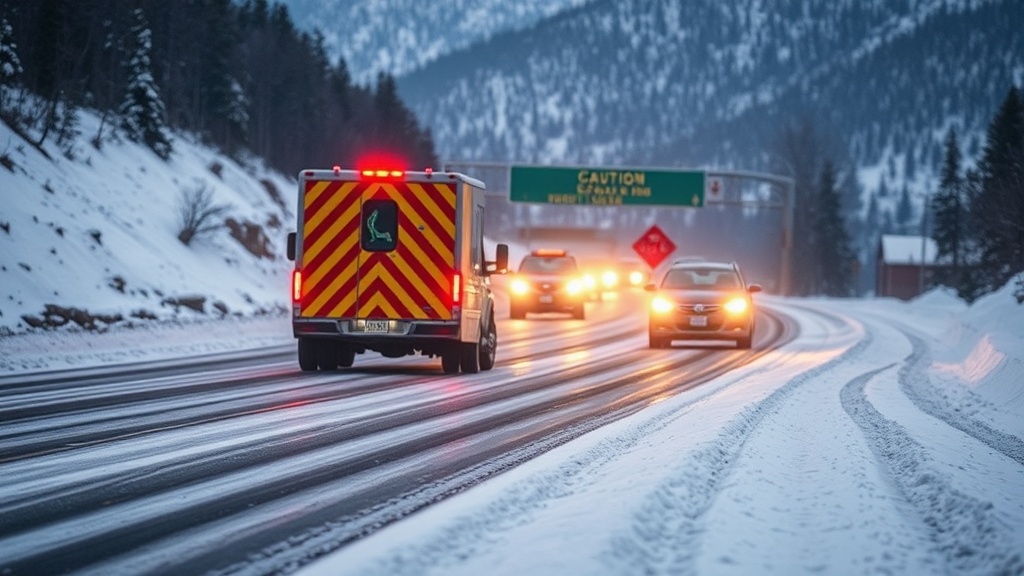
Park City is entering the holiday season with a concerning lack of snow, following a warm and dry November and December across northern Utah. With the holiday week approaching, forecasts predict multiple storms, but warmer temperatures are likely to bring rain at lower elevations, restricting significant snow accumulation in town. Snowpack across Utah is currently below average for this time of year, with northern Utah experiencing the least amount of snow. Salt Lake City has already set records for precipitation in October and high temperatures in November, and the average temperature for December is approximately 9 degrees above normal. The state’s water supply, primarily dependent on snowpack, has seen only four 'normal' snow years in the last three decades. Roughly 95% of Utah’s water supply comes from snowpack, and currently, about 93% of the state is facing some level of drought, a stark contrast to just 19% at the same time last year. The upcoming storms are crucial for determining the water supply for streams and reservoirs in the spring. The National Weather Service forecasts several warm storm systems moving through northern Utah as Christmas approaches. While some snow is expected at higher elevations, rain is anticipated for Park City and other lower areas. One storm is expected to bring rain to lower elevations and snow at higher altitudes this weekend, resulting in a wet, but not white, Christmas for many residents in the valley. The conditions have created a weak snowpack, with melt-freeze cycles causing crusts over weaker layers. Avalanche danger remains low to moderate, though the stability of these layers could change with incoming storms. Despite the current lack of snow, Utah’s snowpack typically peaks in early April, meaning there is still potential for improvement if strong storms occur. Water conservation efforts are essential, and officials encourage residents to utilize resources to reduce water usage this winter.