New BYU Study Reveals What Sharks Hear at the Aquarium
A BYU study reveals insights into what sharks hear underwater, enhancing our understanding of their behavior and conservation needs.
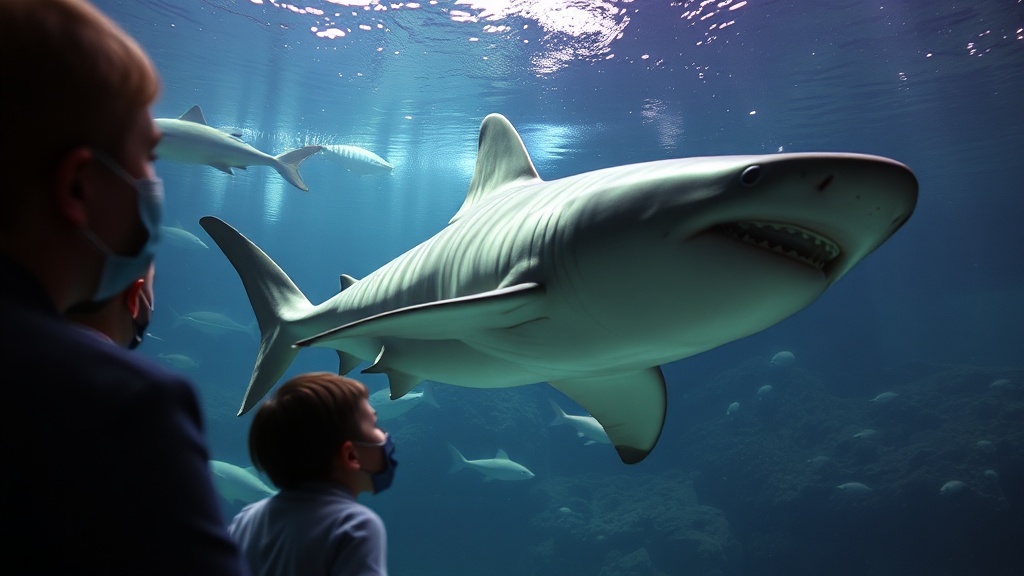
In a groundbreaking study, researchers from Brigham Young University (BYU) collaborated with the Loveland Living Planet Aquarium to explore an intriguing question: what do sharks hear when they swim in their aquatic environments? This study not only sheds light on the auditory perception of these magnificent creatures but also provides insights into how they interact with their surroundings in captivity.
The research team, led by marine biologist Dr. Emily Johnson, utilized advanced acoustic monitoring technology to capture and analyze the sounds present in the aquarium environment. "Understanding how sharks perceive sound is critical, not only for their behavior in captivity but also for their survival in the wild," Dr. Johnson explained. Sharks possess a unique set of auditory adaptations that allow them to detect sounds over long distances, an ability that is crucial for locating prey and avoiding danger.
The study involved placing underwater microphones, also known as hydrophones, in various sections of the aquarium, including the shark tank. These devices recorded a range of sounds, from the bubbling of water filtration systems to the ambient noise created by visitors. The recordings were analyzed to determine which sounds were most prominent and how these might affect the sharks' behavior.
One of the most surprising findings was that sharks are particularly responsive to low-frequency sounds, which are often produced by other marine animals. "Sharks are tuned to pick up on the sounds made by their prey, such as fish and marine mammals, which often communicate using low-frequency vocalizations," said Dr. Johnson. This ability allows them to locate food sources even in murky waters.
The researchers also observed the sharks’ reactions to the sounds recorded during the study. Interestingly, they found that when the sharks were exposed to certain low-frequency sounds, they exhibited increased activity levels, swimming more vigorously and displaying behaviors typically associated with hunting. "This suggests that even in an artificial environment like an aquarium, the soundscape can significantly influence shark behavior," Dr. Johnson noted.
The implications of this research extend beyond the confines of the aquarium. As global shark populations face threats from overfishing and habitat destruction, understanding their sensory experiences can inform conservation strategies. "By learning how sharks interact with their environment, we can better protect them in their natural habitats," Dr. Johnson emphasized.
In recent years, the Loveland Living Planet Aquarium has made significant strides in creating enriching environments for their marine residents. The collaboration with BYU is part of a broader initiative to enhance animal welfare in captivity. "We want to ensure that our sharks and other marine animals are not only healthy but also stimulated and engaged in their environments," said aquarium director Mark Turner.
The findings of this study may also have applications in the design of future aquariums. By understanding the importance of sound in the lives of sharks, aquarium designers can create more immersive and naturalistic environments that cater to the sensory needs of these animals. This could lead to improved animal welfare and more educational experiences for visitors.
As the research continues, Dr. Johnson and her team plan to expand their studies to include other species of sharks and marine life, examining how sound influences their behavior and interactions. "Every species is unique, and understanding their individual needs is crucial for conservation efforts," she stated.
In conclusion, the BYU study on shark auditory perception marks a significant step forward in marine biology and aquarium science. By delving into the auditory world of sharks, researchers are not only enhancing our understanding of these fascinating creatures but are also paving the way for better practices in marine conservation and animal welfare. As we continue to learn more about the complex lives of sharks, it becomes increasingly clear that their survival in the wild is intricately linked to our understanding of their sensory experiences. The collaboration between BYU and the Loveland Living Planet Aquarium serves as a model for future research endeavors aimed at bridging the gap between science, conservation, and public awareness of marine life.