HydraPak: The Utah Company Behind Challenger's O-Rings Reflects on History
HydraPak, the Utah company behind the Challenger O-Rings, reflects on its complex legacy 40 years after the disaster.
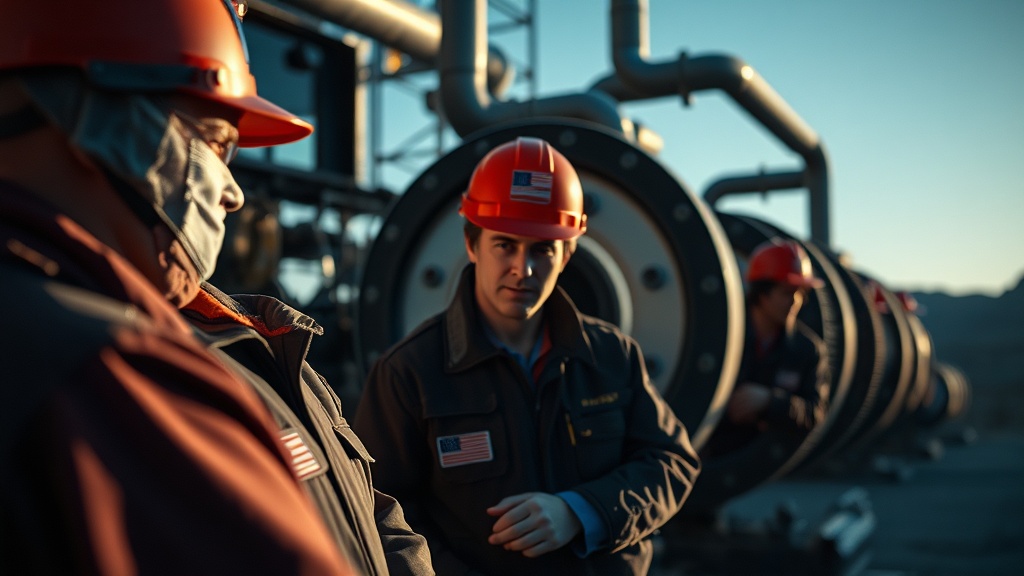
In a quiet corner of West Jordan, Utah, the echoes of history resonate within the walls of HydraPak, a company that played a pivotal role in America’s space program. Founded in 1976, HydraPak became known for manufacturing O-Rings, crucial components used in the boosters of the Space Shuttle program, including the ill-fated Challenger mission in 1986. As the 40th anniversary of this tragic event approaches, two former employees of HydraPak, Wallace Jeffs and Jeff Wall, have opened up about their experiences and the complex legacy of the company.
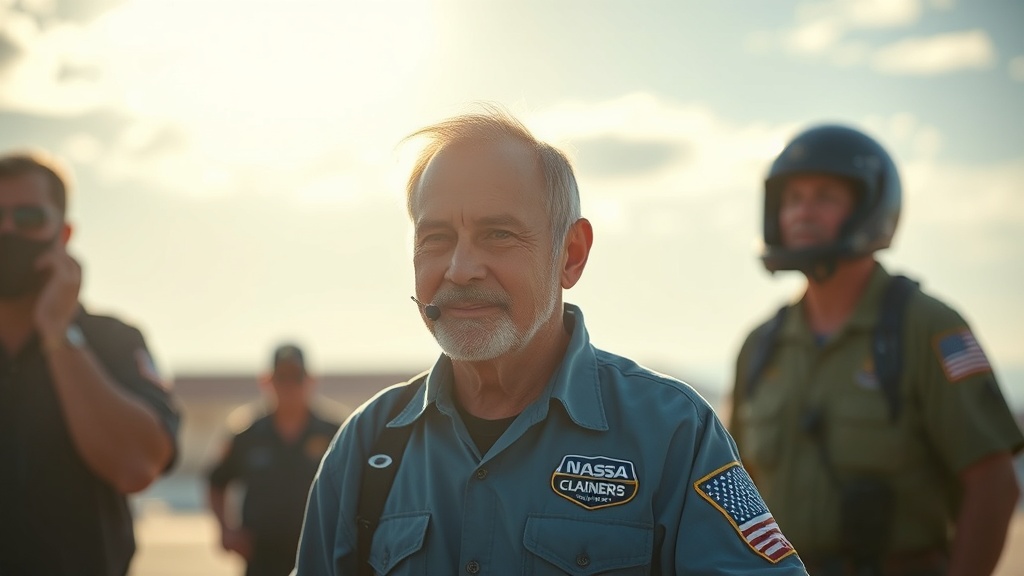
The Challenger disaster, which resulted in the loss of seven astronauts, remains a sensitive subject not only for the families of those who perished but also for the employees of HydraPak. Wallace Jeffs, who worked in sales at the company in the mid-1980s, recalls the pride he and his colleagues felt in contributing to NASA's ambitious endeavors. “We were just proud to be part of this program,” he said. Jeff Wall, also a former sales representative at HydraPak, echoed these sentiments, emphasizing that the company was dedicated to producing O-Rings that met NASA’s stringent specifications.
As the subcontractor for Morton Thiokol, the primary contractor for the Space Shuttle boosters, HydraPak’s O-Rings were integral to preventing gas leaks at the joints of the rocket boosters. The rubber O-Rings were crafted from multiple cords of rubber, which employees meticulously sewed and sanded by hand. “It required very good, dexterous hands to sand the O-Rings,” Wallace Jeffs noted, explaining that this task was predominantly handled by women due to their skill in precision work. The process was so delicate that prototypes were even cured in the family oven of Jeff Wall's father before the company invested in industrial equipment.
However, as the launch date of the Challenger approached, concerns about the O-Rings' performance in cold temperatures emerged. On the eve of the launch, Morton Thiokol engineers expressed apprehensions about the low temperatures at Cape Canaveral, warning that the O-Rings might not withstand the conditions. Despite these warnings, the launch proceeded as scheduled on January 28, 1986. Wallace Jeffs recalls being in a hardware store when he saw the disaster unfold on television. “I couldn't understand that,” he said, reflecting on the shock and disbelief that followed the explosion.
An independent investigation into the Challenger disaster ultimately found that the failure lay in the joint between the two lower segments of the right solid rocket motor, attributing the catastrophic failure to the destruction of the seals. Jeff Wall maintains that the O-Rings themselves did not fail, arguing that they were built according to Morton Thiokol's specifications. “The O-Rings were indeed damaged during the launch and breached, but it was a faulty joint design that allowed this to happen,” he stated.
Despite the commission's findings, HydraPak’s name has been linked to the disaster, leading to misconceptions about the quality of its products. In 1988, reports emerged about inspectors finding cut marks on new O-Rings, which fueled rumors of sabotage. However, these damaged O-Rings never made it onto a shuttle. Wallace Jeffs expressed frustration at the persistent myths surrounding the O-Rings, including claims that they were baked in a pizza oven, a misunderstanding stemming from the use of a home oven for prototype curing.
The aftermath of the Challenger disaster was fraught with uncertainty for HydraPak. “A lot of the stress of the shuttle disaster put stress on the business,” Wallace Jeffs recalled, noting the fears that the company might lose its contract with Morton Thiokol. Nevertheless, HydraPak retained its contract and worked collaboratively with NASA to enhance the designs of the booster joints, ensuring that their O-Rings flew on every subsequent shuttle mission.
The legacy of HydraPak is intertwined with the personal histories of its founders and employees, many of whom were connected to the Fundamentalist Church of Jesus Christ of Latter-Day Saints (FLDS). Rulon T. Jeffs, Wallace's father, was a prominent figure in this community, which adds another layer of complexity to the company's story. However, in recent years, both Wallace Jeffs and Jeff Wall have distanced themselves from the FLDS, moving on to different chapters in their lives.
Today, HydraPak continues to thrive, producing seals for a diverse range of products, from pressure cookers to military jets. As the company celebrates its 50th anniversary this year, General Manager Jake Jeffs, another son of Rulon Jeffs, acknowledges the company’s storied past. “There is a shared history, background, and experience,” he said, recognizing the impact of the Challenger O-Rings on their legacy. As HydraPak looks forward to the future, the lessons learned from its past remain a vital part of its identity, serving as a reminder of the delicate balance between innovation and responsibility in the pursuit of progress.