Heber City Communications Policy Faces Strong Opposition from Wasatch County GOP
Heber City Council faces pushback from residents and GOP over proposed communications policy aimed at political neutrality.

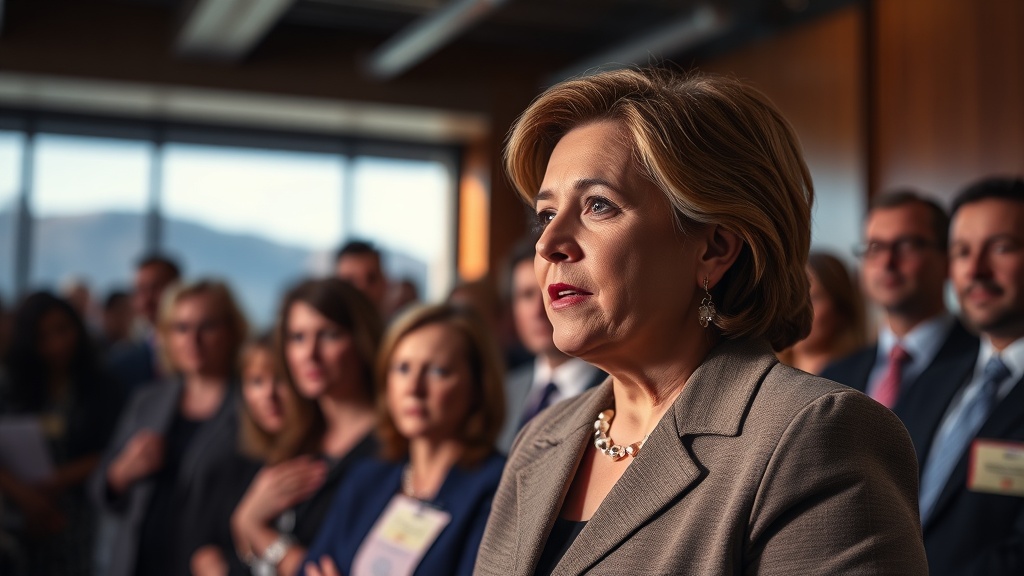
In a lively public meeting held on Tuesday, the Heber City Council faced significant backlash from local residents and the Wasatch County Republican Party regarding a proposed communications policy aimed at maintaining political neutrality. The policy, which has been under discussion since November, was originally introduced by Councilor Scott Phillips as a means to separate personal opinions from official communications in newsletters, surveys, and social media. However, the conversation took a turn as numerous community members voiced their concerns, arguing that the policy could undermine the transparency and direct communication between elected officials and constituents.
The council's deliberation on the communications policy had previously drawn little public interest, with three prior meetings yielding minimal attendance. However, the situation changed dramatically during the latest session, where a substantial number of residents took to the podium to express their opposition. This surge in public engagement underscored the community's unease with the potential implications of the proposed guidelines, which critics argue could create a barrier between elected officials and the public they serve.
David Johnson, Chair of the Wasatch County GOP, emerged as a prominent voice against the policy, donning a wide-brimmed hat and cowboy boots as he articulated his concerns. Johnson emphasized that the proposed policy would hinder authentic communication between elected officials and their constituents, asserting, "Authenticity and trust are built through direct and personal engagement. Constituents deserve to hear from the people they voted for, not filtered or branded interpretations." He warned that an over-reliance on city staff for communications could foster a perception of a "shadow government," further eroding public trust.
Public commenters echoed Johnson's sentiments, with Tracy Taylor from the Wasatch Taxpayers Association highlighting the pitfalls of having a communications director act as a buffer between the school board and citizens. "That extra person buffering? That’s not a representative form of government," Taylor stated, suggesting that such practices create unnecessary barriers to direct engagement.
Mike Hewlett, a former mayoral candidate, reiterated the call for transparency, arguing against the policy's potential to restrict direct communication from city officials. "We need to ensure that the public has unfettered access to their elected representatives. Any policy that limits this access is a disservice to democracy," he said, emphasizing the importance of open lines of communication.
GOP Vice Chair Patty Sprunt also weighed in, advocating for increased engagement from public officials on social media platforms. She cited the example of U.S. Representative Kat Cammack from Florida, who regularly updates her constituents on her voting decisions and the reasoning behind them. "If you were completely transparent, getting on the day after City Council in a video saying, ‘Here’s why we voted the way we did’ — that gives us peace, knowing you care enough to tell us," Sprunt said, calling for a more interactive approach to governance.
The council members themselves displayed a range of opinions on the proposed policy. Councilor Yvonne Barney argued that the city newsletter could serve as an appropriate platform for elected officials to share their insights, pointing out that not all residents are active on social media. However, Councilor Mike Johnston countered her argument, expressing concern that using city communication channels for personal opinions could lead to unproductive exchanges. "Once we go to a newsletter or the city’s website, and we start trolling each other or responding to each other, I think that’s the absolute wrong place to do it. This is the place we do it. This is the place for public discussion," Johnston stated, referring to the council chambers.
Amidst the debates, Mayor Heidi Franco raised specific concerns about the policy's mission statement, which aimed to uphold a unified organizational voice. The Mayor suggested that given the inherent differences in opinions among elected officials, the guidelines should apply only to city staff rather than elected representatives.
In light of the extensive public feedback and the clear divide among council members, the council ultimately decided to revisit the communications policy. They unanimously agreed to draft a new version, taking into account the concerns raised during the meeting. Johnson's final remarks resonated with the audience as he urged the council to simplify the proposed guidelines, arguing, "You’re trying to split hairs here when you’re trying to differentiate how the mayor speaks, when the mayor speaks. The mayor doesn’t need permission to say anything."
As the Heber City Council prepares to review the communications policy in their next meeting, the outcome remains uncertain. However, the substantial public engagement reflects a community deeply invested in the principles of accountability and transparency in local governance. The unfolding debate serves as a reminder of the vital role that open communication plays in maintaining trust between elected officials and the constituents they serve.