Exploring Indigenous Pathways: Summit County's Rich Cultural Heritage
Discover the rich Indigenous history of Summit County, Utah, and its ancient pathways that shaped community and culture.
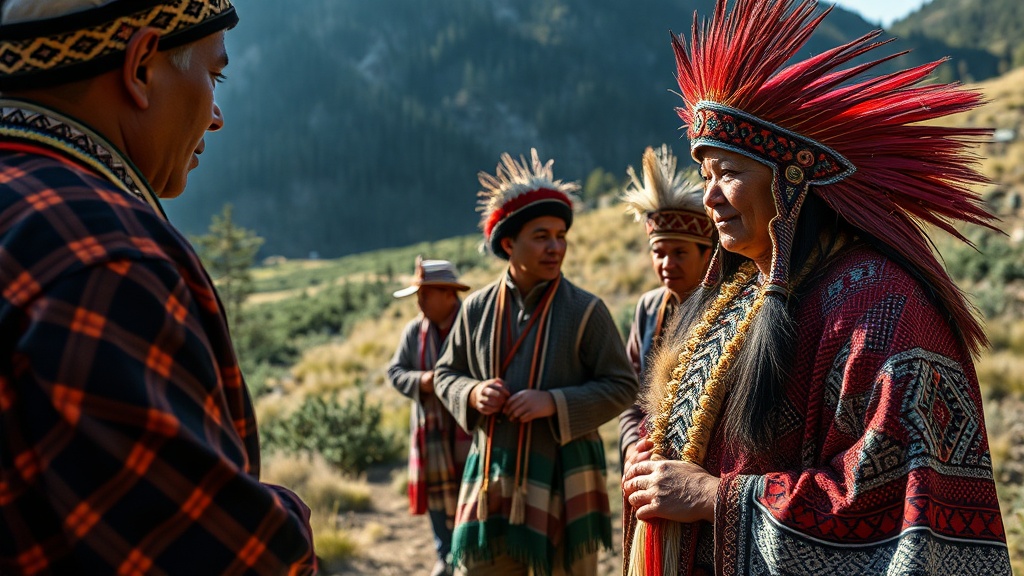
Summit County, Utah, often celebrated for its picturesque ski resorts and vibrant tourism, holds a deeper narrative—one steeped in the ancient pathways of Indigenous peoples. Darren Parry, a prominent leader of the Northwestern Band of the Shoshone Nation and an educator, sheds light on this rich history that predates modern development. In an enlightening discussion, Parry emphasizes that the land now known as Park City was not merely a destination but a vital corridor for trade and travel among Indigenous communities.
Parry, who has authored influential works such as "Tending the Sacred: How Indigenous Wisdom Will Save the World" and "The Bear River Massacre: A Shoshone History," illustrates a vivid picture of the area’s historical significance. He serves on numerous boards, including the American West Heritage Center and the Huntsman Cancer Institute, and teaches at both the University of Utah and Utah State University. Through his teachings, Parry aims to reconnect contemporary society with the land's Indigenous history, revealing pathways that stretch back for centuries.
In his conversation with TownLift, Parry describes the ancient travel routes that once crisscrossed Summit County. He notes, "If you could peel back the asphalt and ski lifts... you’d see that Summit County was once less a destination and more of a living passageway." This perspective challenges the modern view of the land as merely a backdrop for recreation, urging residents and visitors alike to recognize its role as a hub of connectivity.
Long before Park City became synonymous with skiing, it served as an artery for various Indigenous groups, including the Shoshone, Goshute, and Ute peoples. Parry explains that the mountains were not obstacles but rather the backbone of a network of trails—"braided like rivers across the spine of Utah." These routes allowed groups to connect, trade, and share resources, demonstrating that even in their mobility, these communities maintained a profound relationship with their environment.
The trails of Summit County were far more than simple pathways; they were seasonal arteries that adapted to the changing climate. Parry elaborates on this dynamic, stating, "In wet months, people moved along higher ridges where mud could not swallow moccasins. In winter, they followed the valleys where snow packed hard and game sheltered low." This adaptability illustrates an intricate understanding of the land’s rhythms and how Indigenous peoples harmonized their movements with nature.
The concept of trade in these ancient corridors extended beyond mere economic exchanges; it was a means of forging relationships. Parry notes that marriages often occurred between families from different tribes, transforming mountain passes into vital links between communities. He articulates, "Diplomacy was not an abstract idea; it was lived through visits, shared meals, and children raised between cultures." This interconnectedness fostered a culture of peace that transcended geographical divisions.
Etiquette played a significant role in travel as well. Parry emphasizes that entering another's territory involved respect and acknowledgment, often signified through song or small offerings. "Guests were expected to behave honorably, and hosts responded with generosity when that respect was shown," he explains, highlighting the intricate social fabric that governed these interactions.
Certain landmarks within Summit County served as traditional meeting spots, facilitating gatherings and exchanges among travelers. Parry describes these sites as places where stories were shared, decisions made, and alliances formed, reinforcing the notion that the land was alive with history. Even today, standing at locations like the mouth of Parleys Canyon or the meadows near Kamas can evoke the echoes of these past gatherings.
In stark contrast to modern maps that highlight borders and separations, Parry urges us to view these historical routes as connections. "A trail is a promise that someone walked before you, and that someone will walk after," he states. This perspective invites residents of Summit County and visitors to engage with the land not just as a recreational space but as a living testament to the relationships forged over generations.
As Summit County continues to grow and evolve, Parry’s teachings call for a deeper awareness of the Indigenous history that underpins the landscape. He implores the community to recognize that the roads they travel and the ski runs they descend are built upon centuries of relationships and traditions. "When you walk this land with awareness, you join an old and ongoing movement," he notes, emphasizing the importance of kinship with both people and the natural world.
Ultimately, Parry’s message is one of connection and continuity. The history of Summit County is not buried or forgotten; it is embedded in the very soil and mountains that define this region. All that remains is for contemporary society to listen, learn, and honor the legacy of those who came before. This ongoing dialogue between past and present is crucial as Summit County navigates the complexities of growth while respecting its Indigenous roots.
This conversation with Darren Parry is part of an ongoing series aimed at exploring Indigenous history, culture, and perspectives in Summit County. By elevating these narratives, we enrich our understanding of the land and its significance, fostering a more inclusive future for all who call this area home.