Reflecting on Bonhoeffer's Christmas Letter: A Call to Conscience
Bonhoeffer's Christmas letter highlights the dangers of thoughtlessness in society, urging a return to independent thought and moral courage.
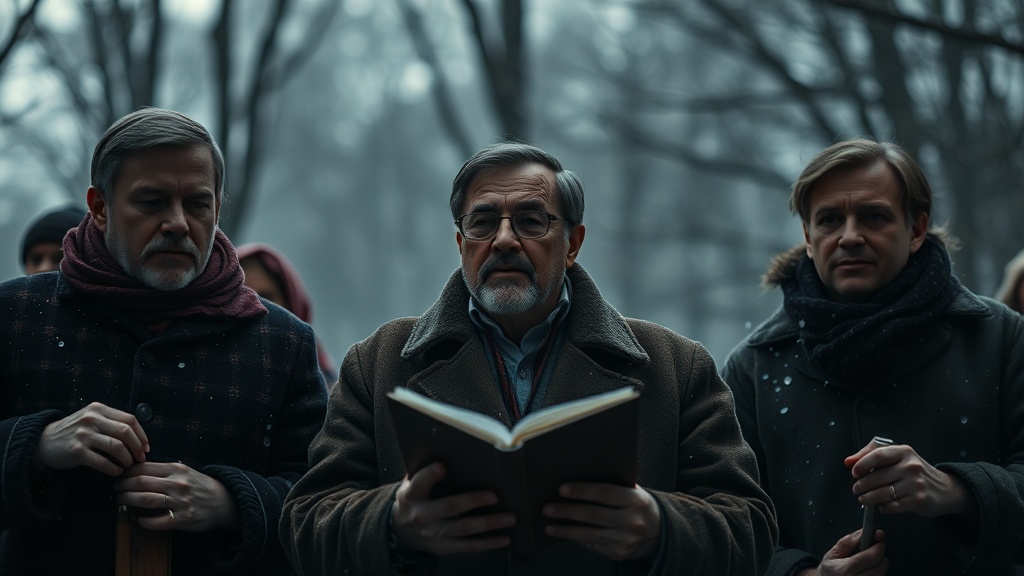
As the holiday season approaches, the words of Pastor Dietrich Bonhoeffer resonate profoundly in today’s sociopolitical climate. His Christmas letter, written in the context of Nazi Germany, emphasizes the dangers of thoughtlessness among the populace, a theme that feels particularly relevant in modern society. Bonhoeffer, a theologian and anti-Nazi dissident, warned that grave evils arise when those in power rely more on the complacency and ignorance of the people than on their independent thought and moral wisdom. This timely reflection prompts us to consider the implications of our own societal dynamics and the responsibilities we bear in an increasingly complex world.
Bonhoeffer penned his letter while imprisoned for opposing Hitler’s regime, a time when critical thinking and moral courage were essential yet perilous. In his correspondence, he articulated a profound concern: that the populace often succumbs to a dangerous form of passivity, allowing those in power to manipulate them without question. His assertion that 'grave evils arise when those in power expect more from people’s thoughtlessness than from their inner independence and wisdom' serves as a clarion call for vigilance against complacency, urging individuals to engage thoughtfully with the world around them.
The relevance of Bonhoeffer’s words today cannot be understated. In an era characterized by rapid information dissemination and polarized political landscapes, individuals are frequently bombarded with messages that can lead to emotional responses rather than thoughtful reflection. Social media platforms, in particular, can exacerbate this issue, creating echo chambers that reinforce existing beliefs and discourage critical discourse. This environment fosters a culture where thoughtlessness can thrive, allowing manipulative narratives to gain traction.
Moreover, the rise of populism across various nations highlights a troubling trend where leaders capitalize on the fears and anxieties of the masses. In such scenarios, the populace may find themselves drawn into a cycle of thoughtlessness, prioritizing loyalty to charismatic figures over reasoned debate and ethical considerations. The implications of this trend are profound, as it can lead to the erosion of democratic values and the rise of authoritarianism, echoing the very conditions Bonhoeffer sought to combat.
In revisiting Bonhoeffer’s Christmas letter, we are reminded of the critical importance of fostering an environment where independent thought and moral courage are championed. This can be achieved through education that encourages critical thinking, open dialogue, and ethical reasoning. Schools and community organizations play a crucial role in cultivating these values, equipping individuals with the tools necessary to navigate complex social and political landscapes.
Furthermore, the media has a responsibility to promote informed discourse, moving beyond sensationalism and clickbait to provide nuanced perspectives that challenge prevailing assumptions. Journalistic integrity is paramount in an age where misinformation can spread rapidly, and the public's trust in media sources is increasingly fragile. By prioritizing fact-based reporting and fostering a culture of accountability, the media can help mitigate the effects of thoughtlessness in society.
As we reflect on Bonhoeffer’s insights, it becomes clear that the fight against thoughtlessness is not merely a historical concern but a contemporary imperative. Individuals must be encouraged to question, to engage, and to think critically about the information they consume and the ideologies they support. This collective responsibility extends beyond mere awareness; it requires active participation in democratic processes and a commitment to upholding ethical standards in both personal and public life.
In conclusion, Pastor Dietrich Bonhoeffer’s Christmas letter serves as a poignant reminder of the dangers inherent in thoughtlessness and the vital importance of independent thought. As we navigate our own complex realities, let us heed his call to cultivate wisdom and moral courage, ensuring that we do not allow our society to fall prey to the very evils he sought to confront. In doing so, we honor his legacy and contribute to a world that values thoughtfulness, integrity, and justice for all.