Exciting Fossil Discoveries at Dinosaur National Monument Amid Construction
Fossils discovered during construction at Dinosaur National Monument reveal insights into ancient dinosaurs and boost local tourism.
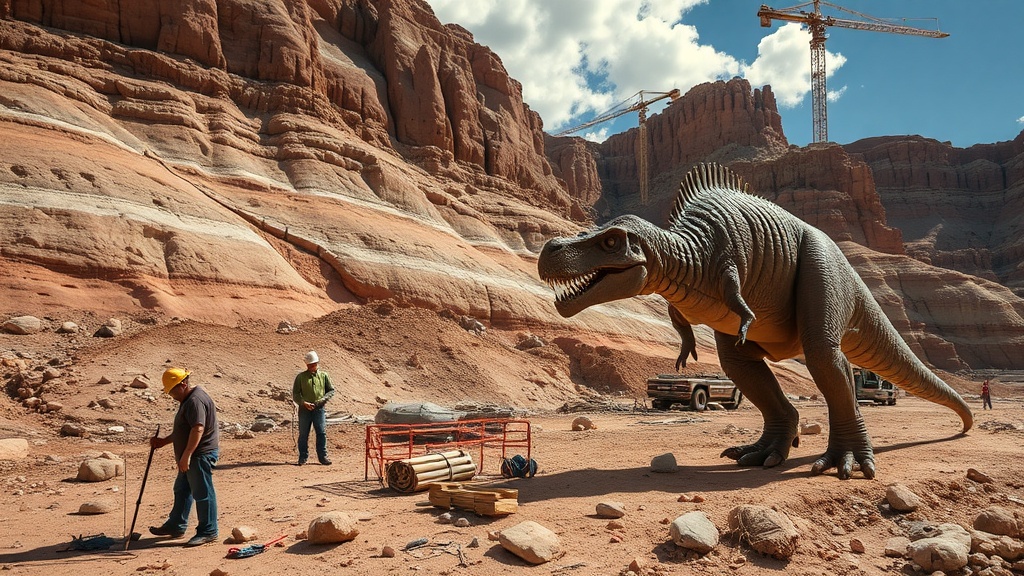
In a remarkable turn of events, a construction project at Dinosaur National Monument has led to the discovery of fossils for the first time in over a century. This unprecedented finding occurred during renovations of the parking lot at the Quarry Exhibit Hall, an area renowned for its paleontological significance. The project, which was initially aimed at improving visitor facilities, has instead opened a window into the distant past, offering new insights into the prehistoric creatures that once roamed this region.
The Dinosaur National Monument, located on the border of Utah and Colorado, is famed for its rich deposits of dinosaur bones and fossils, showcasing a diverse array of species that lived during the Jurassic period. The last significant excavations in the area were conducted over 100 years ago, making these recent discoveries particularly noteworthy for both paleontologists and the scientific community at large. The fossils unearthed during the construction include several vertebrae and limb bones, indicating that they likely belonged to large herbivorous dinosaurs.
Park officials reported that the construction crew stumbled upon the fossils while digging to expand the parking lot, which was becoming increasingly insufficient to accommodate the growing number of visitors. As soon as the fossils were discovered, the project was halted for further investigation. Paleontologists from the nearby University of Utah were called in to assess the findings, and their initial analysis suggests that the fossils could belong to species such as the Apatosaurus or the Diplodocus, both of which are known to have inhabited the area millions of years ago.
Dr. Sarah Johnson, a paleontologist involved in the excavation, expressed her enthusiasm about the discovery. "This is a rare opportunity to study fossils that have remained undisturbed for over a century. Every bone we uncover can provide vital clues about how these creatures lived, their behaviors, and their environment," she stated. The fossils will undergo extensive analysis, including dating techniques to determine their exact age and further studies to uncover more about the species they belonged to.
The implications of this discovery extend beyond just academic interest; they also highlight the importance of careful planning during construction projects in areas rich in natural history. The National Park Service has taken steps to implement more rigorous protocols for monitoring excavation sites in geologically significant areas, ensuring that future discoveries are not overlooked. The potential for new finds in previously excavated areas remains high, as many sites across the country continue to reveal unexpected treasures as construction and development progress.
In addition to the scientific value of these fossils, the discovery has reignited public interest in Dinosaur National Monument. Visitors have expressed excitement about the ongoing research and the possibility of seeing a live excavation in progress. Educational programs are being developed to engage the public, and plans are underway to create an exhibit showcasing the newly found fossils once they have been thoroughly analyzed.
Local businesses in the community are also feeling the positive impact of the discovery. With increased media attention and the potential for more visitors, restaurants, hotels, and tour operators are preparing for a surge in tourism. "This is a fantastic opportunity for us," said Maria Lopez, owner of a local diner. "More people will want to visit the monument, and that means more business for everyone in the area."
As the excavation continues, park officials are committed to balancing preservation with public access. They emphasize that while the fossils are an invaluable part of the park's heritage, they must be treated with care and respect to ensure they are preserved for future generations. The situation serves as a reminder of the delicate relationship between development and conservation, particularly in areas that hold significant historical and scientific value.
In conclusion, the recent fossil discoveries at Dinosaur National Monument not only enrich our understanding of prehistoric life but also serve as a catalyst for community engagement and tourism. As paleontologists continue their work, the park stands at the forefront of a thrilling intersection between natural history and modern development, reminding us of the enduring legacy of the dinosaurs that once roamed its landscapes. The findings will undoubtedly shape our understanding of the region's geological history and offer a chance for the public to connect with the ancient past in ways that were previously unimaginable.