Exciting Dinosaur Fossil Discovery During Construction at Dinosaur National Monument
Dinosaur fossils were discovered during parking lot construction at Dinosaur National Monument, marking a significant paleontological event.
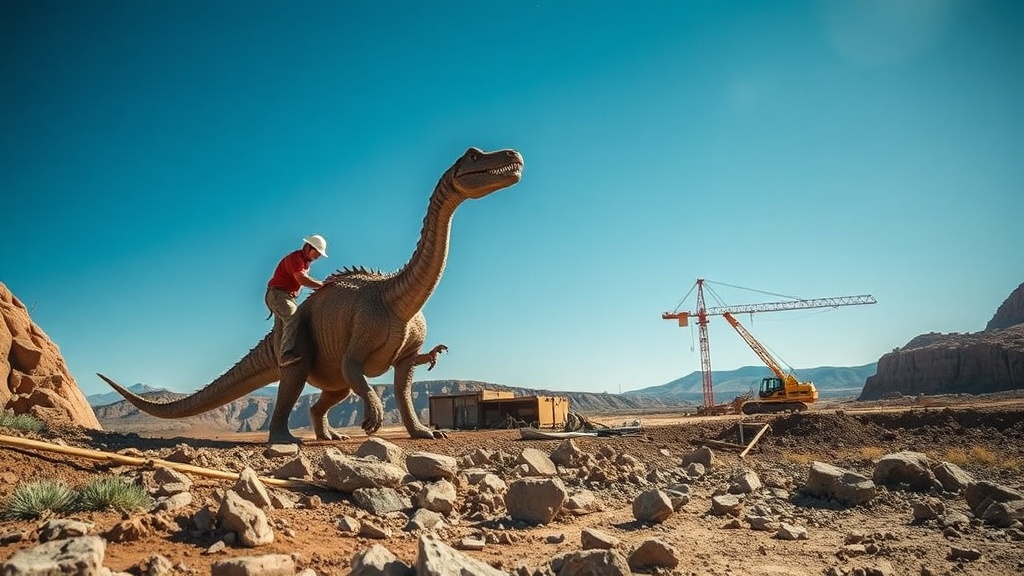
VERNAL, Utah — A remarkable paleontological find has emerged from the depths of Dinosaur National Monument, where construction workers unearthed dinosaur fossils during routine parking lot renovations. The discovery, which occurred on September 16, 2025, near the Quarry Exhibit Hall, is significant as it marks the first fossil excavations at this location in nearly a century, with the last being conducted in 1924.
The National Park Service reported that the construction crew was removing asphalt when they inadvertently exposed a section of sandstone known to contain dinosaur remains. As soon as the fossils were discovered, construction was immediately halted to allow paleontologists to assess the site. "This is an exciting moment for both the park and the scientific community, as each fossil has the potential to provide valuable insights into the prehistoric world," said a spokesperson for the National Park Service.
Initial assessments suggest that the fossils likely belonged to a Diplodocus, a large, long-necked dinosaur that roamed the area millions of years ago. This species is frequently found in the monument's renowned bonebed, which has been a focus of scientific interest since the early 20th century. Paleontologists, supported by a crew from the Utah Conservation Corps, volunteers, and on-site construction workers, worked diligently to excavate the fossils over a period of several weeks.
From mid-September to mid-October, these dedicated teams successfully removed an impressive 3,000 pounds of fossils and the surrounding rock. The material is currently being cleaned and studied at the Utah Field House of Natural History State Park Museum in nearby Vernal. Visitors to the museum can observe the preparation process in the fossil preparation lab, offering an engaging educational experience. "It’s important for the public to see how paleontological work is done and how we learn about these ancient creatures," remarked a museum curator.
Some of the newly uncovered fossils are already on display at both the Quarry Exhibit Hall and the Utah Field House, allowing visitors a rare glimpse into the life of dinosaurs that once inhabited this region. The Quarry Exhibit Hall, famously known as the “Wall of Bones,” is the park’s most popular attraction. It is built atop the original Carnegie quarry, where approximately 1,500 dinosaur fossils remain embedded in rock, creating an awe-inspiring sight for visitors of all ages.
The historical significance of the Quarry cannot be understated. From 1909 to 1924, significant fossil excavations were conducted by renowned institutions such as the Carnegie Museum, the Smithsonian National Museum of Natural History, and the University of Utah. This rich history led to the establishment of Dinosaur National Monument in 1915, aimed at preserving these invaluable resources for future generations.
Following the fossil excavation, the parking lot and road improvement project was completed, which included comprehensive concrete and asphalt work, as well as accessibility upgrades around the exhibit hall. The enhancements aim to improve visitor experience, making the monument more welcoming and accessible for everyone.
The discovery of these dinosaur fossils not only enriches our understanding of the area's prehistoric past but also highlights the importance of preserving such sites for ongoing research and education. The collaborative effort between the National Park Service, local volunteers, and conservation groups underscores the vital role of community engagement in scientific endeavors.
As Dinosaur National Monument continues to be a focal point for both tourists and scientists alike, the excitement surrounding this find is palpable. Visitors are encouraged to learn more about the ongoing research and the fascinating world of dinosaurs by visiting the park and the Utah Field House. Current hours and additional information can be found at the National Park Service's official website at nps.gov/dino.
In conclusion, the recent fossil discovery at Dinosaur National Monument not only reaffirms the site's significance as a treasure trove of prehistoric life but also showcases the ongoing commitment to education and preservation in the field of paleontology. As more discoveries are made, the potential for new insights into the ancient world continues to grow, keeping the legacy of these magnificent creatures alive for generations to come.