2025 Sees Historic Changes in Immigration, Economy, and Governance in D.C.
2025 was a pivotal year in Washington, marked by Trump's return, sweeping policy changes, and a lengthy government shutdown.
In a year marked by unprecedented shifts in U.S. policy and governance, 2025 proved to be a historic chapter in Washington, D.C. The return of President Donald Trump to office, following a decisive victory in the 2024 election, set the stage for sweeping changes across immigration, tariffs, and federal spending. With Republican majorities in both chambers of Congress, the administration pushed through significant legislation while facing considerable challenges, including a record six-week government shutdown and a barrage of lawsuits concerning its policies.
January kicked off with the U.S. House of Representatives reelecting Louisiana Republican Mike Johnson as Speaker. His leadership heralded a series of bills that aligned with GOP priorities, focusing heavily on immigration reform and controversial measures regarding transgender student athletes. Meanwhile, Senate Majority Leader John Thune took over from Mitch McConnell, vowing to protect the legislative filibuster, an essential tool for bipartisan agreement. Just days before his second inauguration on January 20, Trump faced legal repercussions from a New York judge regarding hush money payments made during the 2016 election, a shadow looming over his administration.
On Inauguration Day, Trump signed a series of executive orders addressing immigration policy, birthright citizenship, climate change, and LGBTQ rights, marking an aggressive start to his second term. He also pardoned 1,500 individuals convicted of offenses related to the January 6 Capitol riot, showcasing his commitment to his base. This legislative momentum continued with the signing of the Laken Riley Act, a cornerstone achievement for Republicans, and the announcement of tariffs on imports from Canada, Mexico, and China, furthering Trump's long-standing trade agenda.
February saw a significant uptick in legal challenges against Trump's administration, as Democratic attorneys general and civil rights advocates accused the government of overstepping its boundaries. Amidst this turmoil, Trump initiated massive layoffs within federal agencies, signaling a desire to downsize the federal workforce. Republicans in Congress began navigating the complex budget reconciliation process, which would eventually lead to the “big, beautiful bill” aimed at reshaping domestic spending and tax policy.
March was pivotal for education as the administration made moves to dismantle the Department of Education, emphasizing the transfer of educational authority back to state governments. A notable moment occurred when Trump signed an executive order directing Secretary of Education Linda McMahon to take steps towards closing the department, despite the legal complexities involved.
April brought more controversies as the Trump administration admitted to mistakenly deporting a Maryland man to a notorious prison in El Salvador. The Supreme Court intervened in the growing immigration crisis, mandating the administration to facilitate the return of the wrongly deported individual. This incident underscored the contentious and often chaotic landscape of Trump's immigration policies.
In May, the Supreme Court ruled on multiple cases affecting immigrants and military personnel, including a decision that allowed the administration to maintain its ban on transgender individuals serving in the military. As the month progressed, House Republicans passed a substantial 1,116-page package that would become the “big, beautiful bill,” consolidating various legislative efforts into a single, sweeping initiative.
The summer months saw Trump doubling tariffs on steel and aluminum imports, a move designed to protect U.S. industries, although economists warned this could hinder economic growth. By July, the Senate passed the final version of the “big, beautiful bill,” which Trump signed on Independence Day. The legislation included significant fiscal changes, anticipated to increase the federal deficit by $3.394 trillion over the next decade while leading to millions losing health insurance coverage.
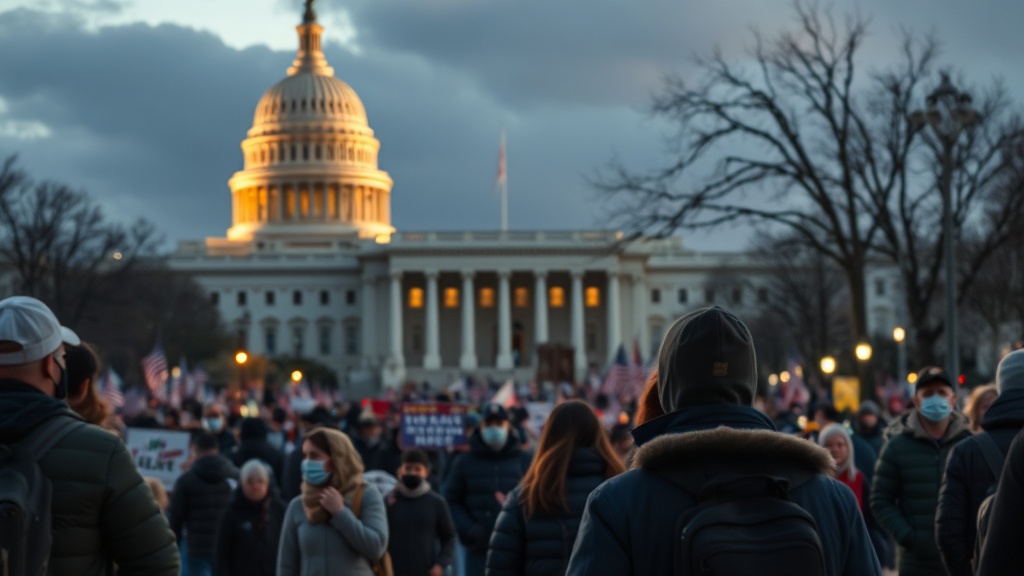
September marked a tumultuous period as Congress grappled with government funding bills leading to a historic six-week shutdown starting in October. The shutdown impacted vital services, including food assistance programs and federal employee salaries, igniting public discontent and protests against Trump’s policies.
As November approached, the shutdown ended after bipartisan negotiations, but the fallout from the extensive delay raised concerns about future governance. The Supreme Court continued to adjudicate cases related to Trump's immigration policies, including one that allowed the administration to profile Latino individuals in Southern California. November also witnessed tragic incidents of political violence, highlighting the increasingly polarized political climate.
As December approached, the administration intensified its focus on mass deportations following a tragic incident involving National Guard members in Washington, D.C. The year ended with ongoing legal battles, including challenges to Trump's tariffs and policy decisions affecting millions of Americans. The turbulent year of 2025 encapsulated the strife and transformation within U.S. governance, reflecting deep divisions while simultaneously setting the stage for future legislative battles and electoral contests ahead.
In summary, the events of 2025 in Washington, D.C., marked a significant period of transformation, characterized by controversial policies, legal challenges, and a redefined political landscape. As the nation moves forward, the implications of these changes will resonate throughout the coming years, shaping not only domestic policy but also the overall governance of the United States.