Vail Resorts Sees 20% Drop in Skier Visits Due to Unprecedented Snowfall Shortages
Vail Resorts reports a 20% drop in skier visits amid historic snowfall shortages, warning of potential earnings decline.
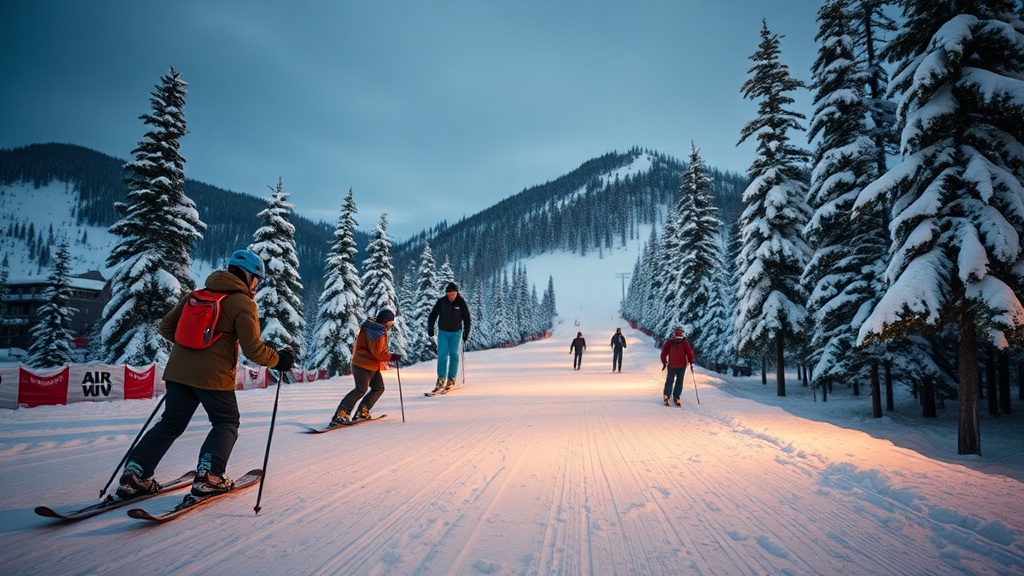
BROOMFIELD, Colo. — Vail Resorts, a leader in the ski industry, has reported a significant decline in skier visits early in the 2025–26 ski season, attributing this downturn to historically low snowfall across much of the western United States. The company has warned that its earnings may fall below the previously projected guidance, reflecting the severe impact of weather conditions on its operations.
As of January 4, Vail Resorts reported a 20% decrease in season-to-date skier visits compared to the same period last year. Despite this drop in visitation, the company's overall lift revenue has only fallen by 1.8%. This minor decline can be attributed to the increasing proportion of revenue derived from advance season pass sales, which have become a significant financial strategy for the company.
The reported figures encompass Vail’s North American resorts and ski areas, excluding their operations in Australia and Europe. It is important to note that the data is preliminary and subject to revision at the end of the fiscal quarter. Company CEO Rob Katz highlighted the severity of the snowfall issue, stating, “We experienced one of the worst early-season snowfalls in the western U.S. in over 30 years.” He noted that snowfall totals in November and December were approximately 50% below the 30-year average, with the Rockies experiencing snowfall nearly 60% below average levels. Consequently, only about 11% of terrain was open in the Rockies by December.
Particularly affected was Park City Mountain, where only 4% of the terrain was operational as of December 21, with just 14 out of 348 runs open and a base depth of 23 inches. Katz also pointed out that conditions in Tahoe and Whistler Blackcomb reached record lows through mid-December, although the situation improved slightly over the holiday period. In contrast, Eastern U.S. resorts experienced stronger early-season conditions, which partially mitigated the declines seen in the West.
The poor start to the ski season is projected to negatively impact the company’s financial performance. Katz indicated that the company now anticipates its full-year Resort Reported EBITDA (Earnings Before Interest, Taxes, Depreciation, and Amortization) to fall just below the lower end of the guidance range issued in September. This financial metric is often used to assess a company's operating profitability, excluding interest, taxes, and non-cash expenses. However, critics of this measure point out that it fails to account for actual costs such as asset depreciation. Katz cautioned that further declines could occur if weather conditions do not improve.
While Vail Resorts did not announce any new cost-cutting measures in response to the earnings outlook, the situation has raised concerns among investors and analysts about potential future actions. Previous downturns have led the company to implement various cost controls, such as reducing grooming operations, limiting snowmaking efforts, operating fewer lifts, or even closing restaurants.
Additionally, season-to-date revenue from areas outside of lift tickets showed more pronounced declines. Ski school revenue has dropped by 14.9%, dining revenue has decreased by 15.9%, and retail and rental revenue has fallen by 6% compared to the same period last year.
Although Vail Resorts has cited weather as the primary cause of weaker results, the company has not provided context regarding how last year’s early-season visitation compared to prior seasons. Notably, the previous year included disruptions at Park City Mountain due to a labor dispute, which affected lift operations during peak holiday times.
Skiers and investors have raised concerns about broader operational issues within the company. In a response to a recent Wall Street Journal article, a commenter identified as James Mod expressed that the decline in skier visits may be reflective of more than just unfavorable snow conditions. He remarked, “The mountain (Vail) itself is fantastic, but everything else is on a downward spiral,” citing issues such as overcrowded lift lines, staffing shortages, food quality, technological problems with the Epic Pass app, and increasing prices.
During the holiday period at Park City Mountain, numerous skiers reported extended closures of several lifts, including the Crescent lift. One skier noted that the Silverlode lift was down for approximately 1.5 hours, and during this time, Miner’s Camp provided shelter but was not serving food. Vail Resorts did offer affected guests coupons for a free day of skiing in compensation for the disruptions.
Despite these challenges, Vail Resorts reported that guest satisfaction scores remain strong, underscoring the company's commitment to its advance-commitment strategy that heavily relies on season pass sales to stabilize revenue amidst unpredictable snowfall patterns. Vail Resorts operates 41 mountain resorts globally, including Park City Mountain, the largest ski resort in the United States, highlighting its significant role in the winter sports industry.
As the season progresses, the company and its stakeholders will be closely monitoring weather developments and their potential implications for financial performance and operational strategies in the months ahead.