Utah Supreme Court Allows Construction of Heber Valley Temple to Proceed
The Utah Supreme Court has lifted the injunction halting Heber Valley Temple construction, allowing the LDS Church to proceed with its plans.
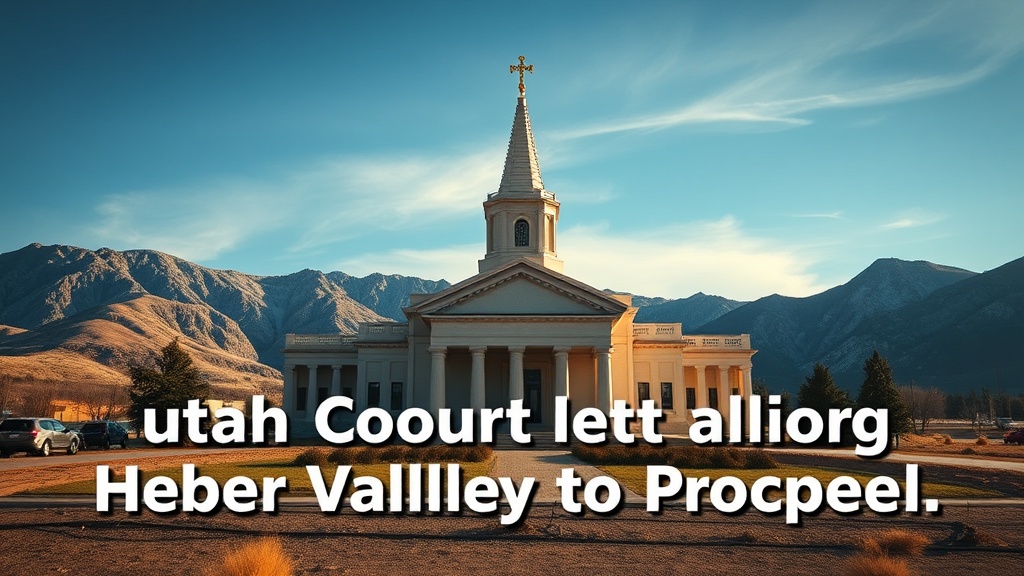
In a significant ruling today, the Utah Supreme Court lifted an injunction that had temporarily halted the construction of a new temple for the Church of Jesus Christ of Latter-day Saints (LDS Church) in Heber Valley. This decision comes as a major victory for the church, which had been embroiled in legal disputes surrounding the project due to concerns raised by local residents and environmental groups.
The construction of the Heber Valley Temple, announced in 2019, has been a source of contention for several years. Local residents and environmental advocates expressed worries about the temple's potential impact on the scenery and the community's character. They argued that the structure, which is expected to cover approximately 38,000 square feet and accommodate thousands of visitors, could lead to increased traffic, noise, and changes in the area's landscape.
In 2021, a state district court issued an injunction that temporarily halted construction, allowing for further review of the project's environmental impacts. This decision was met with mixed reactions. Supporters of the temple emphasized its importance to the local Latter-day Saints community, which has been eagerly anticipating the new place of worship. Critics, however, believed that the temple's construction would disrupt the delicate balance of the area’s natural beauty and local culture.
The Utah Supreme Court's ruling effectively suspends the district court's injunction, which had initially addressed claims related to environmental reviews and zoning issues. The court stated that the lower court's decision did not adequately consider the church's rights to proceed with its construction plans. In its ruling, the justices noted that the church had complied with all necessary regulations and permits required for the project. This included conducting environmental assessments and public hearings, which were mandated by state law.
"We are pleased with the Supreme Court's ruling, which allows us to move forward with the construction of the Heber Valley Temple," said church spokesperson Eric Hawkins. "This temple will serve as a place of worship and community for many members of the faith, and we appreciate the support of those who are excited about its completion."
Despite the ruling, opposition to the temple's construction remains strong among some residents. Local activist Sarah Jennings, who has been vocal in her opposition to the project, expressed disappointment with the court's decision. "This is not just about a building; it’s about preserving the unique character of our valley and protecting our environment for future generations," Jennings said. She indicated that efforts to advocate for environmental protections are far from over, signaling that further legal actions may still be on the table.
The Heber Valley area, nestled in the Wasatch Range, is known for its picturesque landscapes and outdoor recreational opportunities. As such, the debate surrounding the temple construction has also sparked broader discussions about development and growth in the region. Many residents are concerned that unchecked development could threaten the area’s natural beauty and charm, which have drawn families and tourists alike to the valley.
As construction is set to resume, the church plans to break ground as soon as possible, with hopes of completing the temple within the next few years. The LDS Church has committed to upholding sustainable practices during the construction process, promising to minimize environmental disruption and integrate the building harmoniously into the surrounding landscape. Church officials have stated that extensive landscaping will be incorporated to blend the temple into the natural scenery, addressing some of the concerns raised by local residents.
In addition to its spiritual significance, the Heber Valley Temple is expected to have a considerable economic impact on the area. Local businesses are anticipating increased patronage from visitors and congregants, which could translate into job growth and bolster the local economy. Church officials have estimated that the temple will attract thousands of visitors each year, contributing to local tourism and commerce.
Looking ahead, this ruling marks a pivotal moment for both the LDS Church and the Heber Valley community as they navigate the complexities of development, community rights, and environmental stewardship. With construction now authorized to proceed, the church's next steps will be closely monitored by those both for and against the project.
In conclusion, the Utah Supreme Court's decision to lift the injunction on the Heber Valley Temple construction signifies a decisive turn in a heated local debate. While supporters celebrate the ruling as a step towards fulfilling a long-awaited spiritual need, opponents remain steadfast in their commitment to protecting the valley's unique character and environment. As the project unfolds, the balance between development and preservation will continue to be a focal point for the community and its residents.