Lawmaker Proposes Bill to Block Major Homeless Campus Amid Great Salt Lake Concerns
Utah lawmaker Casey Snider introduces HB523, aiming to block a major homeless campus over Great Salt Lake conservation concerns.
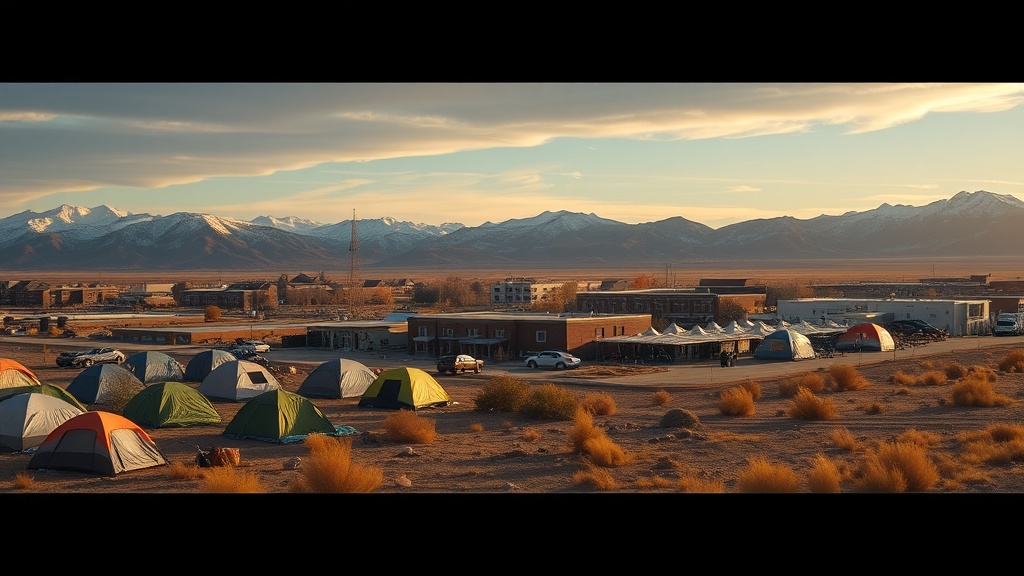
In a surprising legislative move, one of Utah's leading Republican lawmakers, House Majority Leader Casey Snider from Paradise, has introduced a bill that could significantly impact the state’s plans for a large homeless services campus. This bill, known as HB523, seeks to prohibit the Utah Office of Homeless Services from allocating funds for any low-barrier shelter that accommodates 300 beds or more. Snider's action comes as a direct response to frustrations regarding unmet commitments to enhance the buffer zone around the Great Salt Lake, a critical ecological area facing environmental challenges.
The proposed legislation not only aims to halt the establishment of large-scale homeless shelters but also seeks to repeal a provision of state law that previously granted the state the power of eminent domain to condemn land owned by Salt Lake City for the construction of a new homeless facility. This power was originally intended to allow the state to override a conservation easement on the property, facilitating the site for a homeless campus envisioned to accommodate 1,300 individuals.
Despite the restrictions imposed by HB523, the bill does allow the Office of Homeless Services to invest in “temporary emergency shelters,” a provision that could provide some immediate relief amid ongoing homelessness challenges in the area. During a media availability following the bill’s introduction, Snider expressed deep concerns regarding the long-term sustainability of the Great Salt Lake and the lack of follow-through on land swap commitments made during discussions with Salt Lake City officials and private landowners.
"We had some long-term discussions about what we were going to do permanently around the Great Salt Lake, and there were some exchanges and commitments made," Snider stated. He emphasized that without proper conservation measures in place, he is uncomfortable with the idea of the state using eminent domain to disrupt existing conservation efforts. Snider's stance reflects a growing concern among lawmakers about the environmental integrity of the Great Salt Lake, which has seen significant ecological decline in recent years.
House Speaker Mike Schultz, also a Republican, voiced his support for Snider’s bill, highlighting the need to protect the southeast side of the Great Salt Lake. "There are still another few hundred acres that need to be worked out in order to protect encroachment upon the Great Salt Lake," Schultz noted, emphasizing the shared goal of preserving the area's ecological health.
The timeline for the homeless campus has been fraught with complications, including a lack of clarity about who has failed to uphold their commitments regarding land swaps. Snider mentioned that while he has had positive discussions with Salt Lake City officials, he has also been in talks with the Ivory Foundation, a nonprofit linked to prominent Utah home builder Clark Ivory. Requests for comment from the foundation were not immediately returned.
The office of Salt Lake City Mayor Erin Mendenhall issued a statement reaffirming the city’s commitment to addressing the critical needs for additional shelter and services for the homeless population. The statement emphasized the city’s efforts to collaborate with the Office of Homeless Services to enhance community safety and support for unhoused individuals.
As discussions continue, Snider remains open to negotiations, indicating that he would be willing to withdraw his bill if satisfactory progress is made on land swaps and conservation efforts. "At the end of the day, I just hope everybody is good to their word," he remarked, echoing a sentiment of accountability in the negotiations.
The implications of HB523 are significant, as it could stall the establishment of the proposed 1,300-bed homeless campus, a project that has garnered support from Governor Spencer Cox. However, even if the bill passes, state officials have indicated that efforts to address homelessness will continue, with a focus on smaller initiatives and programs aimed at high utilizers of social services.
While the proposed legislation could impede the larger campus project, it does not entirely halt the state's efforts to assist the homeless population. Smaller temporary shelters could still be established, and ongoing initiatives aimed at addressing the needs of individuals frequently cycling through the homeless system may continue. The situation remains fluid, with the potential for new developments in the coming weeks as lawmakers seek to balance the critical needs of the homeless population with the urgent necessity of preserving the Great Salt Lake's environmental integrity.
Overall, Snider’s bill serves as a poignant reminder of the complex interplay between environmental stewardship and social services, highlighting the ongoing challenges Utah faces in addressing both homelessness and environmental protection in a rapidly changing landscape.