Utah Students and Community Rally Against Federal Agency's Actions
Utah students rally against ICE actions, uniting families and educators in a call for justice and reform.
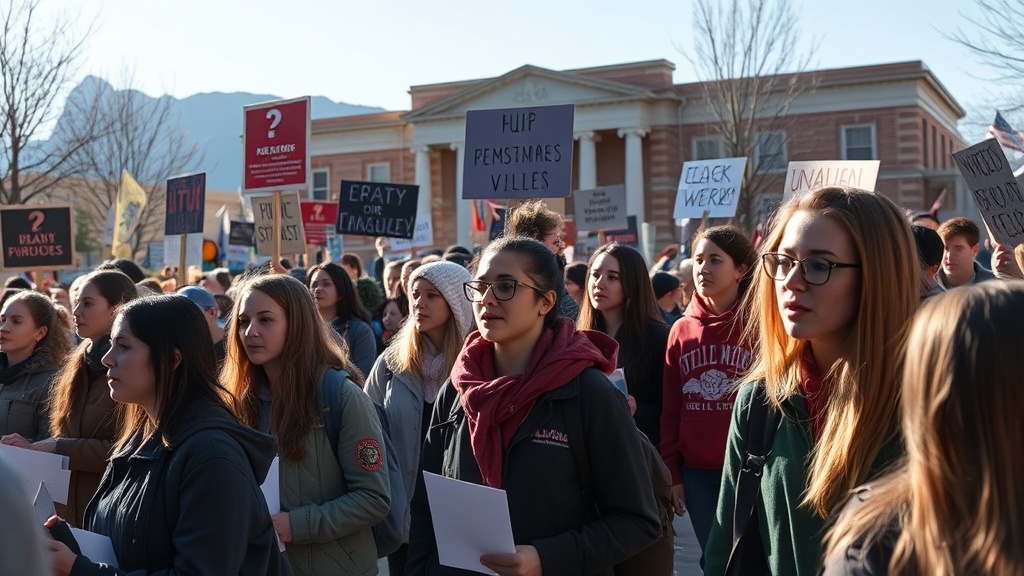
In a show of solidarity and civic engagement, high school and middle school students, alongside parents and educators, have taken to the streets in various Utah communities, including Salt Lake City and Park City. Their demonstrations are aimed at voicing concerns over the actions of the Immigration and Customs Enforcement (ICE) agency, which they characterize as violent, racist, illegal, and unconstitutional. The protests have captured the attention of local media and have sparked discussions about the role of federal agencies in state matters.
The protests began in earnest last week when students organized a walkout at several schools to bring awareness to what they perceive as injustices perpetrated by ICE. Participants held signs bearing messages such as "No Justice, No Peace" and "Families Belong Together," while chanting slogans that echoed sentiments of unity and resistance. Among the demonstrators, many expressed a deep sense of urgency and frustration, citing recent reports of aggressive deportations and family separations that have affected their peers and neighbors.
One student leader, 16-year-old Sofia Martinez, spoke passionately during a rally outside the Utah State Capitol. "We are here because we believe that everyone deserves to feel safe in their own home and community. The actions of ICE are tearing families apart, and we cannot stand by and let this happen," she stated. Sofia, who has friends and classmates whose families have been directly impacted by ICE's policies, emphasized the need for awareness and action from the younger generation to combat what she described as systemic injustice.
The protests have not only been about raising awareness but also about fostering dialogue within the community. Local schools have taken steps to incorporate discussions around immigration policies and their implications into their curricula. Many educators have expressed support for the students’ efforts, seeing these protests as a pivotal moment for teaching civic responsibility and engagement.
The involvement of parents and teachers has been significant in these events, with many adults joining students in their marches and providing logistical support. A parent, Maria Gonzalez, whose daughter has participated in the protests, shared her perspective: "As a community, we must stand together against injustices. Our children are not just the leaders of tomorrow; they are the voices of today. Their concerns matter, and they deserve to be heard."
The protests have also drawn attention from local political figures, with some expressing support for the students' right to protest. Utah State Representative Angela Romero remarked, "These young people are demonstrating the true spirit of democracy. They are standing up for what they believe is right, and it’s crucial that we listen to them. Their voices can spark change, not only in our state but across the country."
However, the demonstrations have not been without controversy. Supporters of ICE argue that the agency plays a vital role in maintaining law and order. Some community members believe that the protests misrepresent the agency's mission and role in immigration enforcement. In light of these differing opinions, community forums have sprung up, allowing for debates and discussions to take place, fostering a more nuanced understanding of the complexities surrounding immigration enforcement.
As the protests continue to gain momentum, organizers are planning future events aimed at educating the public about immigration issues and advocating for policy changes at both state and federal levels. They hope to collaborate with local advocacy groups to amplify their message and reach a broader audience. Sofia Martinez and her peers are also encouraging other students across the state to engage in similar activities, emphasizing that collective action can lead to meaningful change.
The growing youth-led movement in Utah reflects a larger trend across the nation, where young people are increasingly becoming vocal advocates for social justice and reform. The students' actions symbolize a commitment to addressing issues that directly impact their communities and families. As they navigate their roles as activists, they are also learning valuable lessons about the importance of community, resilience, and the power of collective voices in shaping the future.
In conclusion, the ongoing protests in Utah signify a crucial moment in the intersection of education, activism, and community engagement. As students, parents, and educators unite against the actions of ICE, they are not only challenging federal policies but also fostering a culture of awareness, dialogue, and activism that may inspire future generations. The implications of these demonstrations extend beyond the immediate concerns about immigration policy; they highlight the importance of youth participation in civic matters and the role of communities in advocating for justice and equality.