Utah's Proposition 4 Repeal Efforts Marred by Misleading Tactics and Violence
The battle for Proposition 4's repeal in Utah intensifies, marked by allegations of fraud, violence, and misleading tactics.
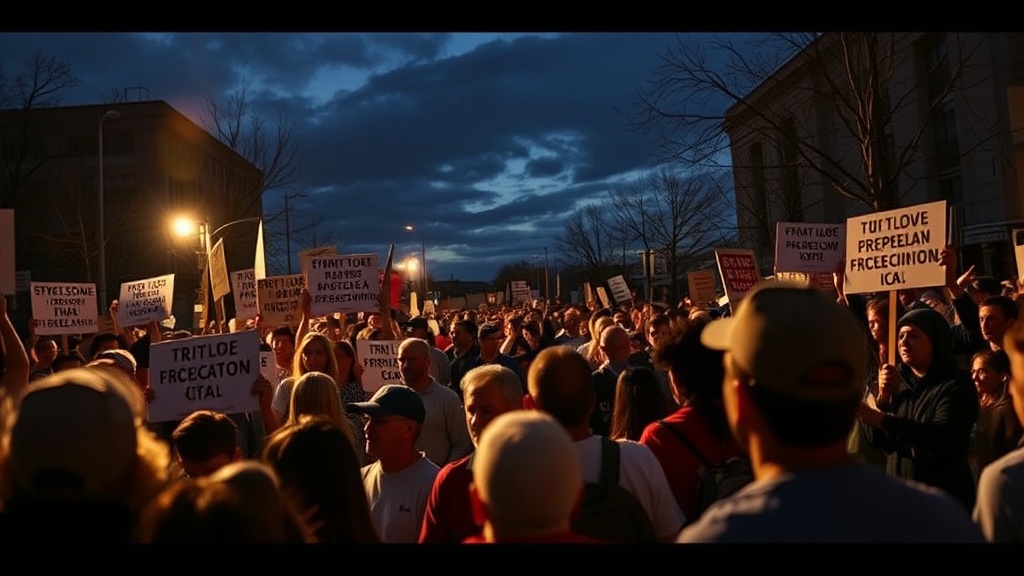
In the high-stakes political landscape of Utah, the battle over the repeal of Proposition 4, a law aimed at curbing gerrymandering, has descended into a contentious conflict marked by allegations of misleading tactics, fraudulent signatures, and even assaults. As the state approaches the February 15 deadline for signature collection, tensions between opposing factions have escalated, raising questions about the integrity of the democratic process in Utah.
Proposition 4 was passed in 2018, establishing an independent redistricting commission to ensure fair political boundaries are drawn every ten years. However, the recent court ruling that produced a map with one Democratic district and three Republican districts has spurred the Republican-controlled Legislature to seek its repeal. The political issues committee, Utahns for Representative Government, led by Utah Republican Party Chair Rob Axson, claims it needs to gather a total of 70,347 signatures in the coming weeks to place the repeal question on the November ballot.
Current reports reveal that as of Wednesday morning, 70,401 signatures had been verified, but the effort faces significant hurdles. The repeal campaign must meet strict requirements for signatures collected in at least 26 of Utah's 29 Senate districts, a challenging task given the time constraints.
Complicating matters, the anti-gerrymandering group Better Boundaries, which originally fought for Proposition 4, has launched a counter-campaign. They are urging individuals who signed the repeal petition to reconsider their support. Better Boundaries has sent out thousands of mailers to voters, informing them of the misleading tactics allegedly employed by signature gatherers. Elizabeth Rasmussen, the executive director of Better Boundaries, emphasized the need for transparency and honesty in the democratic process, stating, "When Utahns passed Proposition 4, they were clear about what they wanted."
Reports have surfaced that several voters felt “tricked” by signature gatherers, who misrepresented the purpose of the repeal petition. Better Boundaries has received numerous complaints from Utah residents who express concern over being misled regarding the petition they signed. This climate of distrust has fueled the ongoing battle between the two groups.
In response to the allegations, Axson admitted that some signature gatherers had been dismissed for not adhering to the standards expected by the campaign. He clarified that only a “handful” of the more than 1,500 volunteers and 750 paid gatherers had been involved in questionable practices. “When it’s happened, we’ve addressed it,” Axson said, emphasizing that the majority are working diligently and ethically.
The conflict has escalated beyond mere allegations of deceit. Reports from multiple sources have indicated instances of physical assaults and thefts targeting signature gatherers for the repeal. Axson described the behavior as “disgusting” and condemned the acts of aggression, stating there is “no place for violence” in political discourse. Some signature gatherers have reported being physically confronted, with their petition packets stolen or destroyed.
Moreover, allegations of fraudulent signatures have emerged, complicating the legitimacy of the repeal effort. Utah County Clerk Aaron Davidson's office reportedly found over 500 signatures that appeared to be fraudulent. Axson stated that his team had flagged these irregularities and urged the clerk’s office to investigate and take appropriate action. He maintained that the individuals responsible for the fraudulent signatures were promptly terminated from their positions.
Rasmussen, while condemning the violence associated with the repeal effort, expressed skepticism about the integrity of the signature gathering process. She noted that Better Boundaries had taken great care to avoid issues of fraud during their own signature collection for Proposition 4, arguing that the current situation indicated a significant problem within the opposing campaign.
As the countdown to the February 15 deadline continues, both sides are ramping up their efforts. Axson remains confident about the repeal campaign's progress, asserting that the numbers reported by the lieutenant governor's office lag behind actual gathering efforts on the ground. He declined to provide specific figures on unverified signatures, citing strategic concerns amid active opposition.
The outcome of this contentious battle over Proposition 4 may have lasting implications for Utah's political landscape. If the repeal effort succeeds, it could signal a shift back to a more partisan-driven redistricting process. Conversely, if the repeal fails, it may solidify the independent redistricting framework that many advocates believe is essential for fair representation.
As Utah navigates this fractious political terrain, the integrity of its democratic processes is under scrutiny. The coming weeks will be crucial as both sides mobilize their resources and supporters in a bid to shape the future of political boundaries in the Beehive State.