Utah's Proposed Constitutional Court Advances in Legislative Process
Utah's revised Constitutional Court bill advances in the legislature, sparking debate on judicial efficiency and access to justice.
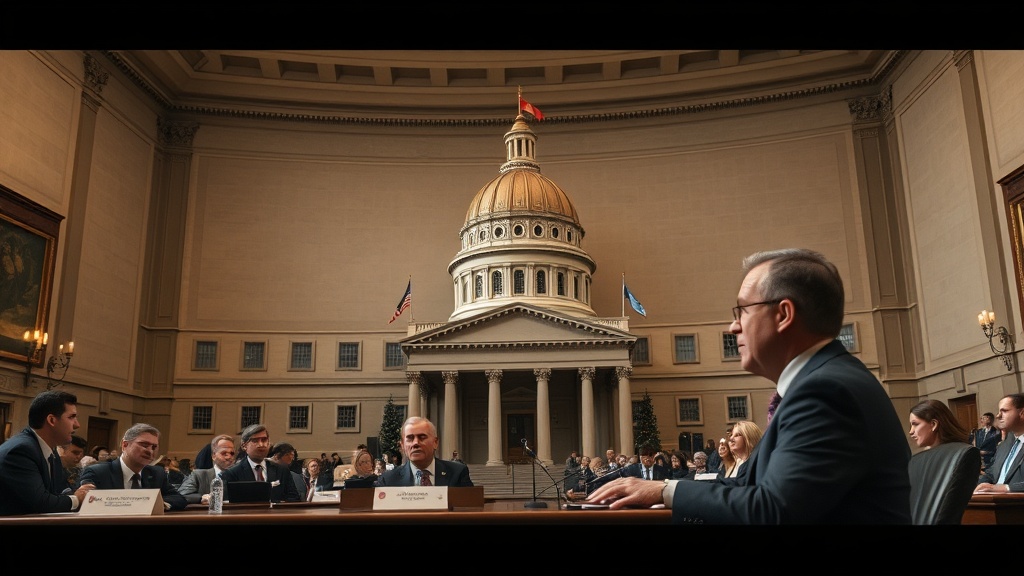
In a significant development for Utah's judicial landscape, a revised version of the proposed "Constitutional Court" passed the Utah House of Representatives on Wednesday. This legislation, which aims to address legal challenges against state actions, is now on a fast track through the legislature, with a Senate committee scheduled to review it on Thursday. The proposed court, instead of being a stand-alone entity, will operate as a three-judge panel tasked with adjudicating constitutional challenges brought against the state.
The concept of a Constitutional Court has been a topic of discussion among Utah lawmakers for several years. Proponents argue that such a court can provide a specialized forum for constitutional issues, ensuring that cases are handled by judges with specific expertise in constitutional law. This is particularly relevant in a state where legal disputes often involve significant constitutional questions, such as those surrounding individual rights, state sovereignty, and legislative authority.
Representative Mark Wheatley, a key advocate for the bill, emphasized the need for a dedicated judicial body to handle these complex cases. "We are dealing with issues that directly affect the rights of our citizens, and we believe a specialized court will lead to more consistent and informed rulings," he stated during a press conference. Wheatley also pointed out that the current court system can often be overloaded, leading to delays in resolving important constitutional matters.
The legislation proposes that the three-judge panel be composed of judges selected from the existing pool of district court judges, thereby ensuring that experienced legal minds will be making these critical decisions. Each judge on the panel would be appointed based on their expertise in constitutional law, thereby elevating the quality of legal scrutiny applied to these cases.
Critics, however, have raised concerns regarding the implications of establishing such a court. Some legal experts argue that creating a separate panel for constitutional challenges could lead to fragmentation within the judicial system, complicating the already intricate legal landscape in Utah. There are also fears that it may inadvertently limit access to justice for some individuals, particularly those who may not have the means to pursue cases in a specialized court.
In addition to concerns regarding access and judicial efficiency, opponents of the bill have questioned the necessity of a Constitutional Court in a state that already has a functioning court system capable of addressing constitutional issues. Senator Karen Mayne, who has expressed skepticism about the bill, remarked, "While I understand the intent behind this proposal, I worry that it may create more problems than it solves. Our courts are already handling these issues adequately, and we should focus on improving them rather than creating new structures."
The debate surrounding the proposed Constitutional Court reflects a broader national conversation about the role of specialized courts in the legal system. In some states, similar courts have been established to handle specific types of cases, such as family law or tax disputes. Proponents of specialization argue that it allows for greater expertise and efficiency, while critics warn that it can lead to a lack of cohesion across the judicial system.
As the legislative process unfolds, the bill's supporters are working to address the concerns raised by its critics. They are engaging in discussions with legal experts, community leaders, and constituents to ensure that the proposed court will effectively serve the needs of Utah residents without compromising access to justice.
If the bill passes the Senate committee and subsequently the full Senate, it will move on to the governor for final approval. Should it become law, the Constitutional Court could begin operating in the coming year, potentially changing how constitutional challenges are addressed in Utah.
As lawmakers prepare for the Senate committee hearing on Thursday, the outcome remains uncertain. The debate over the Constitutional Court is not just about judicial efficiency; it touches on fundamental questions about the balance of power within the state, the rights of citizens, and the role of the judiciary in safeguarding those rights. As Utah continues to navigate its legislative process, the proposed court stands as a focal point for broader discussions about justice and governance in the state.