Utah Republicans Condemn Racist Meme of Obamas Shared on Trump’s Platform
Utah Republicans Burgess Owens and Chris Stewart condemn a racist meme of the Obamas shared on Trump's social media platform, sparking bipartisan outrage.
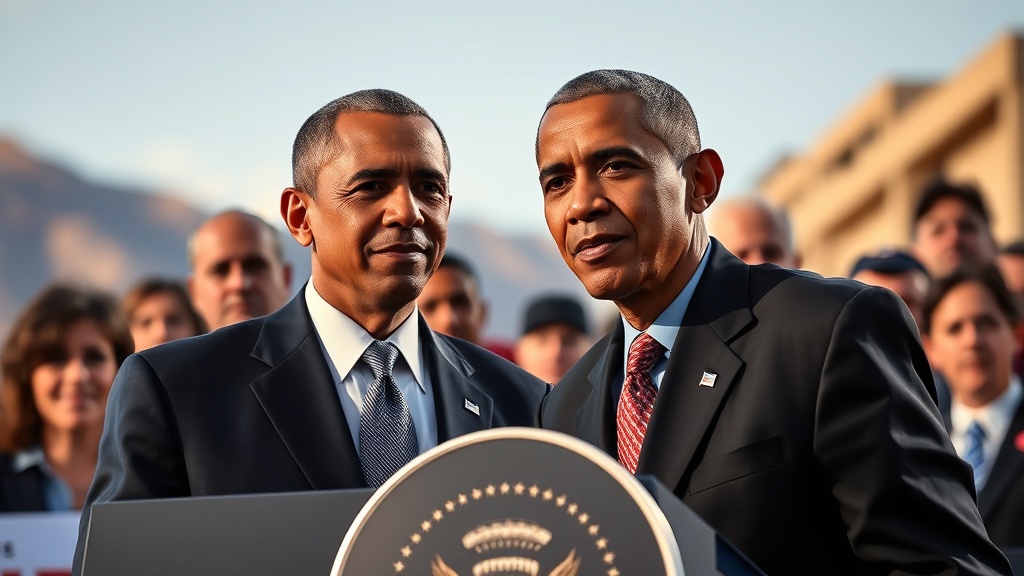
In a controversial episode that has sparked outrage across the political spectrum, a social media post featuring a racist meme depicting former President Barack Obama and former First Lady Michelle Obama was shared on a social media platform associated with former President Donald Trump. The post, which likened the Obamas to monkeys, drew immediate condemnation from lawmakers, including several Republicans from Utah, highlighting a significant bipartisan agreement on the matter of racial insensitivity in political discourse.
The incident unfolded late Thursday night when a staffer for Trump’s platform mistakenly shared a clip from an internet meme video. The video, which portrayed President Trump as the 'King of the Jungle,' was supposedly intended as satire. However, the imagery used crossed a line for many observers, prompting swift backlash from both sides of the aisle. A White House spokesperson later stated that the post was made in error and was subsequently removed on Friday afternoon following intense criticism.
Among the Republicans who spoke out against the meme were Utah Representatives Burgess Owens and Chris Stewart. Owens expressed grave concern over the post, labeling it as one of the most racist things to emerge from a White House in recent memory. He emphasized the need for all political leaders to denounce such insensitivity unequivocally, asserting that racism should have no place in American politics, regardless of party affiliation.
Chris Stewart also weighed in, calling for accountability from all involved. “This kind of rhetoric is unacceptable,” he stated. “It is our responsibility as leaders to foster a respectful political environment.”
The meme itself was a part of a longer video that Trump shared ostensibly addressing alleged election fraud claims. However, the context of the meme quickly became overshadowed by its offensive nature. White House Press Secretary Karoline Leavitt defended the video initially, stating that critics were overreacting and urging the press to focus on more pressing issues. "This is just a meme; please stop the fake outrage," she remarked, indicating a dismissal of the concerns raised by lawmakers and public figures alike.
The backlash was not limited to Democratic lawmakers. Prominent Republican figures, including Senators Tim Scott of South Carolina and Pete Ricketts of Nebraska, condemned the post as well. Scott, who chairs the National Republican Senatorial Committee, expressed his dismay, stating, “I pray this was a mistake because it is the most racist thing I’ve seen come from this White House.” Ricketts echoed similar sentiments, pointing out that even if the post was intended as humor, its implications were offensive and called for its removal and an apology.
Democratic leaders also joined the chorus of condemnation. Senate Minority Leader Chuck Schumer described the meme as “dangerous and degrading,” urging Trump to apologize to both Barack and Michelle Obama. He emphasized that the portrayal was not just a lapse in judgment but a reflection of deeper societal issues related to race in America. “This is a moment where we need to stand together against racism, not allow it to fester within our political discourse,” Schumer stated.
The incident has reignited discussions about race and representation in politics, especially as America approaches the anniversary of significant civil rights milestones. Lawmakers on both sides of the aisle have increasingly recognized the need for a unified stance against racism and bigotry, particularly in an era where social media amplifies harmful messages.
The swift response to the meme illustrates a growing bipartisan consensus that racism cannot be tolerated, regardless of political affiliation. As discussions continue, there is a strong call for leaders to not only condemn such acts but also to engage in meaningful dialogue aimed at addressing the systemic issues that allow racism to persist in society.
This incident serves as a reminder of the responsibility that comes with political leadership and the implications of public discourse. Moving forward, many hope that this moment will lead to more constructive conversations on race and a commitment to fostering a more inclusive political environment.
As the nation continues navigating through these complex issues, the reactions from both Republican and Democratic lawmakers highlight an essential truth: the fight against racism is a collective endeavor that transcends party lines. The expectation for accountability and respect in political communication remains a priority for constituents and leaders alike, emphasizing the importance of integrity in public service.