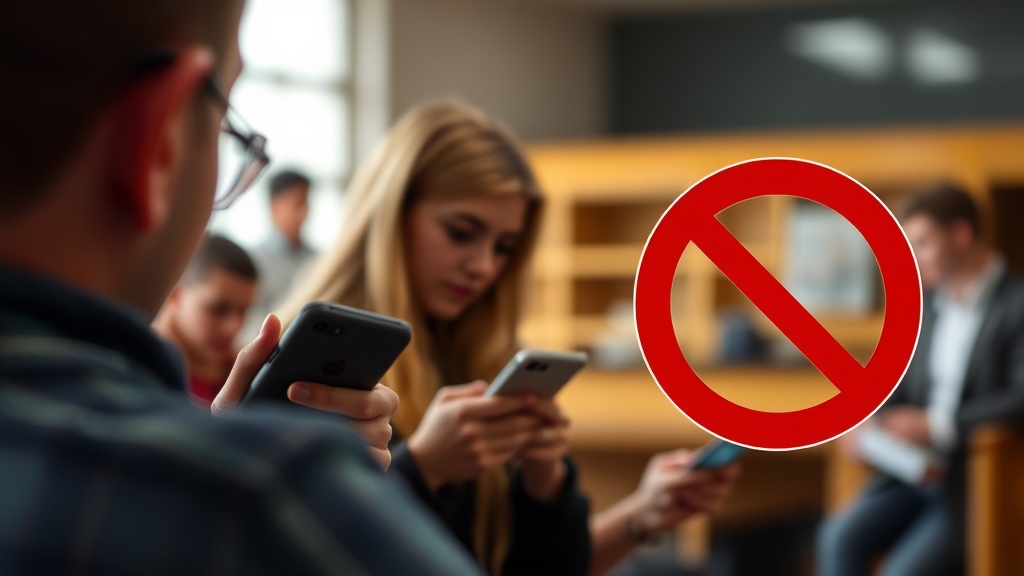
Utah Proposes Comprehensive Cell Phone Ban in Schools: A Shift in Policy
Utah leaders propose a bell-to-bell cell phone ban in schools to enhance student focus and engagement, building on previous legislation.

Utah's education leaders, including Governor Spencer Cox, have announced a significant proposed update to existing legislation regarding cell phone use in schools. This new initiative aims for a comprehensive 'bell-to-bell' ban on cell phones, effectively prohibiting students from using their devices throughout the school day. This proposal builds on Senate Bill 178, which was enacted in 2025 and previously allowed students to use their phones only during passing periods and lunch breaks. The new policy seeks to address growing concerns over distractions caused by mobile devices in the classroom and their impact on student engagement and academic performance.
The announcement, scheduled for January 7th at 11 AM, has garnered attention from various stakeholders within the education system. Senator Lincoln Fillmore and Emily Bell McCormick, President of the Policy Project, will join Governor Cox to unveil the details of this proposed legislation. By restricting cell phone use entirely, state leaders aim to create a more focused learning environment that prioritizes academic engagement.
One of the districts leading the charge on cell phone regulation is the Granite School District. Luke Allen, the district's Associate Director of Communications, shared insights into their existing policies, which already incorporate a 'bell-to-bell' ban at Granger High School. Under this policy, students are required to store their cell phones in locking pouches at the beginning of each school day. These pouches can only be unlocked with a magnetic device when students exit for the day. Allen indicated that this approach has yielded positive results, significantly reducing distractions and improving overall student focus.
"We have seen a 50% reduction in fights among students on campus since we implemented this policy," Allen stated. Moreover, he noted that the first year of the cell phone policy at Granger High School coincided with the lowest failure rates in five years, suggesting a direct link between reduced phone usage and improved academic outcomes. According to Allen, the district's experiences with the policy have been overwhelmingly positive, reinforcing the idea that limiting cell phone access during school hours can lead to a more conducive learning atmosphere.
In cases of emergencies, Allen assured that students would still be able to access their phones through teachers, ensuring that safety concerns are addressed while maintaining the focus on education. He emphasized that each district has the flexibility to tailor the policy to meet their specific needs, allowing for a more individualized approach to cell phone regulation.
The proposed legislation comes amid broader national discussions about the role of technology in schools and its effects on student behavior and learning. Critics of unrestricted cell phone use argue that constant access to social media and other distractions can detract from students' academic performance, while proponents of technology integration advocate for teaching students responsible usage. With the proposed policy shift, Utah aims to strike a balance, prioritizing educational engagement over digital distractions.
Furthermore, the Granite School District expressed support for the proposed legislation, highlighting the importance of ensuring that students spend less time on their devices and more time engaged in meaningful learning activities. Allen remarked, "Any minute that a student has spent engaging with social media or distracted by their cell phone during the school day is a minute they are not spending on their academics."
As the announcement date approaches, educators, parents, and students alike will be watching closely to see how this proposal unfolds. If enacted, the bell-to-bell ban on cell phones could set a precedent for other districts across the state and even the nation, reflecting a growing recognition of the need to manage technology use in educational settings. The implications of this policy could extend beyond academic performance, potentially influencing social dynamics and student behavior in schools.
In summary, Utah's proposed bell-to-bell cell phone ban represents a significant shift in educational policy aimed at fostering a more focused learning environment. As leaders prepare to unveil the details of this initiative, the conversation around the appropriate use of technology in schools continues to evolve, raising important questions about the future of education in a digital age.