Utah Legislature Allocates $1 Million for Colorado River Legal Battles
Utah lawmakers allocate $1 million for potential litigation over Colorado River rights amid ongoing negotiations among seven states.
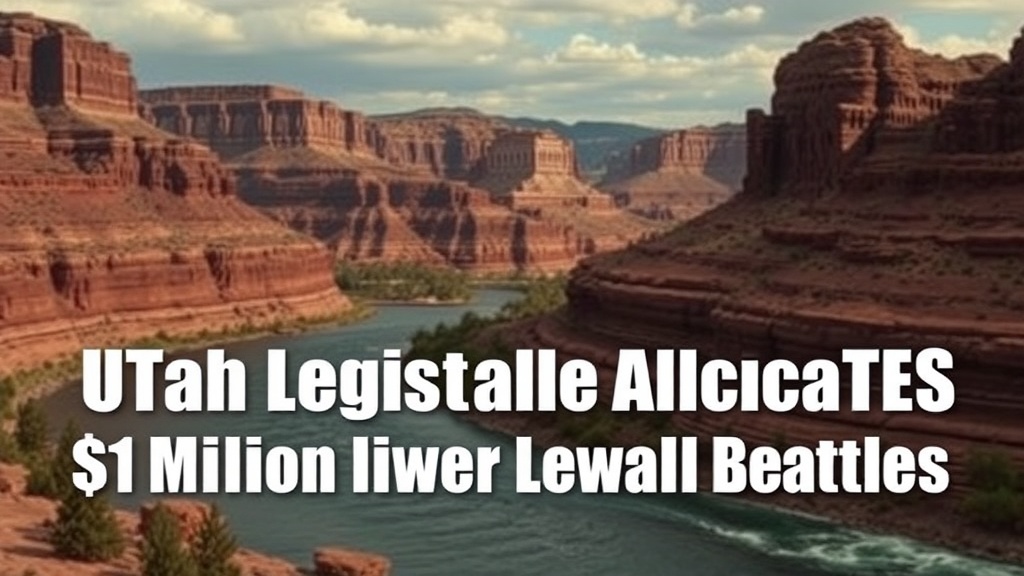
In a significant move reflecting the escalating tensions over water rights in the West, the Utah State Legislature has allocated $1 million for potential litigation concerning the Colorado River. This decision, spearheaded by Senator David Hinkins, the chair of the Natural Resources Appropriations Committee, underscores the urgency of the situation as states grapple with dwindling water resources amidst ongoing negotiations. The Colorado River is a vital water source for over 40 million people across seven states, including Utah, Arizona, and California, making its management a contentious issue.
Senator Hinkins emphasized the need for preparedness in the face of uncertainty, stating, "We just gotta pray for the best and prepare for the worst." His comments reflect a growing sentiment among lawmakers and water users alike that without adequate legal provisions, Utah could find itself at risk of losing its water rights in future negotiations. The allocation is seen as a proactive measure amid ongoing discussions among the seven states—Utah, Wyoming, Colorado, New Mexico, Arizona, Nevada, and California—who are attempting to establish a new agreement for managing the river's resources.
The stakes are high, as the Colorado River is not only a critical water supply but also an economic lifeline for agriculture and urban areas throughout the region. Recent reports indicate that negotiations between the Upper Basin and Lower Basin states have been fraught with disagreements, with each faction pushing for more significant cuts to water allocations. This discord has prompted some lawmakers to seek legal recourse as a means of safeguarding their states' interests.
In parallel, Arizona's legislature is considering a similar $1 million funding request for potential lawsuits, which signals a broader trend among states in the region to prepare for possible legal battles. The urgency of the situation is further compounded by a looming deadline set by the Trump administration for a framework agreement, which is due by February 14. Officials have warned that if an agreement is not reached, federal decision-making may occur, potentially sidelining state interests.
The negotiations were recently highlighted when U.S. Interior Secretary Doug Burgum convened the governors of the seven states in Washington D.C. in hopes of forging a collaborative path forward. Following the summit, Utah Governor Spencer Cox expressed optimism about the discussions but acknowledged the challenges that lay ahead. The anxiety surrounding the negotiations is palpable, particularly among those who rely heavily on the river for their livelihoods.
Wade Garrett, vice-president of the Utah Farm Bureau, voiced concerns from the agricultural community, stating, "There’s a lot of anxiety, if you will, in the farm community. They feel like sometimes people don’t realize that food might be the most important thing we grow off the Colorado. They get even left out of some of this and then the thought of litigation really scares them." While Garrett supports the funding request, he also expressed a reluctance to engage in litigation, illustrating the complex emotions surrounding the issue.
Steve Erickson from the Great Basin Water Network echoed similar sentiments, suggesting that the allocation of funds for litigation could indicate that negotiations are faltering. "It certainly doesn’t send a very good message to our partners in the Colorado River compact," he noted. Additionally, he raised concerns about the potential for closing off public input in the process, underscoring the importance of community engagement in water management discussions.
As the situation unfolds, the implications of the legislature's decision to allocate funds for litigation could be far-reaching. Should the negotiations deteriorate further and legal battles ensue, the outcome may have lasting effects on water rights and resource management in the region. For many, the Colorado River is more than just a water source; it is a lifeline that sustains communities and ecosystems alike. The stakes have never been higher, and as the clock ticks down to the February deadline, all eyes will remain focused on the negotiations and their potential impact on the West’s water future.
This article is part of the Colorado River Collaborative, a solutions journalism initiative supported by the Janet Quinney Lawson Institute for Land, Water, and Air at Utah State University. To explore more stories about the impact of the Colorado River on Utah residents, visit greatsaltlakenews.org/coloradoriver.