Utah Legislation Proposes English Proficiency Requirement for CDL Applicants
Utah lawmakers are advancing HB118, requiring CDL applicants to demonstrate English proficiency, aiming to enhance road safety and accountability.
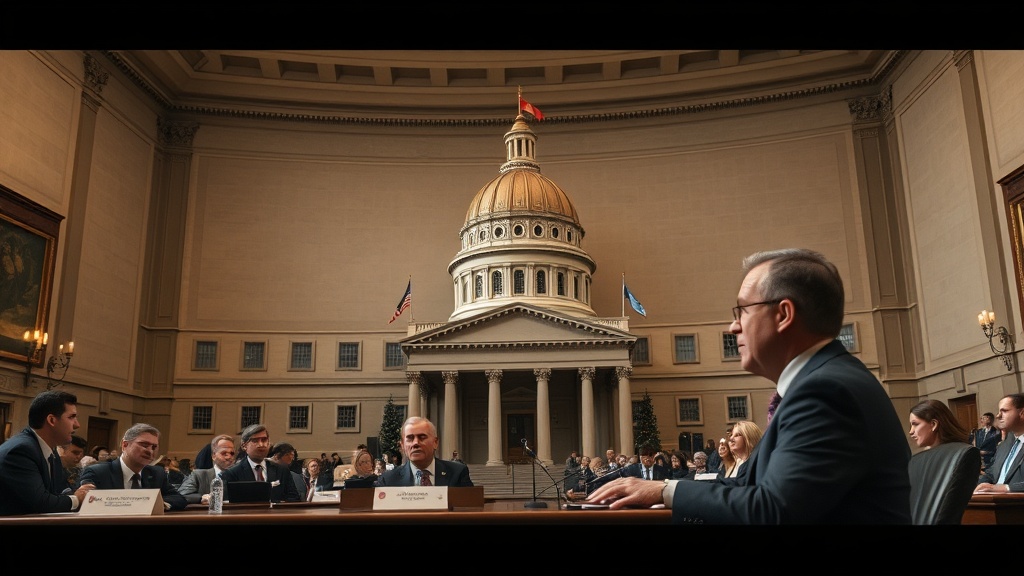
Utah lawmakers are advancing a significant piece of legislation aimed at enhancing road safety and ensuring accountability within commercial driver’s license (CDL) training programs. House Bill 118, which received an 8-2 favorable recommendation from the House Transportation Committee on Monday, proposes that all CDL applicants must attest to their proficiency in English before undergoing training. This initiative builds upon existing federal regulations mandating English proficiency for CDL holders, highlighting the increasing focus on safety and regulatory oversight in Utah's transportation sector.
The bill, sponsored by Representative Candice Pierucci, a Republican from Herriman, is designed to address a crucial aspect of road safety. In her testimony before the committee, Pierucci emphasized that effective communication is vital for drivers to navigate highways and interact with law enforcement. "The ability to converse with the general public, comprehend highway signs and signals, and respond to official inquiries is essential for safety on our roads," she stated.
Under the proposed legislation, CDL applicants will be required to sign a form affirming their English proficiency. This requirement aims to prevent non-English-speaking individuals from investing significant time and financial resources into CDL training only to be denied a license due to their inability to meet federal language requirements. "I view this as a protection for the student," Pierucci said. "It’s unfair to require them to pay all that money, and then not be able to actually pass. They may know the material, but not be able to articulate it in English."
The bill also introduces measures for increased accountability among CDL training schools. It mandates that these institutions report applicant passage rates and provide data on which training schools their students attended. This oversight is intended to identify and address any subpar training programs that may be taking advantage of students. Pierucci noted that the pursuit of a CDL often costs thousands of dollars and can be a lengthy process, further underscoring the need for oversight to protect applicants from unscrupulous practices.
The U.S. Department of Transportation has long required that all CDL drivers demonstrate English proficiency. Recent initiatives, including an executive order from former President Donald Trump, aim to enforce this requirement more stringently. The push for HB118 reflects a broader trend within the trucking industry to enhance safety standards and improve driver qualifications amid rising concerns about road safety.
While the bill garnered substantial support, it faced opposition from two Democratic representatives from Salt Lake City, Angela Romero and Rosalba Dominguez. Romero expressed concerns about the political climate surrounding language proficiency assessments, questioning who would determine an applicant's English skills. In response, Pierucci clarified that the determination would be made by a counselor or supervisor at the training school, who would assess the applicant’s language abilities in good faith, as per federal guidelines.
"The schools should already be doing this assessment, and I would hope they’re flagging that already," Pierucci added, reinforcing the bill's intention to create a structured framework for ensuring proficiency without overburdening applicants.
In an interview with Utah News Dispatch, Pierucci elaborated on the bill's oversight components, emphasizing the necessity of documentation that confirms students' proficiency before they embark on their training. This documentation would be submitted to the driver’s license division, enabling authorities to track the performance of different training schools and identify those that may be failing their students.
Rick Clasby, the executive director of the Utah Trucking Association, voiced strong support for HB118, pointing to the rising number of high-profile accidents linked to inadequate training and language barriers within the trucking industry. "We highly support this recommendation and appreciate that it does two things: it ensures safety and language proficiency, and it protects those students who might be taken advantage of by having to go to a school multiple times or not being able to pass the test at the conclusion of their training," Clasby stated.
As discussions around HB118 continue, its implications for both prospective CDL applicants and the broader trucking industry in Utah are significant. If passed, the bill could serve as a model for other states grappling with similar issues, showcasing a proactive approach to enhancing safety and accountability in commercial driving. The legislative process is expected to unfold in the coming weeks, with stakeholders eagerly anticipating the potential impact of this proposed requirement on the state's transportation landscape.
In conclusion, HB118 represents a critical step towards ensuring that all commercial drivers in Utah are adequately equipped with the necessary language skills to perform their duties safely and effectively. As the bill moves forward, it reflects a growing recognition of the importance of language proficiency in the realm of transportation and public safety, setting a precedent that could resonate beyond state lines.