Utah Lawmaker Questions Disability Law Center's Role Amid Family Frustrations
A Utah lawmaker questions the Disability Law Center's role, citing family frustrations, while supporters defend its advocacy for individuals with disabilities.
In a recent legislative session, a Utah lawmaker has raised concerns regarding the Disability Law Center, a nonprofit organization that has served as the state’s designated watchdog for individuals with disabilities since 1978. This discussion comes amid growing frustrations from families and caregivers who feel the center's actions are at odds with their interests, particularly concerning the legal guardianship system in Utah.
Senator Todd Weiler, a Republican from Woods Cross, has called for a reevaluation of the center's status, suggesting that it may not fully represent the needs and sentiments of families involved in guardianship cases. Weiler's comments were made during a legislative panel where he highlighted frustrations conveyed to him by parents. "In some instances, the Disability Law Center comes across as very anti-family," Weiler stated, reflecting the sentiment of certain families who believe the center's stance complicates their efforts to protect their vulnerable adult children.
The Disability Law Center is one of many protection and advocacy agencies across the nation, established by federal law to investigate abuse, neglect, and rights violations against people with disabilities. It operates under strict regulations that prevent it from representing parents in guardianship proceedings, which has led to discontent among some families who feel unsupported during crucial legal processes.
Kristi Lee Mortensen, a former University of Utah student, shared her experience at the legislative session, emphasizing the importance of the center's advocacy in her life. Mortensen, who is deaf, faced significant barriers to accessing education due to a lack of proper accommodations. "I didn’t have the legal knowledge or the resources to challenge a major institution on my own. The Disability Law Center stepped in, and because of them, my rights were enforced and access was provided," she explained, underscoring the center's role in advocating for individuals with disabilities.
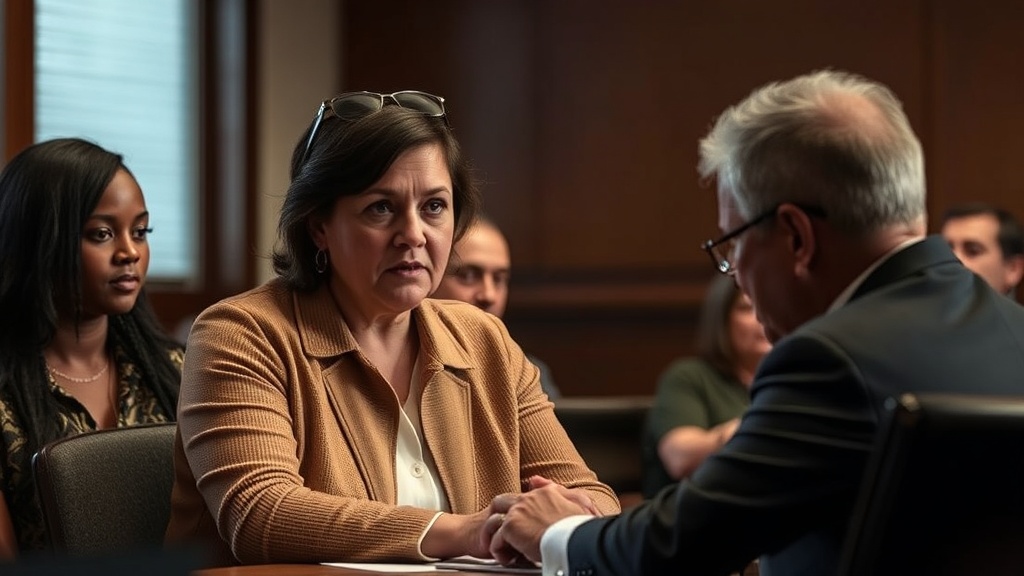
The tension between the needs of families seeking guardianship and the center’s mission was further illustrated during the Senate committee meeting, where both sides presented their views. Some parents expressed their desire for legal assistance that the center cannot provide due to its conflict-of-interest guidelines. Nate Crippes, the center’s public affairs supervising attorney, clarified this position, stating, "We represent people with disabilities, and so we would not be permitted to represent parents in guardianship proceedings. It would be a conflict of interest."
The Disability Law Center, alongside the ACLU of Utah, recently filed a lawsuit against the state regarding a new law related to guardianship. Critics of the law argue that it undermines the rights of individuals with intellectual disabilities by making it easier for guardians to limit their independence and social interactions. This legislation has become a point of contention, with families asserting that it provides them with necessary tools to protect their loved ones, while advocates argue it violates federal antidiscrimination laws.
Lisa Thornton, a guardianship attorney and mother of a child with a significant intellectual disability, expressed her frustration with the center’s stance. She accused the Disability Law Center of having a selective representation agenda that harms families trying to advocate for their children. "You would presume that they are here to help those with disabilities, but their pattern of selective representation shows an agenda," Thornton stated, highlighting the divisive nature of this issue.
Despite these criticisms, Crippes reiterated the center’s commitment to safeguarding the rights of individuals with disabilities. "Even if their parents disagree with us, our position would be that, ultimately, we have to represent the best interest of these individuals," he explained. He further emphasized that the center is not anti-family, asserting their efforts to support families in navigating the complexities of guardianship and advocating for improved resources for those involved in the process.
The proposal to reconsider the Disability Law Center’s watchdog status is currently framed as a resolution rather than a binding bill, expressing lawmakers' opinions without legal consequences. The resolution has passed a Senate panel vote with a 7-2 majority and is awaiting further consideration by the full Senate.
As the debate unfolds, the future of advocacy for individuals with disabilities in Utah hangs in the balance. The ultimate decision rests with federal authorities, as any changes to the center's designation would require substantial justification. The implications of this discussion extend beyond legislative halls, affecting countless families and individuals reliant on the Disability Law Center for legal support and advocacy in their fight for rights and dignity.