The Visual Language of Dissent: Lessons from the Civil Rights Movement
Exploring the evolution of protest imagery and its impact on public perception and discourse.
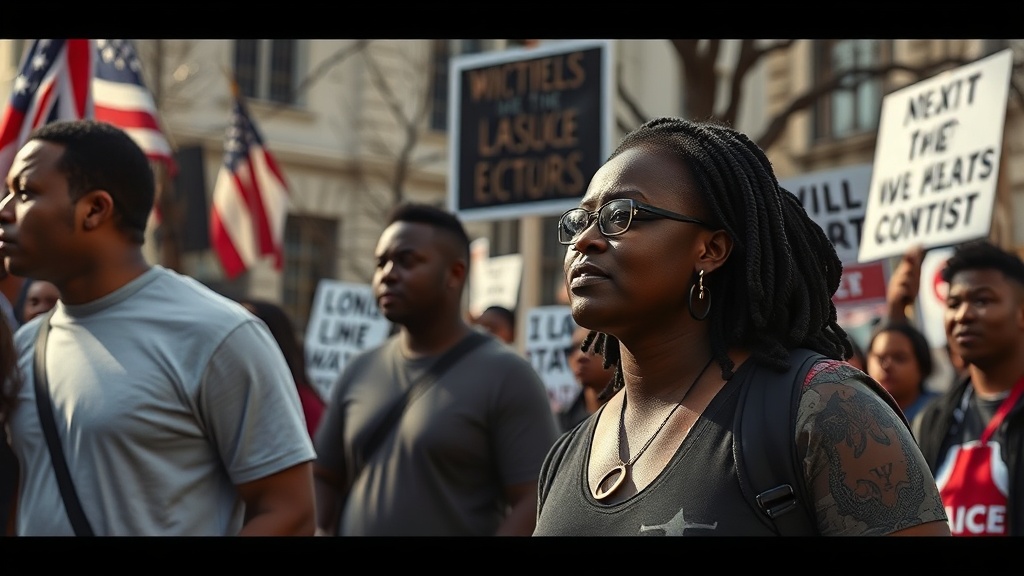
In a world increasingly defined by social media and rapid communication, the imagery associated with protests shapes public perception and discourse. The recent protests against Immigration and Customs Enforcement (ICE) have drawn attention to this phenomenon, raising questions about the effectiveness and consequences of contemporary protest tactics. Reflecting on the historical context of dissent, particularly during the Civil Rights Movement, offers valuable insights into how protests can be both powerful and constructive.
Growing up in the segregated Deep South of Atlanta during the early 1960s, I was surrounded by overt racism and discrimination. The societal norms of the time made it impossible to ignore the injustices faced by those who were different from the powerful majority. My journey towards understanding and combating these inequalities was significantly influenced by the Black educators who stood as beacons of hope and resilience. One such educator, Ms. Rubye Lucas, was my sixth-grade teacher. Despite the oppressive environment, she taught with grace and determination, helping me understand my learning disability and ultimately saving my academic life.
Television during that era was a communal activity, drawing families together as they watched the civil rights movement unfold. The stark contrast between images of anger and chaos on one side and disciplined, peaceful protests on the other left a lasting impression on my young mind. Leaders like Martin Luther King Jr. exemplified the power of dignity and hope in the fight for justice. His message was one of unity and moral clarity, advocating for peaceful resistance and the importance of maintaining composure in the face of adversity.
As I reflect on the protests of today, I can't help but notice a shift in the visual language of dissent. While King and his contemporaries showcased peaceful demonstrations, today’s protests often capture a different narrative—one filled with discord, destruction, and confrontations with law enforcement. This shift in imagery has significant implications for how protests are perceived and the effectiveness of their messages. High levels of public attention can sometimes overshadow the underlying issues being protested, reducing complex social matters to sensationalized clips of violence and chaos.
Historically, the Civil Rights Movement's effectiveness stemmed from its ability to convey a message of hope and change through disciplined action. Protesters embraced nonviolent resistance, often accepting arrest as a means of demonstrating their commitment to the cause. The media, in turn, captured these moments of moral authority, which helped to galvanize public support for civil rights reforms. In contrast, today’s protests frequently risk being overshadowed by images of unrest that may alienate potential supporters and detract from the core messages of justice and equity.
The George Floyd protests in 2020 highlighted this phenomenon, as the nation witnessed widespread unrest and confrontations between protesters and police. While the motivations behind these protests were rooted in legitimate grievances and calls for systemic change, the images that circulated on social media often focused more on chaos than on the powerful messages of justice and reform. This has created a challenging environment for activists who aim to draw attention to critical issues such as racial injustice and police brutality.
Despite this, the fundamental goals of today’s protesters remain valid and crucial. There is a pressing need for dialogue surrounding issues of race, immigration, and social justice. However, it is essential for contemporary movements to learn from the past, particularly the strategies employed by leaders like King. The art of persuasion and the maintenance of moral authority are vital components in fostering meaningful change. The legacy of the Civil Rights Movement teaches us that while passion is important, it must be coupled with discipline and grace.
As we move forward in a rapidly changing world, the visual language of dissent continues to evolve. In an age dominated by social media and instantaneous communication, the images we create and share have the power to shape public opinion and influence policy. It is crucial for activists to recognize this responsibility and strive for a representation of dissent that aligns with the values of hope, dignity, and peaceful resistance.
In conclusion, while the urgency of today's social justice movements is undeniable, the methods and images used to convey their messages can have profound effects on their success. By reflecting on the lessons of the past and the examples set by leaders of the Civil Rights Movement, today’s protesters can craft a more effective visual language of dissent—one that resonates with the public and fosters understanding rather than division. The call for justice should be met with calm and clarity, ensuring that the voices of the oppressed are heard and respected.
Ari Ioannides offers a conservative perspective on local politics. He can be reached at aristides.ioannides@gmail.com.