Supreme Court Allows California's New Congressional Map for Midterm Elections
The Supreme Court's ruling allows California's new congressional map to be used in midterms, impacting the political landscape significantly.
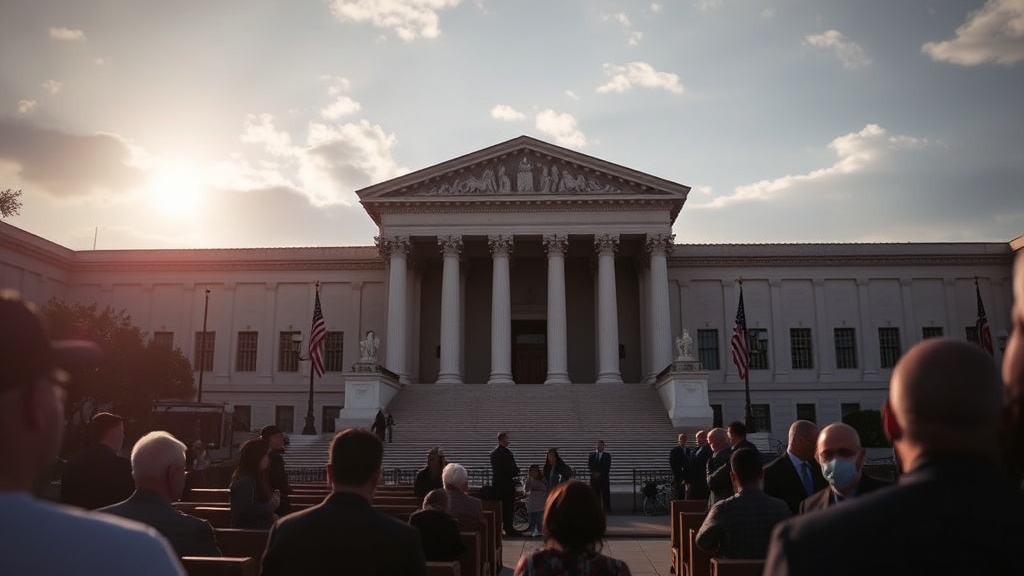
The United States Supreme Court issued a significant ruling on Wednesday, denying an emergency request from California Republicans to block the newly redistricted congressional map from being utilized in the upcoming midterm elections. This decision clears a pivotal legal hurdle, allowing the state to proceed with its new electoral boundaries as the legal challenges surrounding the map continue to unfold in lower courts.
The court’s refusal to intervene comes at a time when the stakes are incredibly high for both major political parties in California. The state’s congressional map was redrawn following the 2020 Census, a process that typically occurs every decade and plays a crucial role in determining the political landscape for the next ten years. California’s population growth, particularly among its diverse communities, necessitated the redistricting effort to reflect changes in demographics and to ensure fair representation.
Republicans in California argued that the new map was drawn in a manner that unfairly favored Democrats, potentially disenfranchising Republican voters. They filed their emergency request citing concerns that the new boundaries would dilute their electoral power and undermine their chances in competitive districts. However, the Supreme Court's decision indicates a reluctance to intervene in what they deemed a matter best left to lower courts, which will continue to examine the legitimacy of the redistricting process.
This ruling is particularly significant given the context of the upcoming midterm elections, scheduled for November 8, 2022. Political analysts are closely monitoring these developments, as California holds a substantial number of congressional seats — 52 in total — and any shifts in district boundaries could have sweeping implications for the balance of power in the U.S. House of Representatives.
In response to the Supreme Court's ruling, California Secretary of State Shirley Weber expressed relief, stating that the decision allows for a fair electoral process and upholds the integrity of California's democratic system. "We are committed to ensuring that every Californian's voice is heard in these elections," Weber said during a press conference following the ruling. "This decision reinforces our efforts to provide a fair and equitable representation for all of our communities."
However, the legal battle is far from over. California Republicans have indicated they will continue to pursue their case in the lower courts, hoping to challenge the newly drawn map based on claims of partisan gerrymandering and inadequate public input during the redistricting process. The outcome of these legal challenges could ultimately reshape the congressional landscape in California, depending on how the courts rule on the allegations.
Historically, redistricting has been a contentious issue across the United States, often leading to legal disputes as political parties vie for control over congressional seats. In California, the process is managed by an independent commission, a measure designed to reduce partisan influence in district drawing. This commission’s work was intended to produce a map that reflects the state's diverse population, including significant Latino, Asian, and African American communities.
As the midterm elections approach, voters in California will be watching closely. The newly drawn districts could influence not only who represents them in Congress but also the broader political dynamics at play nationally. With issues such as inflation, reproductive rights, and climate change dominating the political discourse, the effectiveness of candidates in these newly defined districts will be closely scrutinized.
Political experts predict that the outcome of the midterm elections in California could serve as a bellwether for national trends. As the Republican Party aims to regain control of the House of Representatives, capturing crucial seats in California could be pivotal to their strategy. Conversely, Democrats will be looking to leverage the advantages provided by the newly drawn map to expand their majority.
In conclusion, the Supreme Court's decision to deny the emergency request from California Republicans not only allows the new congressional map to take effect but also sets the stage for a contentious election season ahead. As both parties prepare for the midterm elections, the implications of this ruling will likely resonate far beyond California, affecting the national political landscape as voters head to the polls later this year.