Sundance 2026: A Deep Dive into 'In the Blink of an Eye' and Its Exploration of Time
The Sundance Film Festival panel explored Andrew Stanton's film 'In the Blink of an Eye,' discussing themes of time, humanity, and technology.
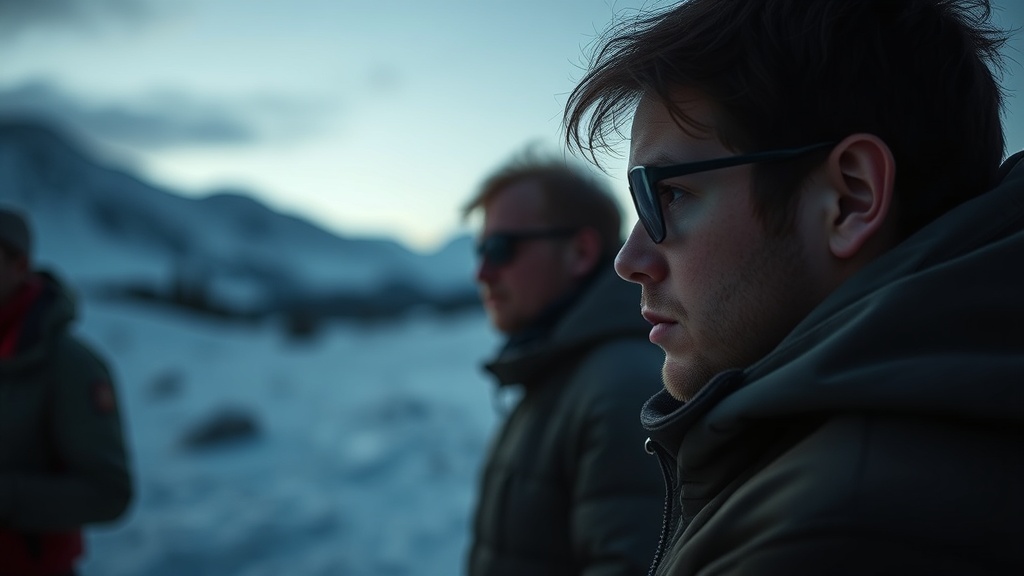
At the 2026 Sundance Film Festival, the panel titled "The Big Conversation: From Fire to Flight: Humans, Technology and Time" sparked an engaging dialogue around Andrew Stanton's latest film, "In the Blink of an Eye." The event, held at the Cinema Café in the Filmmaker Lodge, featured notable figures in both the film and scientific communities, igniting discussions on the intertwining themes of time, humanity, and technology present in the film. Stanton's film, which earned the prestigious Alfred P. Sloan Feature Film Prize, intricately weaves together narratives spanning three distinct timelines: prehistoric, contemporary, and 200 years in the future.
Stanton, an Academy Award-nominated filmmaker known for his work with Pixar, was joined on stage by Colby Day, the film's director and producer. "The film is a triptych, and it’s how we’re all connected," Stanton stated, referencing a famous quote by John Lennon: "Life’s what happens while you’re busy making other plans." He emphasized that the film explores how seemingly insignificant moments in life can collectively shape our experiences and connections over time.
Day elaborated on the film's central theme, which revolves around the concept of time itself. "It’s about what matters to us during the time that we have," he explained. He noted the universal feelings of anxiety regarding time slipping away or losing connections to both the past and future, themes that he believes serve as the connective tissue for the film's varied narratives. Having dedicated years to the project, Day expressed gratitude towards Stanton for successfully translating complex ideas about time into a compelling cinematic experience.
The panel was moderated by Dr. Heather Berlin, a neuroscientist and clinical psychologist at Mount Sinai Hospital, who facilitated a discussion that included two prominent scientists: Dr. Ariel Ekblaw, founder and CEO of the Aurelia Institute, and Dr. Denise Su, a paleoecologist at Arizona State University. Their participation added a scientific lens to the conversation, drawing connections between the film's narrative and real-world implications.
Ekblaw appreciated that "In the Blink of an Eye" diverged from typical dystopian narratives often associated with technology. "This film presents a rigorous, thoughtful, and tender depiction of what it takes for humanity to thrive as a space-faring species," she said, highlighting how the film encapsulates human vulnerabilities in the context of space exploration. Her insights underscored the film's optimistic approach, contrasting with the more common bleak portrayals found in science fiction.
Dr. Su, who specializes in the environments of early human ancestors, shared her admiration for the film's portrayal of prehistoric life, particularly the representation of Neanderthals. She pointed out the historical misconceptions that have painted Neanderthals as brutish and unintelligent, stemming from flawed interpretations of skeletal remains. "Over the past 100 years, we have found out more and more about Neanderthals and realized they were this incredibly intelligent species," she remarked, emphasizing the importance of recognizing our shared ancestry and the complexities of human evolution.
Casting the Neanderthal characters presented challenges for Stanton, who expressed frustration at the stereotypical portrayals he encountered during the casting process. He recalled how many auditions featured exaggerated and unrealistic representations of Neanderthals. The breakthrough came when actor Jorge Vargas auditioned, impressing the team with his physicality and authenticity, embodying the ruggedness of early humans.
The film also tackles the psychological implications of long-term space travel, an aspect that resonated with Ekblaw's work in space architecture. She explained that NASA conducts extensive research on the psychological challenges faced during prolonged missions, which include the dynamics of social interactions among crew members. "There are limiting factors in long-duration space travel — not just with life support, but psychology of isolation," she said, indicating that understanding human psychology is crucial for future missions.
The discussion was enriched by Doron Weber, the vice president and program director of the Alfred P. Sloan Foundation, who opened the panel with remarks about the foundation's commitment to promoting scientific understanding through artistic projects. Weber highlighted the foundation's long-standing relationship with the Sundance Institute, which fosters dialogue between science and the arts. Recent projects supported by the foundation include high-profile films and plays that tackle contemporary scientific issues.
As the panel concluded, Stanton humorously remarked on the missed opportunity of not collaborating with the scientists earlier in the filmmaking process, indicating that the insights shared during the discussion could have further enhanced the film. The event not only celebrated the artistic achievements of "In the Blink of an Eye" but also emphasized the importance of interdisciplinary collaboration in addressing the profound questions of humanity's past, present, and future.
For those interested in viewing "In the Blink of an Eye," in-person screenings are scheduled: January 31 at The Ray Theatre in Park City and February 1 at Broadway Centre Cinemas in Salt Lake City. Tickets and further information can be found on the Sundance Festival website.