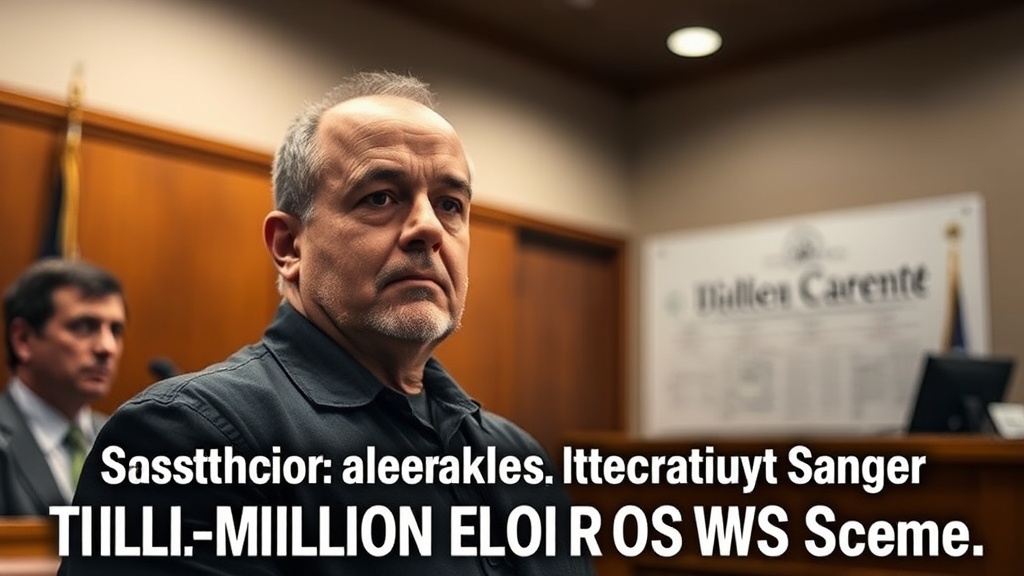
Southern Utah Man Sentenced to Prison for $2.9 Million Investment Fraud
Thomas J. Smith was sentenced to 10 years in prison for defrauding investors of $2.9 million, highlighting the risks of investment scams.

A Southern Utah man has been sentenced to federal prison after being convicted of defrauding investors out of over $2.9 million in a sophisticated investment scheme. This conviction highlights the ongoing issues of fraud in investment practices and serves as a warning to potential investors to conduct thorough due diligence before investing their hard-earned money.
The defendant, 47-year-old Thomas J. Smith of St. George, was sentenced on Tuesday by U.S. District Judge David Nuffer to 10 years in federal prison. Smith was also ordered to pay restitution in the amount of $2,964,000 to the victims, many of whom were individuals seeking to secure their financial futures through what they believed were legitimate investment opportunities.
Smith's fraudulent activities spanned several years, during which he misled investors into believing they were participating in a profitable venture involving the purchase and sale of real estate. According to court documents, Smith claimed to have extensive experience in real estate investment and promised high returns on investments. However, investigations revealed that he had no legitimate business operations and was instead using new investor funds to pay returns to earlier investors, a classic Ponzi scheme structure.
The investigation into Smith's activities began when several investors reported irregularities in their investment returns. The U.S. Securities and Exchange Commission (SEC) became involved, leading to a thorough investigation that uncovered a trail of deceit. "Investors trusted Smith, and he violated that trust by engaging in deceptive practices that ultimately resulted in significant financial loss for many families," said SEC spokesperson Emily Johnson.
During the court proceedings, it was revealed that Smith had used investor funds for personal expenses, including luxury vacations, high-end cars, and other non-investment-related expenditures. Prosecutors painted a picture of a man who lived lavishly while his investors faced financial ruin. "It is a tragedy when someone takes advantage of the trust of others for personal gain, and we will continue to hold such individuals accountable," said U.S. Attorney Andrea T. Martinez.
In addition to his prison sentence, Smith faces civil penalties from the SEC, which has been actively pursuing cases of fraud in investment practices across the nation. The SEC has stated that it is committed to protecting investors and ensuring that those who engage in fraudulent activities are brought to justice.
Victims of Smith's scheme expressed their disappointment and anger during the sentencing hearing. Many shared stories of how they had invested their life savings, hoping to secure a better future for themselves and their families. One victim, who wished to remain anonymous, stated, "I trusted him completely. I thought I was making a smart investment, and now I don’t know how I will recover from this loss."
Smith's sentencing serves as a stark reminder of the risks associated with investing, particularly in unregulated or poorly understood ventures. Financial experts warn that potential investors should always conduct thorough research, seek independent financial advice, and be cautious of promises of guaranteed returns. "If it sounds too good to be true, it probably is," advised financial analyst Rebecca Liu.
The case has raised broader concerns about investment scams, particularly in areas with a high population of retirees and individuals looking for alternative investment strategies. Experts suggest that education around investment risks should be a priority, especially for those who may be more susceptible to scams due to lack of knowledge or experience in investing.
As Smith begins his prison sentence, the impact of his actions will continue to resonate within the community. Many victims are left grappling with significant financial losses, while others are left questioning whom they can trust in the world of investments. The case serves as a cautionary tale about the importance of vigilance and skepticism in the investment landscape.
In conclusion, Thomas J. Smith's conviction and sentencing underscore the critical need for transparency and honesty in financial dealings. Investors must remain vigilant and informed to protect themselves against fraud, and authorities will continue to pursue and penalize those who exploit the trust of others for personal gain. The hope is that through education and awareness, the occurrence of such fraudulent schemes can be significantly reduced in the future.