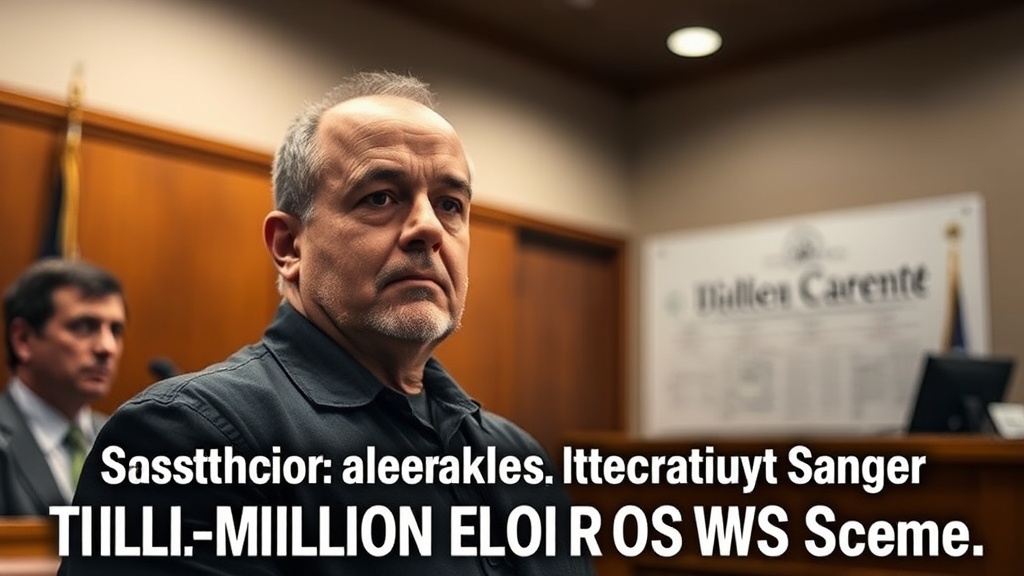
Syracuse Man Sentenced for Operating Child Exploitation File-Sharing Network
A Syracuse man has been sentenced to 15 years in prison for operating a CSAM file-sharing program, highlighting ongoing child exploitation issues.

In a significant legal ruling, a Syracuse man has been sentenced to 15 years in federal prison for his role in operating a file-sharing program that facilitated the distribution of child sexual abuse material (CSAM). This disturbing case sheds light on the pervasive issue of online child exploitation and the ongoing efforts by law enforcement to combat it. The sentence was handed down in a federal court, emphasizing the severity of crimes related to child exploitation and the legal system's commitment to protecting vulnerable populations.
The defendant, 34-year-old Jason T. Anderson, was arrested in a federal sting operation that uncovered his involvement in a network that allowed users to share and download CSAM. According to court documents, Anderson operated the file-sharing program from his residence in Syracuse, where he allegedly amassed a vast collection of illicit materials. Investigators noted that the program was not only a platform for sharing such materials but also a facilitator for the exchange of information among users about other methods of obtaining and distributing CSAM.
During the sentencing hearing, U.S. District Judge Janet C. Hall described the gravity of Anderson's actions. "The exploitation of children is one of the most heinous crimes we face in our society today," Judge Hall stated. "The defendant's actions have far-reaching consequences, impacting not only the victims but also the community at large."
Anderson's arrest followed a months-long investigation by the Federal Bureau of Investigation (FBI) and local law enforcement agencies. Authorities traced the online activity back to Anderson's home, where they discovered numerous electronic devices containing thousands of images and videos depicting child sexual abuse. In total, investigators recovered a staggering 15 terabytes of data related to CSAM.
The investigation revealed that Anderson was not only a consumer of this material but also an active participant in its distribution. Prosecutors revealed that he had been using a peer-to-peer file-sharing network, which allowed him to connect with other users who shared similar interests in CSAM. This network made it easier for individuals to access and share child exploitation materials, raising serious concerns about the accessibility of such content on the internet.
In addition to his prison sentence, Anderson is required to register as a sex offender upon his release. The court also mandated that he undergo mental health treatment, recognizing the underlying issues associated with his criminal behavior. Such measures are part of a broader approach to ensure that offenders receive the necessary support while also protecting society from potential recidivism.
The case has sparked discussions about the effectiveness of current laws and enforcement strategies in combating child exploitation online. Advocates for child protection argue that more robust measures need to be implemented to prevent such crimes from occurring in the first place. "While we are grateful for the efforts of law enforcement in bringing this individual to justice, we must also recognize the systemic issues that allow these types of networks to flourish," said Sarah Johnson, a spokesperson for the National Center for Missing and Exploited Children. "We need to prioritize education, prevention, and legislative action to address this crisis."
The impact of Anderson's actions extends beyond the immediate legal consequences. The proliferation of CSAM is a growing concern for child welfare organizations, law enforcement agencies, and communities across the nation. Each case represents not only the violation of individual children but also the broader societal implications of failing to protect the most vulnerable members of our population.
As Anderson begins his prison sentence, experts warn that his case is just one of many in a troubling trend. The internet's anonymity can embolden individuals to engage in heinous behaviors without fear of immediate repercussions. Consequently, it is crucial for lawmakers and tech companies to collaborate in developing innovative solutions to combat online child exploitation.
Moving forward, the case serves as a reminder of the ongoing battle against child sexual exploitation and the importance of vigilance in safeguarding children from predators. Community members are encouraged to report suspicious online activity and to educate themselves about the signs of child exploitation. Together, through awareness and action, it is possible to create a safer environment for children in our digital age.
As authorities continue their work to dismantle child exploitation networks, the case of Jason T. Anderson underscores the urgent need for collective action against such crimes. By holding offenders accountable and implementing preventative measures, society can strive to protect children from the dangers of exploitation in an increasingly interconnected world.