Sen. Tim Scott Criticizes Trump for Sharing Racist Obama Video Clip
Senator Tim Scott condemns President Trump for sharing a racist video of the Obamas, calling it 'the most racist thing' from the administration.
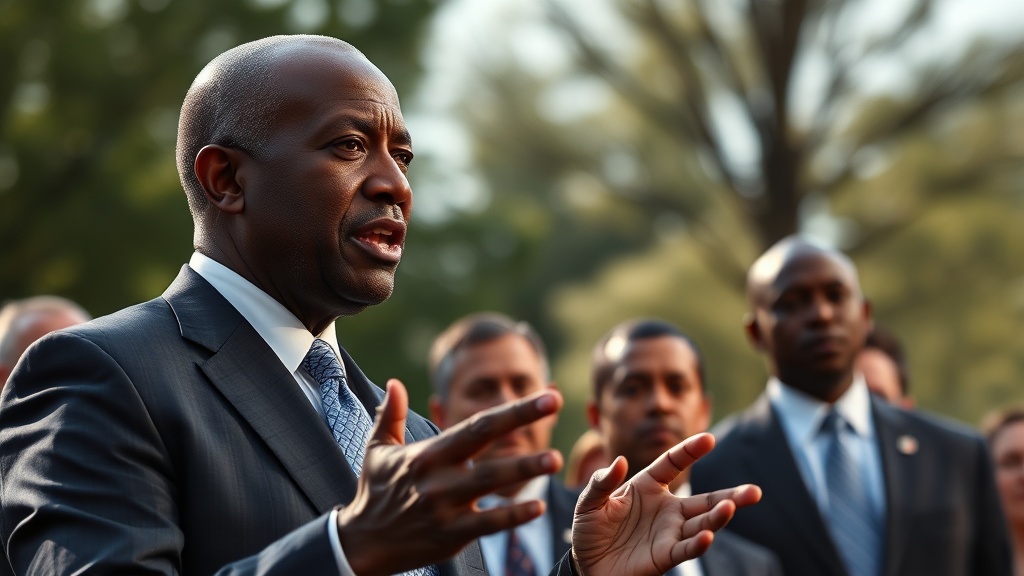
In a sharp rebuke of President Donald Trump's social media activities, Senator Tim Scott, the only Black Republican senator, expressed his outrage over a video clip that had been shared by the president. The clip, which was subsequently deleted, depicted former President Barack Obama and former First Lady Michelle Obama in a derogatory manner, likening them to apes. Scott remarked that the post represented 'the most racist thing' he has witnessed from the current administration.
The incident unfolded on Friday when Trump shared the video clip on his Twitter account. Although it was later removed, the damage had already been done. The clip's content, which is widely regarded as overtly racist, sparked immediate backlash from various communities, political analysts, and public figures across the nation. Scott, who has often found himself navigating the complex racial dynamics within the Republican Party, did not hold back in his condemnation of Trump’s actions.
In a statement to the press, Scott emphasized the gravity of the situation. 'As a nation, we should be better than this,' he said, underscoring the responsibility of leaders to foster unity rather than division. Scott's remarks are notable, given his position in a party that has been criticized for allowing racist rhetoric to proliferate without sufficient pushback from its leadership.
Scott’s comments come at a time of heightened sensitivity regarding racial issues in America. The Black Lives Matter movement and various protests calling for racial justice have brought issues of systemic racism to the forefront of national conversation. In this context, Trump's decision to share such a video has been interpreted by many as a blatant disregard for these ongoing conversations.
Political analysts have pointed out that Trump's use of social media has often been a double-edged sword. While it allows him to communicate directly with his base, it also opens the door for controversy that can alienate moderate voters and further polarize the electorate. The incident is particularly troubling for the Republican Party, which has been working to appeal to a more diverse demographic, especially in the wake of the 2020 election.
Numerous public figures, both within and outside the Republican Party, have voiced their disapproval of Trump's actions. Former Republican National Committee Chair Michael Steele, who is also Black, stated, 'This is not just a reflection of Trump; it is a reflection of the party as a whole and the message we are sending to the American people.' Steele's comments highlight the ongoing struggle within the GOP to address issues of race and representation.
Furthermore, organizations that advocate for civil rights have condemned the president's actions. The NAACP released a statement calling for accountability, asserting, 'Racist imagery has no place in our discourse, especially from the highest office in the land.' The statement reflects a broader sentiment that political leaders must be held responsible for their words and actions, particularly when they contribute to a culture of racism.
Scott’s condemnation of Trump is not without its complexities. While he has criticized the president in this instance, he has historically aligned with many of Trump’s policies and has often been seen as a key ally. This duality puts Scott in a unique position as he navigates his role as a Black leader within a predominantly white party that has faced accusations of fostering racial insensitivity.
The implications of this incident extend beyond just the immediate fallout on social media. It raises questions about the future of racial discourse in America and the role of political leaders in shaping that narrative. Many are now looking to the Republican Party to see how it will respond to this incident and whether it will take concrete steps to address issues of race and representation moving forward.
As the political landscape continues to evolve, Scott's remarks may signify a turning point for the GOP, especially as it seeks to redefine its image and outreach strategies in an increasingly diverse America. The party's ability to confront and address issues of racism will likely play a critical role in its political viability in future elections.
In conclusion, the shared video depicting the Obamas in a derogatory manner is not just a momentary lapse in judgment from the president; it reflects deeper societal issues and the ongoing struggle for racial equality in the United States. Scott's strong reaction highlights the need for accountability and a commitment to fostering a more inclusive and respectful political environment. As conversations about race continue, the responsibility falls on leaders from all backgrounds to engage thoughtfully and constructively in these critical discussions.