Salt Lake City Business Faces Backlash After Supporting Anti-ICE Protest
A Salt Lake City business's support for an anti-ICE protest sparked backlash and a wave of positive reviews from customers rallying in defense.
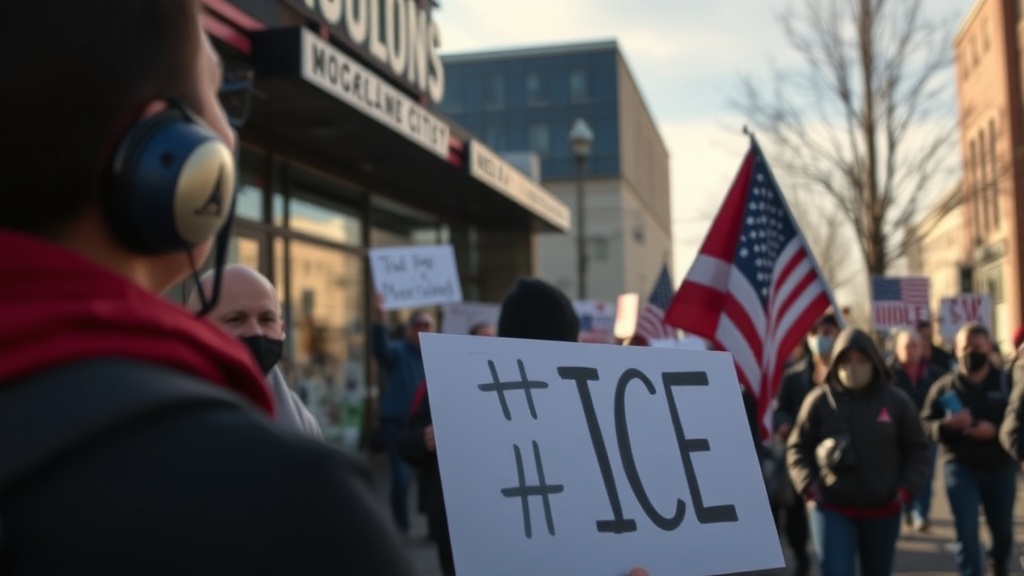
In Salt Lake City, a local business became the center of a heated discussion following its public support for an anti-Immigration and Customs Enforcement (ICE) protest that took place in its neighborhood. The events unfolded in three distinct phases: the business’s initial endorsement of the protest, the subsequent backlash manifested through negative online reviews, and finally, a supportive wave of five-star reviews from customers who rallied to the business’s defense.
The protest, organized by local activist groups, focused on advocating for immigrant rights and calling for the abolition of ICE, which many activists believe disproportionately targets vulnerable communities. The participating groups assembled outside the Salt Lake City ICE office, holding signs and chanting slogans aimed at raising awareness about immigrant issues. In a show of solidarity, the local business, known for its community engagement and progressive values, displayed a sign supporting the protesters in its window. This gesture was seen as a reflection of the business’s commitment to social justice and community empowerment.
However, the support came at a cost. The business quickly found itself at the center of a backlash, especially from online users who disagreed with its stance. Negative reviews flooded in on social media platforms and review sites, with some users expressing their discontent by vowing to never patronize the establishment again. One reviewer stated, “I can’t believe a business would support such a radical movement. I will never spend my money here again.” The negative reviews ranged from personal attacks to calls for boycott, highlighting the polarized views on immigration and law enforcement in the current political climate.
Despite the backlash, the business’s management stood firm in its support for the protestors. In a statement released to the press, the owners explained their decision to support the demonstration, emphasizing their belief in standing up for marginalized communities. “We believe that every person deserves dignity and respect, regardless of their immigration status. Our support for the protest is a reflection of our values as a business and as members of this community,” the statement read.
As the negative reviews continued to pour in, a surprising and heartwarming response emerged from the community. In an unexpected twist, loyal customers and supporters of the business began to flood its online profiles with positive reviews, praising not only the quality of the products and services but also the company’s commitment to social justice. Hundreds of five-star reviews were submitted in a matter of days, with customers sharing their personal experiences and expressing their gratitude for the business’s stance. One supporter wrote, “It’s refreshing to see a business that stands up for what is right. I’ll be here every week to support them!”
The influx of supportive reviews highlighted a growing trend among consumers who prefer to engage with businesses that align with their values. Social media platforms became a battleground for these opposing views, with some users initiating campaigns to boost the business's ratings in response to the negative comments. This online activism showcased a shift in consumer behavior, where individuals are actively seeking to support businesses that take a stand on social and political issues.
Experts in public relations and social media noted that the situation exemplifies the complexities of modern consumer relationships. “In today’s digital landscape, businesses are not just selling products; they are also selling their values. Consumers are increasingly looking to align their spending with their beliefs,” said Dr. Lisa Greene, a marketing expert at the University of Utah. “This incident highlights how quickly public opinion can shift and how important it is for businesses to remain authentic and transparent.”
As the dust settles from this incident, the local business remains committed to its mission and values. The owners have expressed gratitude for the overwhelming support from their loyal customers and the community at large. They have also initiated plans to further engage with the community on issues relating to social justice and immigrant rights, aiming to turn this challenging experience into an opportunity for growth and dialogue.
In conclusion, the unfolding situation surrounding the Salt Lake City business serves as a compelling case study in the intersection of commerce and social activism. It reflects the growing trend of consumer engagement in political and social issues, challenging businesses to navigate the complexities of customer expectations while standing firm in their principles. As discussions around immigration and community rights continue to resonate across the nation, this incident may serve as a microcosm of broader societal shifts, emphasizing the importance of advocacy and support within local communities.