Republican Dave Robinson Announces Candidacy for Utah's New Congressional District
Republican Dave Robinson has announced his candidacy for Utah's newly redrawn 1st Congressional District, aiming to engage voters in a shifting landscape.
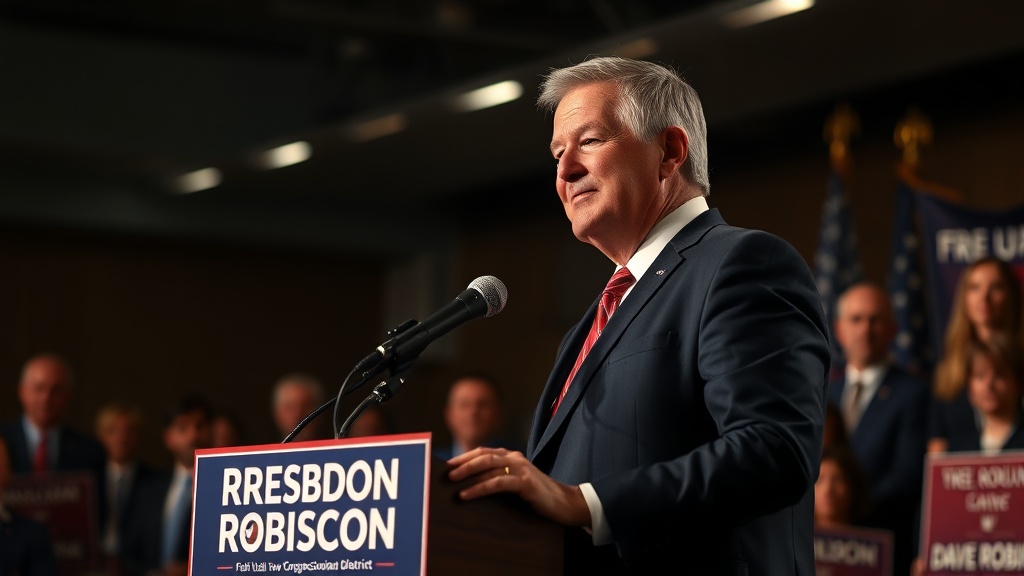
In a significant development for Utah's political landscape, Republican Dave Robinson officially announced his candidacy for the newly redrawn 1st Congressional District on Thursday. This district, which has shifted towards a more blue-leaning demographic due to recent redistricting efforts, is poised to be highly competitive in the upcoming election cycle.
Robinson, a seasoned political figure with deep roots in Utah, made his announcement at a press conference held at a local community center in Ogden. "I am excited to engage with the residents of this district and hear their concerns," Robinson stated during his speech. He emphasized his commitment to conservative values and pledged to advocate for policies that promote economic growth, lower taxes, and robust national security.
The 1st Congressional District, which encompasses parts of Weber, Davis, and Box Elder counties, has seen a demographic shift in recent years, with an influx of younger voters and an increase in urban populations. This transformation has made the district more competitive for Democratic candidates, prompting Republican strategists to pay close attention to the upcoming race. Robinson's entry into the race indicates a strategic effort by the GOP to maintain its foothold in a district that could easily tilt toward Democratic representation.
Robinson previously served as a member of the Utah State Board of Education and has been an active participant in local politics. His background in education and community service may resonate with voters who prioritize educational reform and local engagement. "I believe education is the foundation of our society, and I will work tirelessly to ensure that our schools are adequately funded and our children receive the quality education they deserve," he said, highlighting one of his key campaign issues.
The political climate in Utah has been shifting, with an increasing number of voters expressing dissatisfaction with traditional party lines. In the 2020 election, President Joe Biden made significant inroads in parts of Utah, suggesting a potential opening for Democratic candidates in future elections. This trend has not gone unnoticed by local Republican leaders, who recognize the importance of appealing to a broader electorate.
In an interview following his announcement, Robinson acknowledged the challenges posed by the changing demographics of the district. "I understand that the electorate is evolving, and I am committed to listening to all voices, whether they align with my views or not," he remarked. This approach may be crucial in a district where independents and moderate Democrats could play a pivotal role in determining the outcome of the election.
Robinson’s campaign will likely face challenges from other Republican contenders and potentially a strong Democratic challenger. The Democratic Party is expected to capitalize on the district's demographic changes, and names of potential candidates are already circulating in political circles. Local Democratic leaders have expressed optimism about their chances in the new district, emphasizing issues like healthcare, environmental sustainability, and economic equality as central to their platform.
In addition to his focus on education, Robinson has pledged to address issues such as job creation, healthcare access, and infrastructure improvements. His campaign will aim to connect with voters on a personal level, emphasizing his local roots and understanding of the community's needs. "I want to be a voice for the people, not just a politician," he stated, highlighting his commitment to grassroots engagement.
As the race heats up, political analysts will be closely monitoring the dynamics within the district. Robinson’s ability to galvanize support from both traditional Republicans and disaffected moderates could prove vital to his campaign. Furthermore, the role of outside spending and national party interests will likely influence the electoral landscape as both parties ramp up their efforts in anticipation of the 2024 elections.
Looking ahead, Robinson's campaign strategy will need to adapt to the evolving political environment. Engaging with community members through town hall meetings, forums, and social media will be essential in building a strong grassroots network. As voters increasingly seek accountability and transparency from their representatives, Robinson's ability to connect with constituents will be put to the test.
In conclusion, Dave Robinson's entry into the race for Utah's newly redrawn 1st Congressional District marks a pivotal moment in the state's political narrative. With changing demographics and a competitive landscape, both Robinson and his opponents will need to navigate a complex electoral environment. As the campaign unfolds, key issues will come to the forefront, shaping the future of representation in this vital district. The 2024 election cycle is set to be one of the most consequential in Utah’s political history, with implications that may resonate beyond state lines.