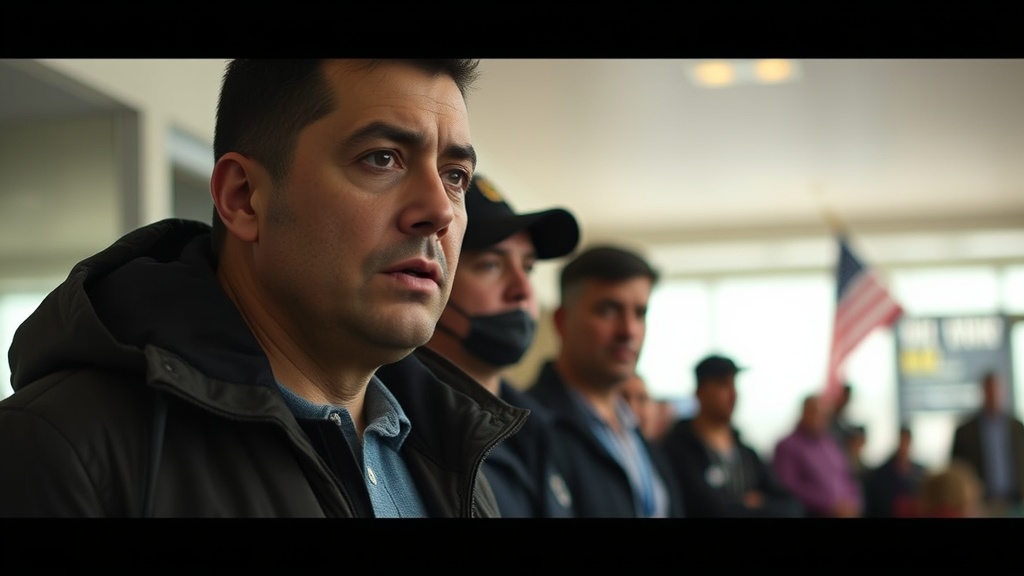
Reporter Arrested While Covering Minnesota Unrest Raises Concerns Over Press Freedom
A reporter's arrest while covering unrest in Minnesota raises serious concerns about press freedom and the rights of journalists on the ground.
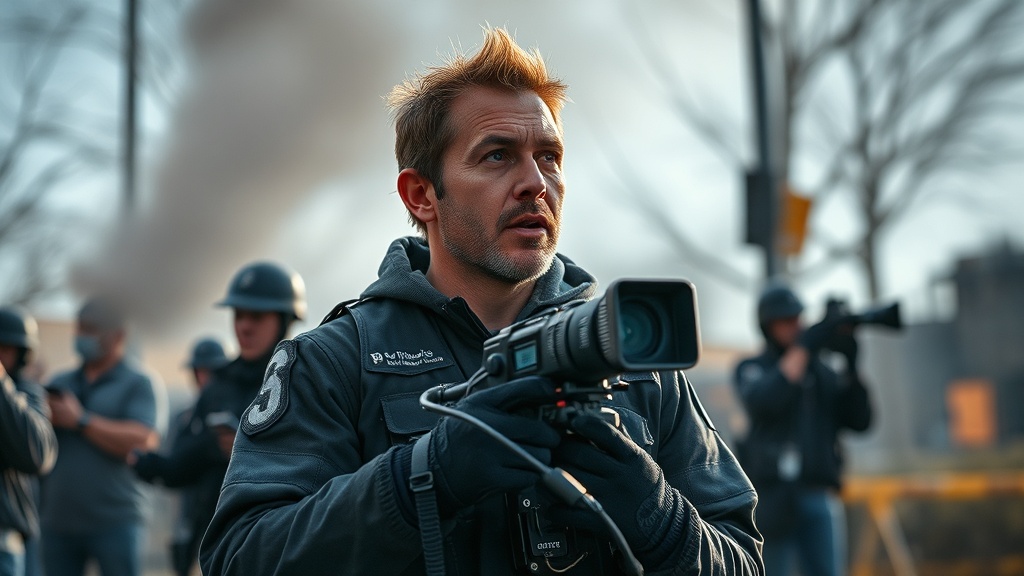
On January 18, a Sunday morning marked by tension and unrest in Minnesota, a journalist found themselves at the center of a controversial incident that has sparked discussions about press freedom and the rights of reporters in the field. The reporter, who has been diligently covering the aftermath of the fatal shooting of Renee Good, was arrested while performing their duties, raising urgent questions about the safety of journalists in volatile situations.
The unrest in Minnesota began following the tragic death of 28-year-old Renee Good, who was shot by police during an altercation that has been described as both chaotic and tragic. Good's death ignited protests across the state, with demonstrators taking to the streets to demand accountability and transparency from law enforcement agencies. As tensions escalated, local media outlets sent reporters to cover the unfolding events, hoping to provide accurate and timely information to the public.
The reporter in question had been on the ground for 11 consecutive days, enduring grueling shifts that often lasted between 14 to 16 hours. Exhaustion was palpable as they balanced the demands of reporting with the need to stay safe amidst a charged atmosphere. Witnesses described the scene as increasingly volatile, with protests morphing into clashes between law enforcement and demonstrators. Many journalists were present, documenting the events and ensuring that the voice of the community was heard.
On that fateful Sunday, as the reporter was conducting interviews and gathering information, they were approached by law enforcement officers. Details surrounding the arrest remain murky, but according to eyewitness accounts, the reporter identified themselves and explained their role in covering the protests. Despite this, they were taken into custody, an action that has drawn condemnation from various media organizations and press freedom advocates.
“We are deeply concerned about the implications of this arrest,” said a spokesperson for the Minnesota Association of Journalists. “Journalists play a critical role in our democracy, especially in times of unrest. When reporters are arrested while simply doing their jobs, it sets a dangerous precedent for press freedom.” This sentiment was echoed by many who took to social media to voice their concerns, emphasizing the importance of protecting journalists on the front lines.
The arrest raises significant legal questions regarding the rights of journalists during protests and the extent to which law enforcement can intervene. Legal experts have pointed out that the First Amendment of the U.S. Constitution guarantees freedom of the press, which should protect journalists from being detained while covering newsworthy events. However, the reality on the ground often complicates these legal protections, especially in high-stress scenarios where tensions are high.
In the aftermath of the arrest, local news organizations have come together to call for transparency from law enforcement about the circumstances surrounding the incident. They are demanding a clear explanation of why the reporter was detained and what measures will be taken to ensure the safety of journalists in the future. The Minnesota chapter of the American Civil Liberties Union (ACLU) has also weighed in, stating that such actions can lead to a chilling effect on the media's ability to report freely.
As the situation continues to unfold, the community is left grappling with the implications of this event. The protests in Minnesota have not only highlighted issues of police accountability but have also brought to light the vital role journalists play in documenting these events. Their work is essential in holding power to account and ensuring that stories are told from all angles.
In the coming days, it is expected that there will be further discussions about the rights of journalists, particularly in scenarios where law enforcement is involved. Advocates for press freedom are pushing for clearer guidelines that protect reporters in the field, emphasizing that the ability to report without fear of arrest is foundational to a healthy democracy.
As the reporter awaits further developments regarding their case, the broader implications of this incident continue to resonate throughout the media landscape. It serves as a stark reminder of the challenges journalists face in their pursuit of truth and accountability, particularly in an era where the relationship between law enforcement and the press is increasingly scrutinized. The hope is that this incident will lead to meaningful conversations about the protection of journalists, ensuring that they can continue to serve as the watchdogs of democracy without fear of retribution.
In conclusion, the arrest of a reporter during the Minnesota unrest is not just an isolated incident but a significant event that raises fundamental questions about press freedom, the role of journalists in society, and the need for ongoing dialogue between law enforcement and the media. As the community continues to seek justice for Renee Good, the fight for the rights of journalists remains equally critical, serving as a reminder that the pursuit of truth must always be protected and valued in a democratic society.