Celebration and Controversy Surrounds Hanuman Statue Dedication in Texas
The unveiling of a Hanuman statue in Sugar Land highlights cultural pride and challenges of acceptance in modern America.
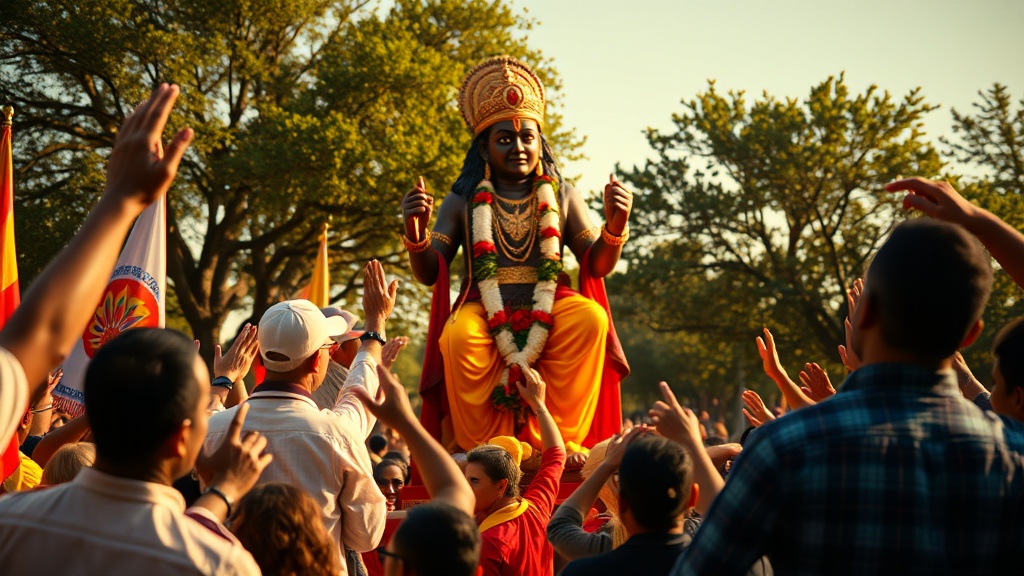
SUGAR LAND, TEXAS — A significant milestone was marked recently at the Hindu temple in Sugar Land, Texas, as a statue of Hanuman, a revered deity in Hinduism, was unveiled in a ceremony that drew a diverse crowd of supporters and observers. This event, the culmination of over 25 years of dedication and fundraising efforts by community members, particularly by retired physician Srinivasachary Tamirisa, served not only as a celebration of cultural heritage but also sparked conversations about the changing dynamics of community inclusivity and acceptance in the United States.
The statue stands tall at the entrance of the Sri Satyanaarayana Temple, which Tamirisa helped establish in the late 1990s. The temple has served as a cultural hub for the local Hindu community, providing a space for worship, education, and community service. The journey to erect the Hanuman statue began as a dream for Tamirisa, who expressed his vision of creating a symbol of strength and devotion that could inspire generations to come. "Hanuman represents resilience and loyalty. I wanted this statue to remind us of our roots and to inspire future generations to embrace their identity," Tamirisa shared during the unveiling.
The dedication ceremony attracted not only members of the Hindu community but also local officials, interfaith leaders, and curious onlookers. The event featured traditional music and dance performances, as well as speeches that emphasized the importance of cultural diversity in the fabric of American society. Local dignitaries praised the contributions of the Hindu community to the broader Sugar Land area, which has seen a significant increase in its multicultural population over the past two decades.
However, the unveiling of the Hanuman statue was not without its challenges. In recent years, there has been a growing trend of anti-Indian sentiment in various parts of the United States. This has raised concerns among community leaders and activists who fear that incidents of discrimination and intolerance might overshadow the positive contributions of immigrant communities. "While we celebrate this achievement, we must also remain vigilant against the rising tide of divisiveness that threatens our communities," said Anjali Patel, a local activist.
Patel’s words resonate deeply within the current sociopolitical climate, where discussions about race, identity, and inclusion are more pertinent than ever. Many community members expressed their hopes that the statue would serve as a unifying symbol, encouraging dialogue and understanding among different cultural groups. "We all share this land. It is essential to build bridges between our cultures rather than walls," said Rajesh Kumar, a temple member.
In the months leading up to the statue’s unveiling, the temple committee faced opposition from a small group of local residents who voiced concerns about the appropriateness of a Hindu deity being placed in a public space. These sentiments, however, were countered by a larger contingent of supporters who believe in the importance of showcasing diverse cultural expressions in public domains. "This is a space for everyone, and every culture should have the right to be represented," stated Priya Singh, a local teacher and temple supporter.
The significance of the Hanuman statue extends beyond its physical presence; it represents a broader narrative of acceptance and integration of diverse cultures within American society. As communities grow increasingly diverse, the need for mutual respect and acknowledgment of different traditions becomes ever more critical. The temple’s initiative to include educational programs about Hindu culture and religious practices aims to foster understanding and acceptance among non-Hindu neighbors.
In addition to the statue's unveiling, the temple plans to host various cultural events to engage the wider community, promoting interfaith dialogues and cultural exchange. These initiatives are designed to combat stereotypes and misconceptions about Hinduism, providing a platform for education and interaction. "We want to share our traditions and values with everyone, and we hope that through these efforts, we can create a more harmonious community," said Tamirisa.
As the statue of Hanuman stands proudly at the temple grounds, it is a reminder of the journey taken by many immigrants in pursuit of their dreams and the importance of preserving cultural heritage. While challenges remain, the commitment of individuals like Tamirisa and the support of the wider community signal a hopeful path forward. The Hanuman statue not only marks a personal achievement for Tamirisa and his supporters but also serves as a beacon of resilience and unity in an increasingly complex societal landscape.
The unveiling of the statue of Hanuman represents a significant cultural milestone for the Hindu community in Sugar Land, encapsulating both pride in heritage and the ongoing struggle for acceptance in a diverse America. As the community moves forward, the hope is that this statue will inspire dialogue and foster a more inclusive environment for all cultural expressions.