Paloma Schneideman's 'Big Girls Don’t Cry' Celebrates Queer Coming-of-Age Cinema
Paloma Schneideman's 'Big Girls Don’t Cry' explores adolescence in rural New Zealand, showcasing a unique queer coming-of-age story.
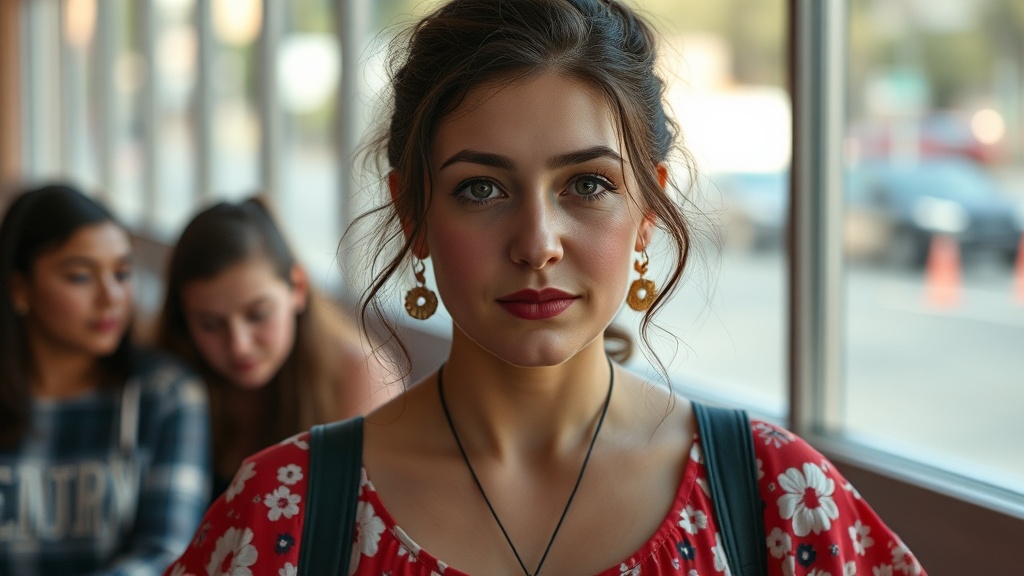
At the Sundance Film Festival, the debut feature 'Big Girls Don’t Cry' directed by Paloma Schneideman has garnered attention as a heartfelt tribute to the coming-of-age genre. Set against the backdrop of rural New Zealand in 2006, the film explores the complexities of adolescence through the eyes of its protagonist, Syd, played by first-time actor Ani Palmer. As the film premiered, it became clear that Schneideman's personal experiences with indie film and her journey of self-discovery significantly shaped this poignant narrative.
In a post-screening Q&A session, Schneideman opened up about her upbringing in a small New Zealand town where conversations about identity and sexuality were largely absent. "Films have always helped me to understand myself way more than, growing up in rural New Zealand, my community could, because we just weren’t having those kinds of conversations," she shared. Her journey into independent cinema began when her town began gentrifying, bringing with it an art house cinema that screened 'Little Miss Sunshine,' a film that profoundly impacted her perspective. "My mind was just blown that there was so much more out there for me, that there was a world beyond the hills," she recalled, emphasizing the liberating power of cinema in fostering dialogue and healing.
'Big Girls Don’t Cry' follows Syd, a young teen navigating the tumultuous waters of adolescence, who finds herself drawn to the older, cooler girls in her life, particularly her sister's American friend, Freya—portrayed by Rain Spencer. The film captures the essence of a pivotal summer in Syd’s life as she embarks on a journey of self-discovery marked by daring experiments and challenging experiences. From attending her first party to exploring her sexuality, Syd's summer is filled with reckless abandon and moments of realization, all while she grapples with her emerging identity.
The choice of setting the film in 2006 is particularly significant to Schneideman. "The mid-2000s were a big time for us in New Zealand," she explained, reminiscing about the cultural shifts and the impact of media on identity formation. She noted that the arrival of MTV and the prevalence of platforms like Myspace shaped her understanding of sexuality and self-image. "It felt like a really fitting backdrop for a coming-of-age story because it wasn’t just this young woman on the edge of discovering her sexuality and her identity, but it was like the nation was coming of age as well," she stated. This dual narrative of personal and national growth adds a rich layer to the film's themes.
Casting was a crucial element in bringing the film to life. Schneideman revealed that finding the right actor to embody Syd was a significant challenge. "I got sent through a wave of maybe 100 audition tapes," she said, emphasizing her unconventional approach to casting. Rather than following typical casting conventions, she decided to focus on actors whose appearances didn’t align with her mental image of the character. This led her to Ani Palmer's audition tape, which she described as a moment of serendipity. "It was just one of those divine moments," she remarked, impressed by Palmer's ability to convey depth and authenticity.
For Palmer, the collaborative nature of the production was invaluable. She highlighted the time spent in rehearsals where the cast engaged in discussions about their lives, fostering a deeper understanding of their characters and building chemistry within the group. "We spent quite a few days just going to, like, a cafe, and talking about life and our experiences," she said, reflecting on how these interactions enriched her portrayal of Syd.
Rain Spencer, who plays Freya, echoed Palmer's sentiments about the supportive environment created by Schneideman. "I trusted Paloma immediately," Spencer said, noting that the director's honesty and openness made it easy for the cast to connect and collaborate. The positive atmosphere on set contributed to the film’s authentic portrayal of friendship and self-discovery.
Noah Taylor, who portrays Syd's somewhat absent but loving father, initially had reservations about working with a first-time director. However, his concerns quickly dissipated as he recognized Schneideman’s clear vision and commitment to the project. "Working with her was really one of the most profound experiences I’ve had, actually, on a set," Taylor noted, praising her generous approach to filmmaking.
As 'Big Girls Don’t Cry' reached its conclusion, Schneideman made a deliberate choice to leave the ending open to interpretation. "I really wanted to invite viewers to project their own understanding and their own means to resolve it for themselves instead of pushing them to feel a certain type of way," she explained. This ambiguity is a hallmark of the coming-of-age genre, encouraging audiences to engage personally with the film’s themes and messages.
In an era where representation and diversity in film are more crucial than ever, 'Big Girls Don’t Cry' stands out as a significant contribution to the queer coming-of-age narrative. By weaving together personal experiences, cultural context, and a relatable protagonist, Schneideman has crafted a film that resonates with both New Zealand audiences and beyond, making it a remarkable addition to the Sundance Film Festival lineup.