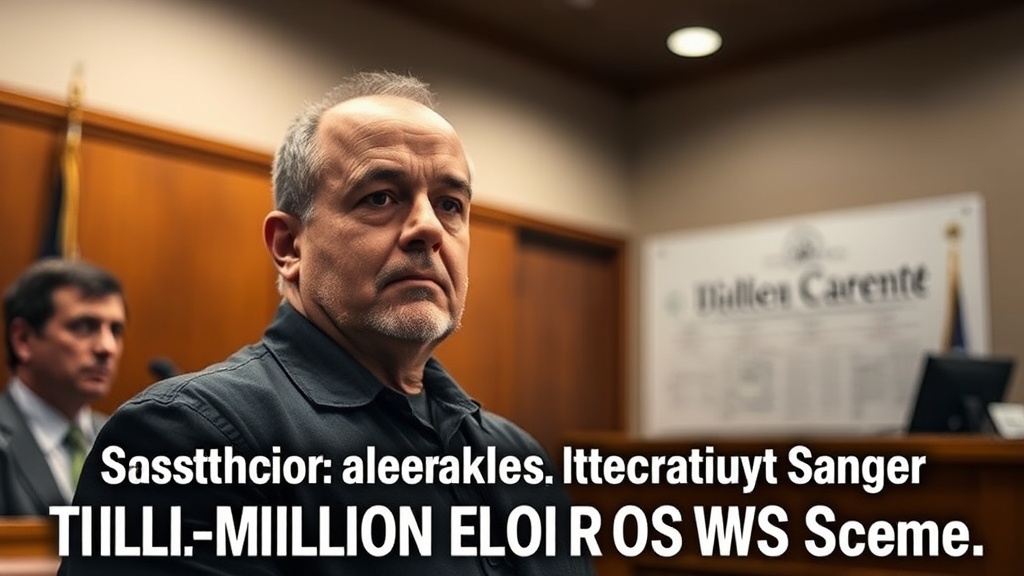
Orem Man Charged with Manufacturing Explosives Released to Recovery Center
An Orem man pleads guilty to manufacturing explosives and will enter a recovery program, raising community safety concerns.

In a striking development, an Orem man previously charged with the manufacture of 75 explosives has pleaded guilty in federal court and is set to be released into a recovery center. The case has raised significant concerns about public safety and the legal implications surrounding homemade explosives. This decision comes after a thorough investigation by federal authorities, who uncovered a disturbing trend of explosive manufacturing in residential areas.
The individual, identified as 34-year-old Jacob Allen, was arrested in January after a tip-off led authorities to his home, where they discovered an extensive cache of explosives. According to court documents, federal agents found a variety of bomb-making materials, including chemicals and devices capable of causing substantial harm. The arrest sparked a community uproar, with local residents expressing fear and anxiety over the potential dangers posed by Allen's activities.
During the court proceedings, Allen faced multiple charges, including the possession and manufacture of explosives without a license, which is a serious federal offense. His plea agreement, reached late last week, included a guilty plea on reduced charges in exchange for a recommendation for a sentence that allows for rehabilitation. As part of the agreement, Allen must complete a comprehensive recovery program aimed at addressing any underlying mental health or addiction issues that may have contributed to his actions.
Federal prosecutors expressed their relief at the resolution of the case, noting that the decision to release Allen to a recovery center instead of prison reflects a growing recognition of the importance of rehabilitation in the justice system. "We are pleased that this case has concluded and that the defendant will have the opportunity to seek help for any issues he may be facing," said U.S. Attorney John Huber. "Public safety is always our top priority, and we believe that addressing the root causes of such behavior is imperative for long-term solutions."
The case has also prompted discussions about the legal implications of homemade explosives and the need for stricter regulations. Experts in the field of explosives and public safety have called for increased awareness and prevention measures to deter similar incidents in the future. "The accessibility of materials used in bomb-making poses a significant risk to communities," stated Dr. Emily Harper, an explosives safety specialist. "Education and proactive measures are essential to prevent individuals from engaging in such dangerous activities."
Community leaders in Orem have responded to the case with a mix of relief and apprehension. Mayor John Curtis held a town hall meeting to address residents' concerns, emphasizing the importance of community vigilance and cooperation with law enforcement. "We are grateful for the swift action taken by our local police and federal agents. However, we must remain vigilant and proactive in ensuring the safety of our neighborhoods," Curtis remarked.
In the wake of Allen's plea and subsequent release, local law enforcement agencies are reviewing their protocols for handling cases involving explosives. Many are considering increased training for officers to better identify and respond to potential threats in residential areas. "It’s crucial that we are equipped to handle these situations effectively and ensure that our communities remain safe," said Orem Police Chief Gary Giles.
As Allen prepares to enter the recovery program, he will be subject to strict monitoring and guidelines to ensure compliance with the terms of his release. Failure to adhere to these conditions could result in his return to court and potentially harsher penalties. The recovery center, which specializes in treating individuals with histories of substance abuse and mental health challenges, is expected to provide Allen with the necessary support to address the issues that led him to manufacture explosives in the first place.
In conclusion, the case of Jacob Allen highlights the critical intersection of public safety, mental health, and rehabilitation within the U.S. legal system. As he embarks on his recovery journey, the community remains watchful, hoping that this incident serves as a catalyst for change and a deterrent against future threats. The resolution of this case is a reminder of the delicate balance between justice and compassion in addressing criminal behavior, especially when public safety is at stake.