Muslim Filmmakers Unite at Sundance: A Community on the Rise
At Sundance, Muslim filmmakers unite to share stories, support one another, and challenge stereotypes in a vibrant community.
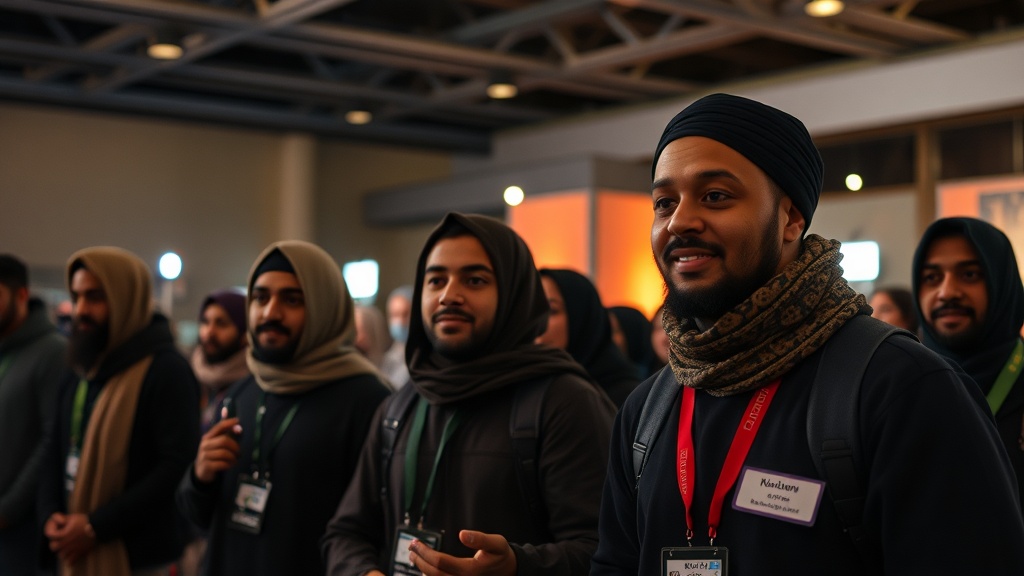
At the recent Sundance Film Festival, a group of Muslim filmmakers and storytellers found a welcoming haven in the Muslim House, a dedicated space aimed at fostering community and collaboration among one of Hollywood's most marginalized groups. This initiative, organized by the Muslim Public Affairs Council (MPAC), provided a platform for these artists to share their narratives, support one another, and celebrate their unique contributions to the film industry. The lounge, nestled on Main Street in Park City, Utah, became a hub where over 200 attendees convened for discussions, screenings, and networking opportunities, highlighting the growing presence and influence of Muslim filmmakers in contemporary cinema.
Rohi Mirza, a film producer and founder of Box Office Guru, expressed optimism during a panel discussion at the event, stating, "I see the future as very bright. Twenty-five years ago, it was tough." This sentiment was echoed throughout the festival, as filmmakers reflected on the challenges and triumphs they have experienced in an industry often fraught with stereotypes and misconceptions about Muslim identities. Despite ongoing challenges, including the lingering effects of post-9/11 Islamophobia, there is a palpable sense of progress among this community of creators.
The significance of the Muslim House is underscored by its ability to gather a diverse group of filmmakers who have historically been underrepresented in mainstream media. Attendees celebrated films that reflect authentic Muslim experiences, such as "American Doctor," "Hanging by a Wire," and "Knife: The Attempted Murder of Salman Rushdie," among others. These projects represent a noteworthy percentage of the 90 films selected for this year's festival from a pool of over 4,200 submissions, indicating that Muslim filmmakers are making substantial strides in a competitive landscape.
Aizzah Fatima, an accomplished comedian and filmmaker, shared her journey from auditioning for stereotypical roles to creating content that provides nuanced representations of Muslim women. Her film "Americanish," which evolved from her one-woman show, aims to present a more accurate and relatable portrayal of Pakistani American women. "Sue Obeidi has been there throughout the whole journey from the beginning," Fatima remarked, referring to the MPAC's Hollywood Bureau leader who has played a crucial role in advocating for Muslim representation in film. Obeidi's efforts have laid the groundwork for initiatives like the Muslim House, which serve as both a sanctuary and a launching pad for aspiring filmmakers.
Panel discussions featured insights from industry veterans such as Effie T. Brown, CEO of Gamechanger Films, who highlighted the challenges faced by marginalized filmmakers in an increasingly competitive environment. Brown cautioned, "Things are constricting now. They’re coming for all of us," emphasizing the need for solidarity among filmmakers to forge new paths in the industry. Mo Naqvi, producer of "Hanging by a Wire," echoed this sentiment, advocating for the creation of independent narratives that challenge prevailing stereotypes. "Let’s make our own films, and also make pathways for the kids coming behind us," he urged, calling for action to uplift the next generation of storytellers.
As discussions unfolded, the importance of authentic storytelling emerged as a central theme. Sohad Murrar, a professor and scholar at the University of Illinois, Chicago, articulated the power of narratives to transcend cultural barriers and connect with audiences on a deeper level. "We need authentic stories, and these narratives penetrate people’s hearts," Murrar stated, emphasizing the responsibility of filmmakers to push the boundaries of representation.
Despite the progress made, challenges persist for Muslim filmmakers who continue to navigate a landscape often dominated by negative portrayals. The panelists acknowledged the ongoing struggle against bias and the need for perseverance in the face of adversity. Murrar noted, "Change is incremental. Social change has to be incremental," encouraging filmmakers to remain patient as they work toward greater visibility and acceptance.
The Muslim House at Sundance serves as a testament to the resilience and creativity of Muslim filmmakers, who are determined to carve out a space for their stories within the broader narrative of American cinema. As they gather to share their experiences and support one another, the future appears promising for this vibrant community of artists. With each film that reaches audiences, they not only challenge stereotypes but also enrich the cultural tapestry of the film industry, proving that their voices deserve to be heard.
In conclusion, the Muslim filmmaking community is not just surviving but thriving, thanks in part to supportive networks like the Muslim House. As these filmmakers continue to navigate the complexities of representation and storytelling, they are well-positioned to make an indelible mark on the industry, paving the way for future generations of diverse voices in cinema.