Jay Hill Joins Michigan as Defensive Coordinator, Leaving BYU After Three Seasons
Jay Hill leaves BYU to reunite with Kyle Whittingham at Michigan, enhancing Wolverines' defensive strategy.
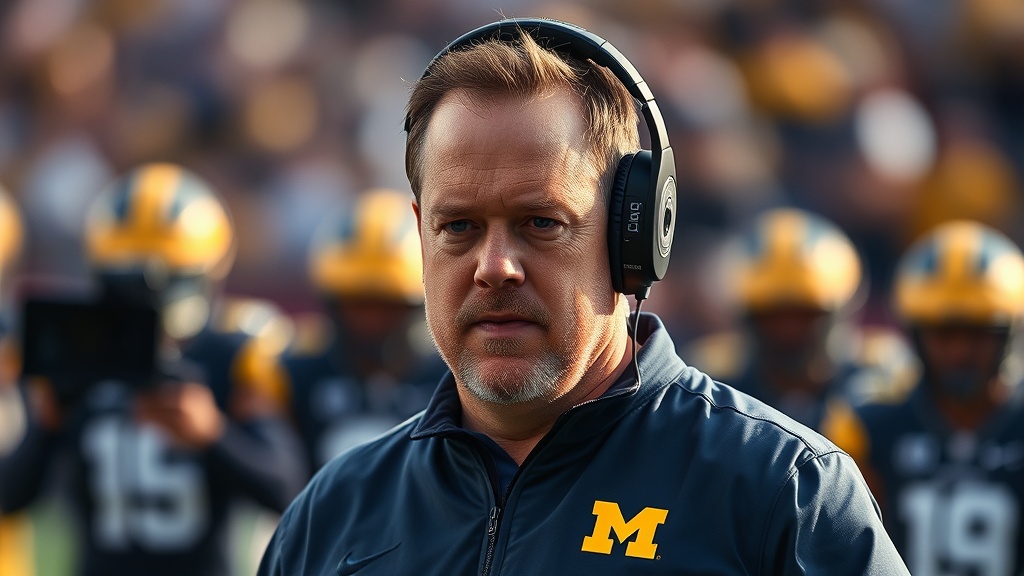
PROVO, Utah (ABC4 Sports) - In a significant shift within college football coaching ranks, Jay Hill, the defensive coordinator for Brigham Young University (BYU), is departing to accept the same position at the University of Michigan. This news was first reported by ESPN's Pete Thamel and marks a notable transition in Hill's career, as he will reunite with his former boss, Kyle Whittingham, who has been a pivotal figure in Hill's coaching journey.
Hill has been with BYU for the past three seasons, where he was instrumental in shaping the team's defensive strategies under head coach Kalani Sitake. During his tenure at BYU, Hill's defense consistently ranked among the top units in the country, showcasing a blend of aggressive play and strategic finesse that made them a formidable opponent in the NCAA.
Before arriving at BYU, Hill spent a significant portion of his career at the University of Utah, where he worked closely with Whittingham, serving as the cornerbacks coach and later as the co-defensive coordinator. His time at Utah was marked by impressive defensive performances, including a 2019 season where the Utes reached the PAC-12 Championship Game, a testament to his coaching prowess. Hill's familiarity with Whittingham's coaching philosophy, which emphasizes discipline, toughness, and a relentless pursuit of excellence, made him a natural choice for the Wolverines.
At Michigan, Hill will step into a program that has seen considerable success in recent years under head coach Jim Harbaugh. The Wolverines, coming off a Big Ten Championship and a College Football Playoff appearance, are looking to bolster their defense to maintain their competitive edge in a notoriously challenging conference. Harbaugh's decision to bring in Hill indicates a commitment to enhancing the team's defensive capabilities, especially after a season where Michigan's defense was both lauded for its strength and scrutinized for lapses in critical moments.
Hill expressed enthusiasm about the opportunity to join Michigan, stating, "I am excited to work with Coach Harbaugh and the talented players at Michigan. It’s a program with a rich history and a commitment to excellence that aligns with my coaching philosophy. I look forward to bringing my experience and passion to the Wolverines and contributing to their continued success."
The move also has implications for BYU's football program. Hill’s departure leaves a significant void on the coaching staff, particularly in the defensive unit that he has cultivated over the years. Under Hill, BYU's defense improved markedly, holding opponents to an average of 24 points per game and producing standout players who made significant impacts both in college and beyond. Sitake will now be tasked with finding a suitable replacement who can maintain the momentum that Hill built during his time in Provo.
As BYU prepares for the upcoming season in the Big 12 Conference, finding a defensive coordinator who can uphold the standards set by Hill will be crucial. The Cougars are aiming to make a strong impression in their new conference, and continuity within the coaching staff will be vital to achieving that goal.
With Hill's departure, discussions about potential candidates to fill the defensive coordinator position at BYU are already underway. Names being floated include former assistants from other programs and individuals with ties to BYU football, as the administration seeks someone who understands the culture and ethos of the university and its athletic programs.
As the coaching carousel continues to spin in college football, Hill’s move to Michigan is emblematic of the ever-evolving landscape of the sport. Coaches are frequently on the move as programs seek to enhance their competitiveness, and for Hill, this opportunity represents a chance to further his career while also aligning with a program that has national title aspirations.
In conclusion, Jay Hill’s departure from BYU to join Michigan’s coaching staff signals both a personal and professional milestone in his career. As he embarks on this new chapter, the implications of his move will resonate throughout both programs. For BYU, the challenge will be to fill the gap left by Hill’s exit, while for Michigan, the addition of Hill is expected to reinvigorate their defensive strategies as they look to build on their recent successes. The coming months will be critical for both programs as they navigate these changes and prepare for their respective futures in college football.