Jack Raese's Documentary 'The Chimney Sweeper' Debuts at Sundance
Jack Raese's documentary 'The Chimney Sweeper' debuts at Sundance, chronicling a nutcracker maker's legacy in rural Germany.
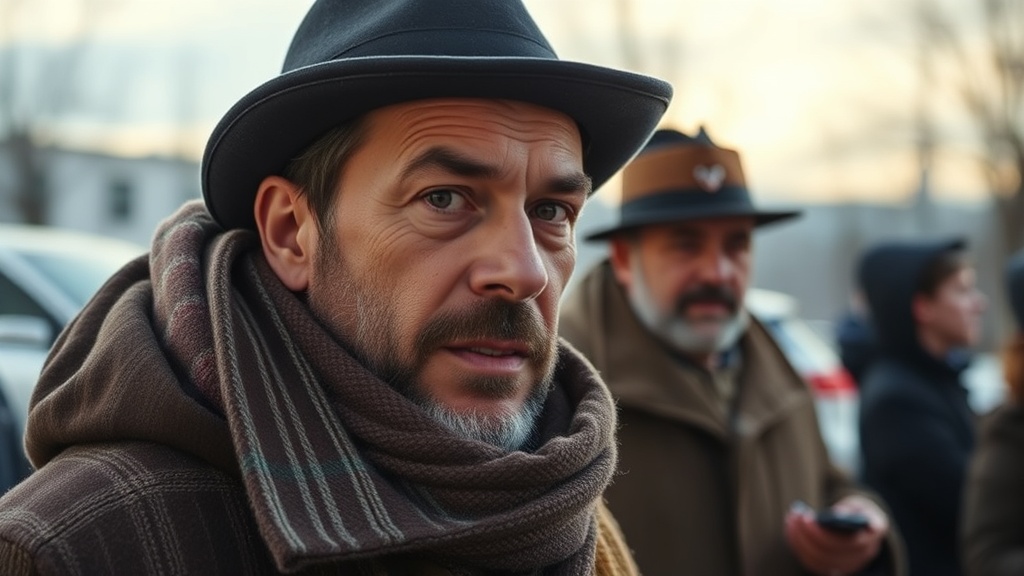
In a remarkable journey from classroom assignment to the prestigious Sundance Film Festival, young filmmaker Jack Raese has made waves with his documentary short film, "The Chimney Sweeper." This touching film, which Raese directed, shot, and edited entirely on his own, explores the intricate legacy of craftsmanship through the lens of Markus Füchtner, a nutcracker maker in the quaint village of Deutschneudorf, Germany.
Raese's odyssey began while he was immersed in film studies at Loyola Marymount University in Los Angeles. With a yearning to create a documentary that reflected a rural story, he began poring over local publications in Germany, seeking compelling narratives. His search led him to Deutschneudorf, a picturesque village that lies near the Czech border, where nearly every family engages in the age-old tradition of crafting wooden Christmas toys. "I knew I wanted to make a very rural film," Raese expressed, emphasizing his desire to capture the essence of a community deeply rooted in tradition.
Upon his arrival in Deutschneudorf, Raese found himself in a village that resembled a real-life North Pole, bustling with artisans dedicated to producing handcrafted nutcrackers, Schwibbögen, and other holiday figures. The heart of Raese's documentary lies in its intimate portrayal of Füchtner, a lifelong nutcracker artisan whose family's craftsmanship spans generations. The film captures Füchtner not just as a craftsman but as a bearer of family history, revealing the weight of legacy through one-on-one conversations and daily routines.
"The Chimney Sweeper" was initially intended to focus on Füchtner's younger son, who harbored dreams of becoming a filmmaker rather than following in the family business. Raese resonated with this narrative, feeling a similar tension growing up in a family with defined expectations. However, as he began filming, Füchtner's son proved camera-shy, guiding Raese to pivot the film's focus toward Füchtner himself. This decision unveiled a richer story about the values of legacy and choice, as Füchtner reflected on his own upbringing and the craft he has inherited.
The process of filmmaking was deeply personal for Raese, who spent ten days living with Füchtner and his family. This immersive experience allowed him to build a rapport, akin to that of a son learning about his father's legacy. "I wasn’t just there to make a movie. I was there for his story," Raese remarked, highlighting the emotional depth of his project. Rather than relying on structured interviews, Raese adopted an observational approach, capturing the day-to-day life of Füchtner as he worked in his workshop and shared anecdotes that painted a vivid picture of his family heritage.
Raese's commitment to authenticity and intimacy is evident in the film’s aesthetic, crafted to feel as if the viewer is part of the family. With the camera in hand, Raese followed Füchtner closely, capturing the nuances of his work and the stories that emerged organically over time. "It was just me," he noted, emphasizing his hands-on approach to all aspects of the filmmaking process, from sound to framing, which allowed for a genuine connection with his subject.
The documentary reflects not only Füchtner’s journey but also Raese’s own introspection about family, tradition, and personal aspirations. As he observed Füchtner navigate the burdens of legacy—especially the pressure to pass down a family craft—Raese found clarity about his own path in filmmaking. "Watching Füchtner wrestle with tradition and the life-not-taken helped clarify my own path," he explained, revealing how the experience reshaped his understanding of familial expectations.
After completing the film, Raese maintained contact with Füchtner, continuing to reflect on the profound lessons learned during his time in Germany. While the craft of nutcracker making is intricate and requires a lifetime to master, Raese expressed gratitude for the opportunity to explore such a unique aspect of cultural heritage.
The debut of "The Chimney Sweeper" at Sundance represents a significant milestone for Raese, who views participation in the festival as a dream come true. As he prepares for future projects, he is eager to continue exploring documentary filmmaking alongside narrative work, seeking to further define his voice and vision as a filmmaker. "I want to make more movies. That’s next. Another one, and another one, and keep doing it," he said, embodying the spirit of perseverance and creativity that defines both his journey and the legacy he has chosen to explore through his art.
Raese's experience in Deutschneudorf and the subsequent debut of his short film at Sundance not only celebrate individual artistry but also underscore the importance of storytelling in understanding and preserving cultural heritage. In a world where crafts and traditions can easily fade, documentaries like "The Chimney Sweeper" serve as vital reminders of the stories that connect us all, bridging generations and illuminating the paths we choose to follow.