Exploring the Flavor of a 150-Year-Old Bottle of Alcohol Found in Utah
High West Distillery discovers and tastes a 150-year-old bottle of liquor in Utah, unveiling a piece of history.
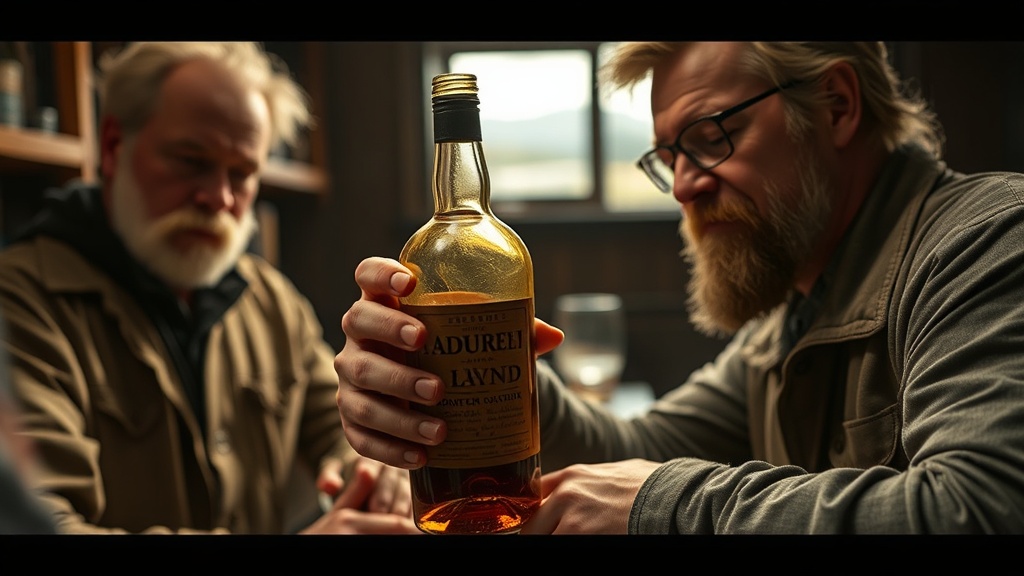
In a remarkable discovery that merges history and distilling craft, High West Distillery’s Master Distiller, Isaac Winter, recently had the unique opportunity to taste a 150-year-old bottle of alcohol unearthed in Alta, Utah. This rare artifact, believed to date from 1870 to 1890, was found during a snowmaking construction project on U.S. Forest Service land near the Alta ski resort. The Utah State Historic Preservation Office was called upon to conduct a swift excavation, uncovering thousands of artifacts amidst the snow and debris, but none captured attention like this full, corked bottle of liquor.
Ian Wright, a public archaeologist with the Utah State Historic Preservation Office, recounted the thrilling moment when the backhoe unearthed the bottle. “Bottles were everywhere, but this one just kind of rolled down the hill and was still full, with a cork intact. When we realized it was a full bottle of alcohol, we knew we had discovered something truly special,” Wright said. The significance of this find cannot be overstated; it marks the first time a complete bottle of liquor has been discovered at an archaeological site in Utah, a feat Wright noted is almost unheard of in the state’s history.
Typically, archaeologists find fragmented bottles, often with corks that have deteriorated over time. “We might find pieces of bottles, but a complete one, especially with the cork still intact, is incredibly rare,” Wright explained. The excavation yielded around 5,000 artifacts, including numerous empty bottles and bullets, each telling a story from a bygone era that shaped Utah's history.
Initially unsure of how to proceed with the bottle, the preservation team sought guidance from several institutions. While The Metropolitan Museum of Art declined to assist due to liability concerns, contact with various Bourbon Trail museums in Kentucky led them to High West, which was seen as the ideal local distillery to help unravel the mystery of the bottle’s contents.
High West Distillery holds a unique place in Utah’s history, being the first legal distillery to operate in the state after Prohibition. Winter, who acknowledged that he is not a historian, was excited to step in and assist with the project. “Given our commitment to preserving the spirit of the High West, it made sense for us to be involved in this fascinating discovery,” he remarked.
As they began to analyze the contents, Winter speculated that the spirit might have been produced using grains such as sorghum or possibly potatoes. It could also have been a cider, beer, or wine. The excavation team first attempted to extract the liquid using a Coravin needle, a tool typically used for fine wines. However, when that method failed, they resorted to an ‘ah-so’ opener, designed for older bottles, to remove the cork effectively. This allowed them to decant the liquid into smaller flasks for further analysis.
Upon tasting the ancient spirit, Winter noted its distinct characteristics. “It was immediately obvious that it’s low ABV,” he commented, likening the taste to that of a Fino Sherry. He detected oxidized fruit notes, hints of raisins, and a sweetness reminiscent of honey, which further intrigued him about its composition and historical context.
With the liquid now properly stored, the next phase of the investigation involves enlisting the help of the scientific community. The “Alta Spirits Recovery Project” team, which includes two PhD chemists specializing in beverages, aims to conduct high-performance liquid chromatography tests to identify the exact compounds present in the liquid. They plan to determine the alcohol by volume percentage and possibly trace the sugar source back to its origins using isotopic analysis.
Perhaps the most exhilarating aspect of the discovery is the sediment at the bottom of the bottle, which could potentially contain yeast. “If we can isolate that yeast, there’s a real chance we could recreate a product,” Winter said, his excitement palpable. He has already reached out to Kevin Templin, founder of Templin Family Brewing in Salt Lake City, who expressed enthusiasm about the potential to make a beer or whiskey from the recovered yeast.
“I think it’s an incredible opportunity to bring history to life and to allow more people to taste a piece of Utah’s past,” Winter emphasized. The project's objective aligns with Wright’s vision of making history accessible and engaging for the public. “For too long, archaeology has been seen as a gatekeeper of history. This bottle allows people to connect with the past in a tangible way,” Wright concluded.
As the project progresses, the team plans to conduct a more thorough excavation at the site in June, inviting volunteers to participate. They aim to uncover additional artifacts that could shed light on life in the boomtown of Alta. The excitement surrounding this historic find continues to grow, as both Wright and Winter believe that the exploration of this bottle not only honors Utah’s rich distilling history but also opens doors to new discoveries that could further enhance our understanding of the region's past.