Exploring Legacy in Storytelling: Key Insights from Sundance 2026 Panel
At Sundance 2026, filmmakers and writers explored the evolving concept of legacy in storytelling, addressing its cultural significance and societal impact.
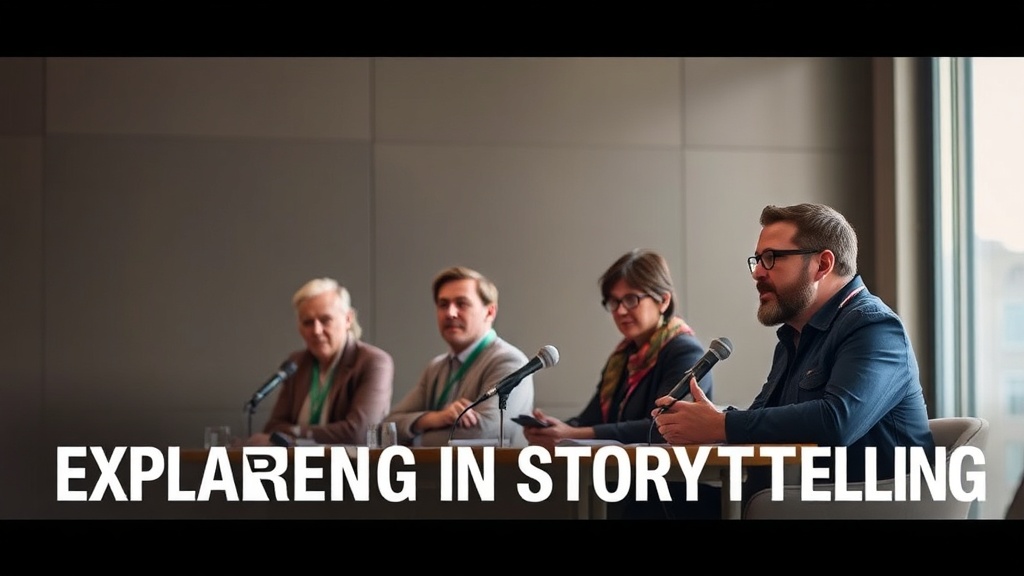
The concept of legacy took center stage at the 2026 Sundance Film Festival during a compelling panel discussion titled 'Power of Story: On Legacy' held at the historic Egyptian Theatre. This event, featuring a diverse group of creatives including filmmaker Alex Gibney, award-winning author and journalist Ta-Nehisi Coates, and acclaimed actors and directors John Turturro and Olivia Wilde, provided an in-depth exploration of how storytelling shapes and reflects our understanding of legacy in contemporary society.
Moderated by Jia Tolentino, a staff writer for The New Yorker, the panel began with a candid acknowledgment of the term 'legacy.' Tolentino shared her recent inquiry into the word's origins, noting that its earliest usages were linked to delegations and bequeathments, which traditionally refer to tangible items. 'It’s interesting now that we talk about legacy as something intangible, yet it still carries a sense of those tangible things,' she remarked, setting the stage for a rich discussion on the evolving nature of legacy in storytelling.
Olivia Wilde, who directed and stars in the film 'The Invite,' articulated how her family’s journalistic background has deeply influenced her creative work. 'I am always inspired by my family who are all journalists—my grandparents, my cousins, my uncles, my parents, everybody,' she shared. She emphasized the importance of truth-telling in her craft, revealing that her decision to produce 'The Invite' independently stemmed from a desire to maintain artistic control and authenticity. 'I wanted to make a film that felt made by the artists who had the control to say what we wanted to say,' Wilde explained, reflecting on the legacy of independent cinema at the festival, which has historically given a platform to daring and innovative storytelling.
Wilde also discussed how her thoughts on legacy have evolved since her film's premiere at Sundance. She expressed gratitude to the filmmakers who inspired her, particularly Mike Nichols, and commented on how the legacy of independent film has shaped audience expectations and the language through which stories are told. 'It's been so interesting to look back at all the films that created the language audiences are now fluent in,' she noted.
Alex Gibney, known for his impactful documentaries, shared insights regarding the complexities of legacy in relation to his film 'Knife: The Attempted Murder of Salman Rushdie,' which premiered at the festival. Gibney explained that the film deals with the 2022 attack on Rushdie, who has faced death threats for decades due to his novel 'The Satanic Verses.' 'The long tail of the violence unleashed by that fatwa is a legacy that has real implications,' Gibney said, emphasizing how the assailant's actions were shaped by a violent legacy that transcended his own lifetime. He highlighted Rushdie’s resilience, noting how the author's journey has become a testament to the power of culture and storytelling.
Ta-Nehisi Coates, contributing his perspective as both a writer and filmmaker, addressed the darker aspects of legacy through his work in the documentary 'When a Witness Recants.' Reflecting on his childhood experiences during a murder case that wrongfully imprisoned three boys, Coates stated, 'This is how you begin to develop a skeptical relationship with the state.' He articulated the importance of storytelling in confronting societal injustices and emphasized that understanding the world through narratives is essential for meaningful action.
The discussion took a poignant turn as the panelists acknowledged the recent societal challenges, particularly in light of ongoing protests and issues related to systemic racism and police violence. Tolentino prompted a conversation about the impact of such events on artists and the responsibility they bear in documenting and interpreting these realities. Gibney recounted attending a protest in Russia, which resonated with his experiences at Sundance, while Coates reflected on the broader implications of artistic expression during times of social upheaval. 'The response from the powers that be was a police response, but it was also a response against writing, a response against books and journalism,' he remarked, underscoring the critical role of storytelling in shaping public consciousness.
As the panel concluded, Sundance Film Festival Director Eugene Hernandez expressed gratitude for the venue's historical significance, noting that this was the last event at the Egyptian Theatre before the festival relocates to Boulder, Colorado next year. 'This is a big deal for us because this is our final event in this venue—where our festival started,' he stated, reflecting on the legacy of Robert Redford, the festival’s late founder, and the stories that have been shared within its walls since 1981. The event served not only as a celebration of storytelling but also as a reminder of the enduring impact that narratives can have on shaping cultural and societal legacies.
The 2026 Sundance Film Festival runs through February 1. For more information on the festival and its programming, please visit festival.sundance.org.