Calls for Stronger Immigration Enforcement Amid Political Tensions in Utah
A letter to the editor sparks debate over immigration enforcement and local leaders' roles in Utah.
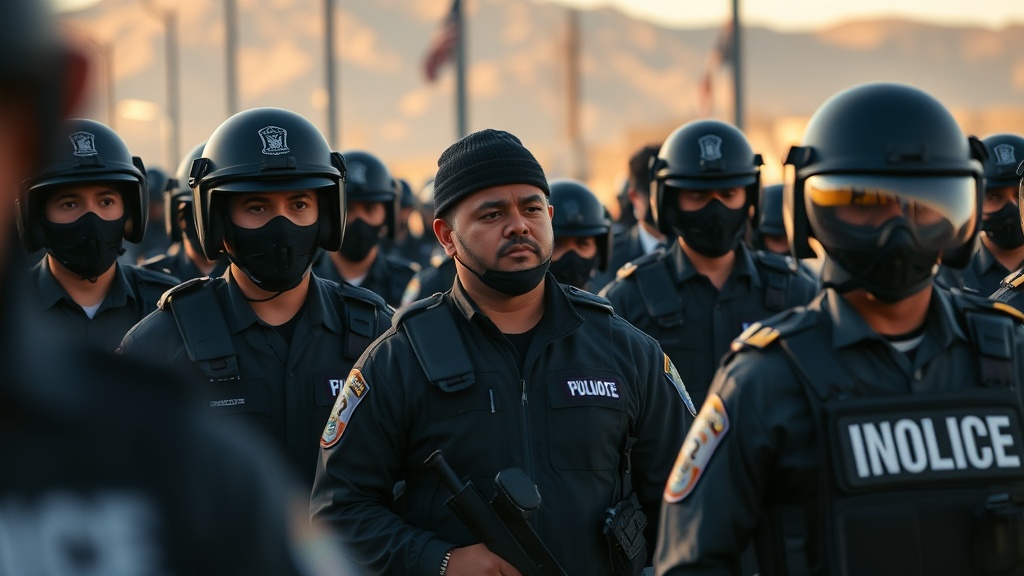
In the ongoing debate over immigration enforcement, a recent letter to the editor in the Park Record has sparked significant discussion regarding the roles of state and federal authorities in addressing illegal immigration. The author, Jerry Heck from Oakley, has voiced strong support for the actions of U.S. Immigration and Customs Enforcement (ICE) and has expressed concerns about local leaders in Minnesota, particularly Mayor Jacob Frey and Governor Tim Walz, who he accuses of undermining federal immigration policies.
Heck's letter highlights a sentiment among certain segments of the population that believes local leaders are capitulating to what he describes as 'domestic insurgents' who oppose ICE and its enforcement actions. He claims that this opposition not only obstructs federal law enforcement efforts but also diverts attention away from alleged welfare fraud involving state officials. Such claims reflect a broader narrative emerging from some conservative circles advocating for stricter immigration control and stronger enforcement measures at both state and federal levels.
The letter comes at a time when immigration remains a hot-button issue across the United States. With President Joe Biden’s administration facing considerable scrutiny over its handling of immigration policies, critics have intensified their calls for a return to more stringent measures. Heck’s letter echoes sentiments previously expressed by conservative commentators, who argue that without a secure border, the integrity of the nation is compromised. This fear is compounded by the ongoing influx of migrants at the southern border, which some see as a crisis necessitating immediate action.
Heck's endorsement of invoking the Insurrection Act of 1807 is particularly noteworthy. The act allows for the use of federal troops to suppress civil disorder, but its invocation is controversial and viewed by many as a drastic measure. It highlights the lengths to which some individuals are willing to go to enforce immigration laws. ‘Without a well-defined and defended border, we don’t have a country,’ Heck argues, underscoring his belief that national identity is inherently tied to immigration policy. His perspective reflects a faction of voters who feel that immigration should be tightly regulated to preserve cultural and national values.
The letter also touches on the personal experience of Heck, who identifies himself as a veteran of the Global War on Terror. He emphasizes that his military service was aimed at protecting American sovereignty and culture, suggesting that current immigration policies contradict this mission. He contends that taxpayers should not bear the burden of supporting individuals who he deems as 'international welfare tourists,' a term he uses to describe immigrants who rely on public assistance.
This rhetoric aligns with a growing trend among certain local and national politicians who argue for harsher immigration policies. Advocates for stricter immigration enforcement often cite crime rates and economic impacts as reasons to support their stance. Heck’s mention of specific individuals, Alex Pretti and Rene Good, who he states died due to actions related to a lack of cooperation with DHS, serves as a poignant reminder of the potential consequences of lenient immigration policies. He argues that their deaths are a direct result of what he perceives as the failures of local leaders to adequately support federal enforcement agencies.
While these views resonate with a segment of the population, they also invite significant pushback from those who argue for more compassionate immigration policies. Critics of Heck’s stance contend that such rhetoric fosters a climate of fear and division, and that it overlooks the contributions of immigrants to society. They advocate for a balanced approach that addresses both security concerns and the need for humane treatment of individuals seeking refuge or better opportunities in the United States.
As political divisions deepen over immigration policy, the discussion is likely to intensify. Local leaders may find their positions scrutinized as they navigate the complexities of enforcement, community safety, and the need for comprehensive immigration reform. The challenge will be to find common ground amidst a polarized landscape where opinions on immigration vary widely.
In conclusion, the call for stronger immigration enforcement articulated by Heck reflects a broader national conversation about immigration, safety, and national identity. As debates continue, it will be critical for policymakers to engage with all perspectives to foster dialogue that can lead to effective and humane solutions to the challenges posed by immigration in the 21st century.