Utah Businesses Display Signs Opposing ICE Enforcement Amid Immigration Debate
Utah businesses are increasingly displaying signs against ICE enforcement, reflecting community support for immigrant rights amid ongoing debates.
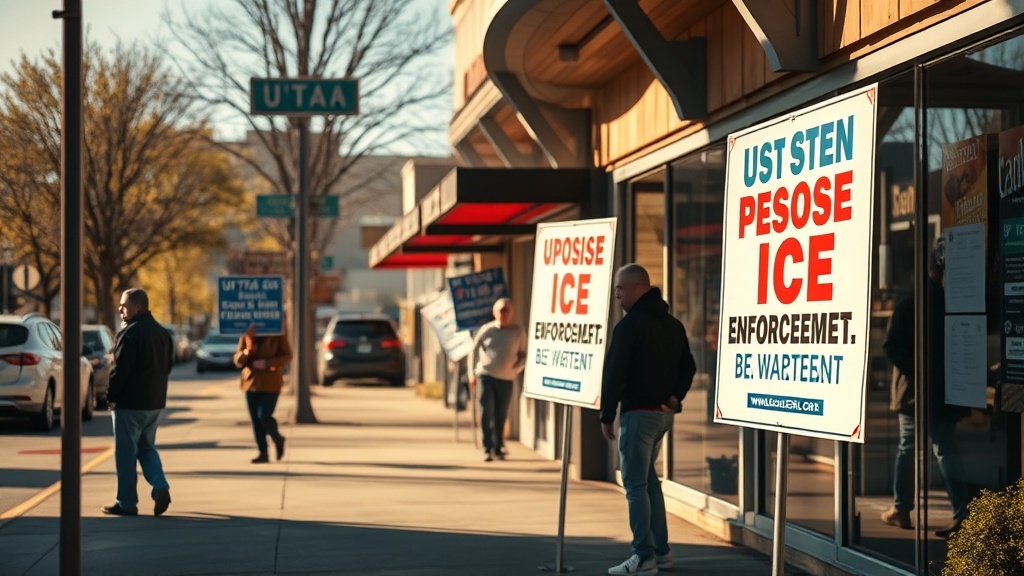
In an increasingly polarized national debate over immigration enforcement, several businesses in Utah have begun displaying signs that read, “ICE no está autorizado” (ICE is not authorized) in their storefronts. This movement, which started gaining traction in recent months, reflects a growing sentiment among local business owners and community members who oppose the aggressive tactics often employed by U.S. Immigration and Customs Enforcement (ICE) agents.
The signs serve as a clear statement against what many perceive to be excessive and often unjust immigration enforcement practices. Business owners, particularly in immigrant-heavy neighborhoods, see the presence of ICE as a threat not only to their customers but also to the fabric of their communities. Many of these establishments are frequented by undocumented immigrants who fear deportation and legal repercussions, which has led to a noticeable decline in foot traffic and customer engagement in recent years.
For instance, Maria Gonzalez, the owner of a popular taco shop in Salt Lake City, noted, “We want our customers to feel safe coming here. Many of them are part of our family, and we don’t want them to worry about being taken away.” Gonzalez emphasized that the signs are meant to foster a welcoming environment and to encourage patrons from all backgrounds to feel secure while they enjoy a meal or shop in the area.
The pushback against ICE is not limited to just restaurants; a variety of businesses, including grocery stores, barber shops, and clothing stores, have begun displaying similar messages. This grassroots initiative has garnered support from local advocacy groups, such as the Utah Immigrant Rights Coalition (UIRC), which aims to protect immigrant rights and promote inclusivity within the community. The coalition has been actively working to educate business owners about their rights and the legal limitations of ICE agents, further empowering them to take a stand against aggressive enforcement practices.
According to UIRC spokesperson Juan Martinez, the proliferation of these signs represents a broader movement toward community solidarity. “We’re seeing more and more Utahns standing up for their neighbors and families,” he said. “These signs are a reflection of the values we want to uphold: compassion, respect, and community.” Martinez also pointed out that many immigrants contribute significantly to the local economy, with studies showing that undocumented workers are often vital to industries such as agriculture, construction, and hospitality.
Despite the supportive response from many in the community, the initiative has also received backlash from some local groups who argue that the signs could encourage illegal immigration and undermine law enforcement efforts. Critics assert that while compassion is important, the rule of law must be upheld. They emphasize that ICE plays a crucial role in maintaining public safety and enforcing immigration laws.
In light of this debate, local government entities have also been drawn into the conversation. Some city officials have expressed their support for immigrant-friendly policies and practices, signaling a shift in local governance toward a more inclusive approach. Mayor Erin Mendenhall of Salt Lake City has publicly voiced her support for immigrant rights initiatives, stating, “Every person deserves to feel safe in their community, regardless of their immigration status.”
The display of these signs comes at a time when national immigration policies are under scrutiny, particularly in the wake of various proposed reforms and changes to federal immigration laws. As the Biden administration seeks to unwind some of the more stringent policies of the previous administration, communities across the nation are grappling with the implications of these changes.
However, the local reaction in Utah highlights a unique aspect of the national immigration debate. While some states have moved toward stricter enforcement and anti-immigrant legislation, Utah has a rich history of immigration that has shaped its cultural and economic landscape. The growing presence of these signs indicates a potential shift in public perception and a desire for more humane treatment of immigrants.
As the discussion surrounding immigration continues to evolve, the implications of these signs extend beyond mere symbolism. They represent a call to action for many Utahns who wish to create a more inclusive and supportive environment for all residents, regardless of their immigration status. With the backing of local businesses and advocacy groups, the movement is not only reshaping storefronts but also contributing to a larger dialogue about the values that define the community.
As the debate rages on, the future of immigration policy and enforcement remains uncertain. However, what is clear is that in Utah, a significant number of residents are standing together in solidarity with their immigrant neighbors, advocating for a community where everyone feels safe and welcome. The “ICE no está autorizado” signs serve as a powerful reminder of this ongoing struggle for dignity and justice in the face of adversity.