Salt Lake City's BioTower Project Halted Amid Community Concerns in Poplar Grove
The BioTower project in Salt Lake City's Poplar Grove neighborhood is paused due to community backlash, sparking discussions on environmental justice.
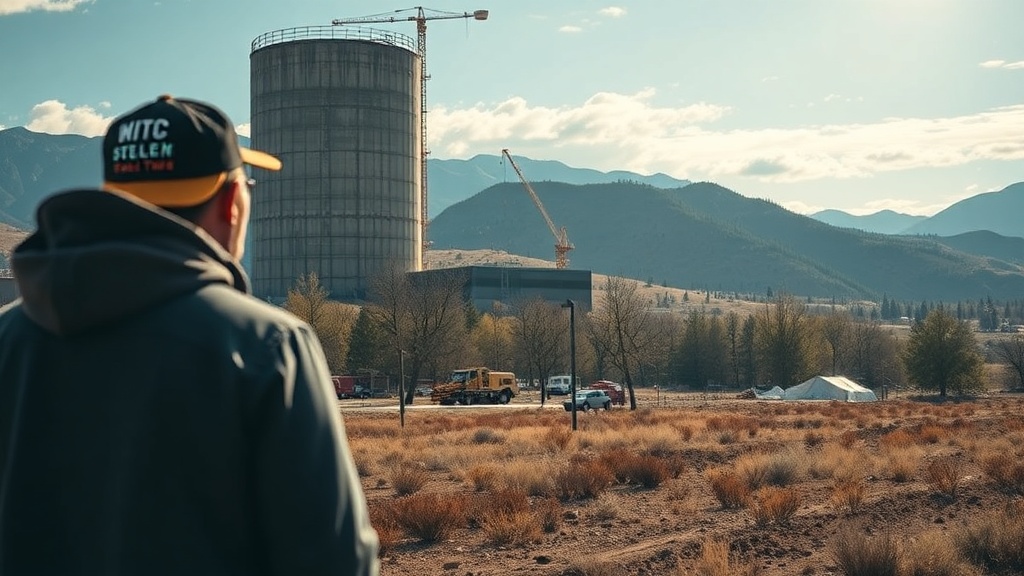
SALT LAKE CITY — The proposed BioTower project, which was set to be constructed in the Poplar Grove neighborhood of Salt Lake City, has been temporarily paused following significant backlash from local residents. The BioTower, a biofilter designed to mitigate foul air from hydrogen sulfide emissions linked to nearby sewer lines, was met with skepticism and outright opposition during a community meeting held this week.
The meeting, attended by a few dozen concerned residents, provided a platform for neighbors to voice their apprehensions directly to city officials. Jason Brown, deputy director of Salt Lake City Public Utilities, was present to address the crowd and clarify the purpose and design of the BioTower. "We're here today to give the community some education and understanding of your concerns so we can address them as we move forward," Brown stated, aiming to foster dialogue and transparency between city officials and residents.
Despite Brown's efforts, the sentiment among attendees was overwhelmingly negative. One resident expressed frustration, declaring, "We don’t want it! At least I don’t believe anybody here wants it. And if they’re so polite that they’re not going to step up and say it, I’m going to say it: We don’t want it!" This sentiment resonated with many in attendance, who shared fears about the project’s potential impact on their neighborhood’s air quality and overall environment.
Brown explained that the BioTower was strategically located due to its proximity to three major sewer lines, with the intention of reducing odors and improving air quality in the area. "It’s understandable," he acknowledged, "I understand having things in your neighborhood of this nature could be seen as a negative thing." The city’s plan included using the BioTower to filter out hydrogen sulfide, a gas often emitted from sewage systems, which can pose health risks in high concentrations.
Ken Funk, a representative from Crossroads Urban Center, has been actively engaged within the Poplar Grove community and expressed skepticism regarding the project. Funk commented, "We think the west side has, for a long time, forever really gotten the short end of the stick, and this is probably a good example of that." His remarks highlight a broader concern among residents about inequitable treatment and resource allocation in less affluent neighborhoods.
Another resident, Rachel Laxner, has taken a proactive stance against the BioTower. She has conducted extensive research on the project and voiced her desire for further community engagement. "We’d like another chance to ask more questions, get more studies done for sure air modeling and things like that," Laxner stated, emphasizing the need for thorough investigation into the potential environmental impacts before moving forward.
During the meeting, city officials collected contact information from attendees to facilitate future discussions. A sign-up sheet was circulated, indicating that another community meeting is planned for later this month. This forthcoming meeting is expected to provide further clarity on the project and address the concerns raised by residents.
As of now, the BioTower project is on hold, at least temporarily, as city officials seek to engage with the community more effectively. The pause allows for additional public input and the opportunity for residents to express their concerns in a structured environment. City officials have acknowledged the importance of community feedback in shaping projects that directly impact local neighborhoods.
The BioTower project has ignited a broader conversation about environmental justice and community involvement in urban planning. Residents of Poplar Grove are advocating for a more equitable approach to development, where their voices are heard and considered in decision-making processes. As the city navigates this situation, the outcome of the BioTower project may set a precedent for how similar projects are handled in the future, particularly in historically underserved areas.
In conclusion, the BioTower project serves as a pivotal moment for the Poplar Grove community, illustrating the complexities of urban development and the essential role of public engagement in ensuring that community needs and concerns are prioritized. As discussions continue, residents remain vigilant, aiming to safeguard their neighborhood while seeking solutions that enhance their quality of life without compromising their environmental health.