Rian Johnson's 'Knives Out' Film Offers Unique Portrayal of Christianity
Rian Johnson's latest film offers a unique and nuanced portrayal of Christianity, challenging Hollywood stereotypes.
In a striking departure from typical Hollywood narratives, the latest installment of Rian Johnson's acclaimed murder mystery series, "Wake Up Dead Man: A Knives Out Mystery," features a nuanced portrayal of Christianity that stands out in a genre often dominated by stereotypes. The film, which premiered on Netflix, showcases the character of Benoit Blanc, a charismatic private detective played by Daniel Craig, who navigates a complex murder case against the backdrop of a seemingly abandoned church.
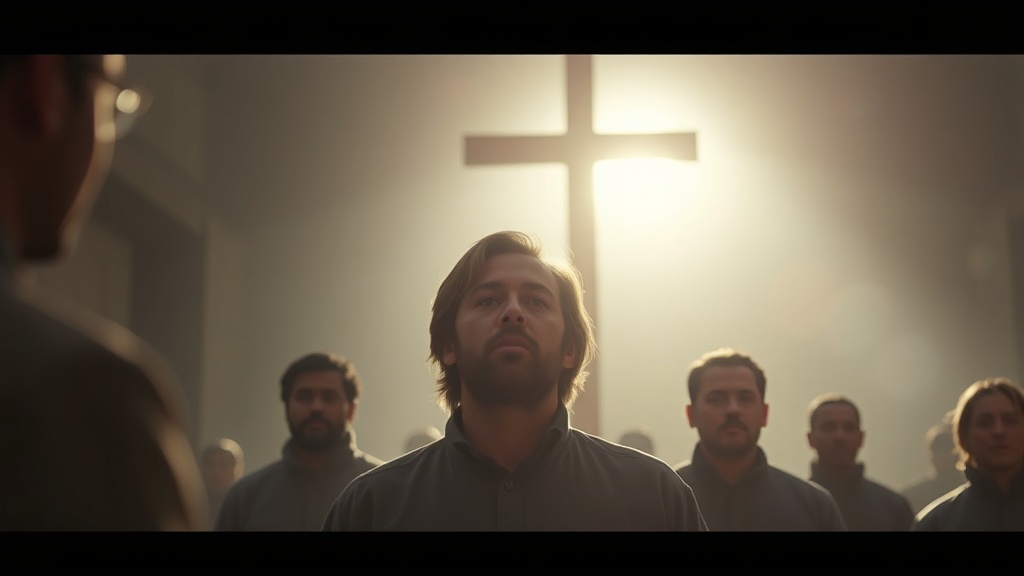
The opening scenes of the film introduce viewers to Blanc as he enters a dilapidated church, where the absence of a crucifix above the altar is conspicuous. Instead, there is only a faded mark indicating where one might have hung long ago. This detail sets the tone for the film's exploration of faith, morality, and the consequences of neglecting spiritual heritage. Throughout the movie, the church becomes a symbolic representation of lost values and the questioning of belief systems in contemporary society.
Rian Johnson, known for his previous work on the "Knives Out" franchise, has a knack for blending traditional mystery elements with deeper social commentary. In this film, he expands on themes of faith and skepticism, inviting audiences to reflect on the role of religion in modern life. The choice to depict a church devoid of its central symbol could be interpreted as a commentary on the current cultural landscape, where many grapple with the relevance of organized religion.
As Blanc delves into the murder mystery, he encounters a diverse cast of characters, each embodying various perspectives on faith and morality. These interactions highlight the complexities of belief in a secular world. For instance, one character, a self-proclaimed agnostic, challenges the notion of faith as a guiding principle, while another character grapples with guilt and redemption, reflecting the internal struggles that many face.
Critics have noted that the film's approach to Christianity diverges from the often simplistic or negative portrayals found in mainstream cinema. Instead of depicting religious characters as one-dimensional figures, the screenplay delves into their motivations, fears, and desires, presenting them as fully realized individuals. This shift in narrative style offers a refreshing perspective, allowing viewers to engage with the characters on a more profound level.
Moreover, the film's cinematography plays a crucial role in conveying its themes. The church scenes are shot with a stark, almost haunting beauty, emphasizing the emptiness that accompanies the absence of faith. The contrast between the vibrant colors of the surrounding world and the muted tones of the church serves as a visual metaphor for the internal conflict experienced by the characters.
In addition to its thematic depth, "Wake Up Dead Man: A Knives Out Mystery" is also a masterclass in storytelling. The intricate plot, filled with twists and turns, keeps audiences on the edge of their seats while simultaneously prompting them to consider the moral implications of the characters' actions. Johnson's writing deftly weaves together humor, suspense, and philosophical inquiry, creating a film that is as entertaining as it is thought-provoking.
The film's release comes at a time when discussions around faith and spirituality are increasingly relevant. Many individuals are reevaluating their beliefs and searching for meaning in an ever-changing world. Johnson's film resonates with this sentiment, offering a space for reflection on the role of faith in personal and communal identities.
As audiences flock to streaming services for entertainment, the choice to tackle such weighty themes within a murder mystery showcases the evolving landscape of cinema. "Wake Up Dead Man: A Knives Out Mystery" challenges viewers to reconsider their perceptions of faith, morality, and the complexities of human relationships.
In conclusion, Rian Johnson's new film not only entertains but also invites viewers to engage in a dialogue about belief and its place in today's society. By avoiding the clichéd treatment of Christianity commonly found in Hollywood productions, the film provides a richer, more complex exploration of faith that resonates with diverse audiences. As Benoit Blanc navigates the intricacies of the murder mystery, viewers are encouraged to ponder their own beliefs and the significance of spirituality in their lives. With its combination of captivating storytelling and meaningful commentary, "Wake Up Dead Man: A Knives Out Mystery" marks a significant entry in the evolving landscape of contemporary cinema.