Park City Sees 29% Drop in Lodging Tax Amid Stable Visitor Spending Ahead of Sundance
Park City's lodging tax fell 29% in October, but visitor spending remains stable ahead of the Sundance Film Festival.
PARK CITY, Utah — The latest Sales Tax Report released by the city this week has revealed a significant decline in Transient Room Tax (TRT) collections for October 2025, showing a 29.3% decrease compared to the same month last year. This decline also falls 13.6% short of the city’s budget projections, raising concerns about the economic implications for the popular ski resort town as it approaches the winter season.
As the year progresses, the cumulative TRT collections from July through October indicate a similar trend, with an overall decline of 10.5% year-to-date compared to the previous year and 7.4% below budget expectations. In contrast, sales tax collections present a more positive picture, reporting a slight increase of 0.5% year-over-year and 3.2% above budget figures. The disparity between these two metrics has raised questions about visitor behavior and the overall health of Park City’s economy.
City officials have been quick to temper concerns surrounding the drop in TRT collections, clarifying that October typically accounts for only about 5.5% of total annual tax distributions. They emphasized that fluctuations in monthly tax collections, such as the one observed in October, often reflect timing differences in tax reporting rather than a sustained downturn in visitor demand.
Dan Howard, Vice President of Sales & Communications for the Park City Chamber of Commerce and Visitors Bureau, echoed these sentiments, assuring stakeholders that the downturn is not indicative of a broader economic weakness. "We’re definitely not seeing a sustained slowdown in visitor spending," Howard stated. "Occupancy rates are virtually identical throughout the year, and average daily room rates remain stable."
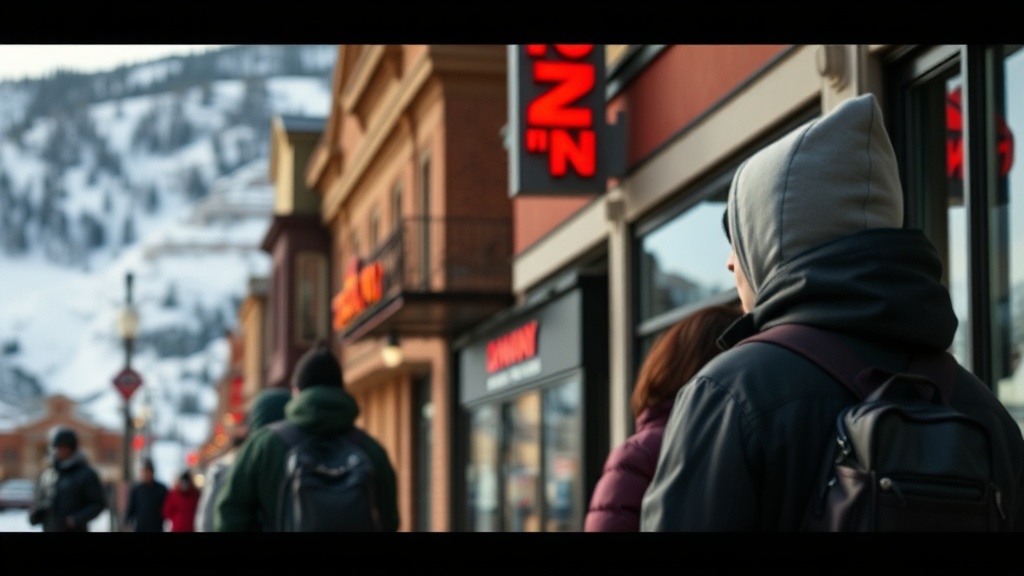
Despite the positive indicators in occupancy and spending, the city has not provided specific insights into the causes behind the year-to-date decline of 10.5% in TRT collections. Anecdotal evidence gathered from local businesses suggests that spending on Main Street has remained relatively steady compared to last year. This stability appears to be driven by a shift in visitor focus towards off-mountain activities and events, as ski conditions remain limited ahead of the peak winter season.
The slow start to the 2025-26 ski season has contributed to the underperformance of both major resorts in Park City. As of early January, Park City Mountain reports only 21% of its terrain open, while Deer Valley has managed to open 35%. This slow ramp-up in ski operations is a concern for local businesses that rely heavily on winter tourism for their revenue.
Attention now shifts to the upcoming 2026 Sundance Film Festival, scheduled from January 22 to February 1. This event is anticipated to provide a much-needed boost in hotel demand and visitor spending as it marks the festival's final year in Utah before relocating to Boulder, Colorado in 2027. The Sundance Film Festival has historically been a cornerstone of winter visitation in Park City, contributing significantly to lodging revenues.
Local business owners and city officials are keenly aware that continued snowfall throughout January and February will be crucial for maintaining momentum in bookings. Adequate snowfall is not only vital for enhancing skiing conditions but also for stabilizing TRT collections as the region approaches the spring season.
In conclusion, while October's figures may raise eyebrows, the underlying indicators of visitor spending and occupancy rates suggest that Park City’s economy is not in a state of decline. As the city braces for the Sundance Film Festival and hopes for favorable winter weather, the focus remains on leveraging these events to boost both tourism and revenue in the coming months. Stakeholders will be watching closely as the dynamics of visitor spending unfold, especially in light of the unique challenges presented by the current ski season.