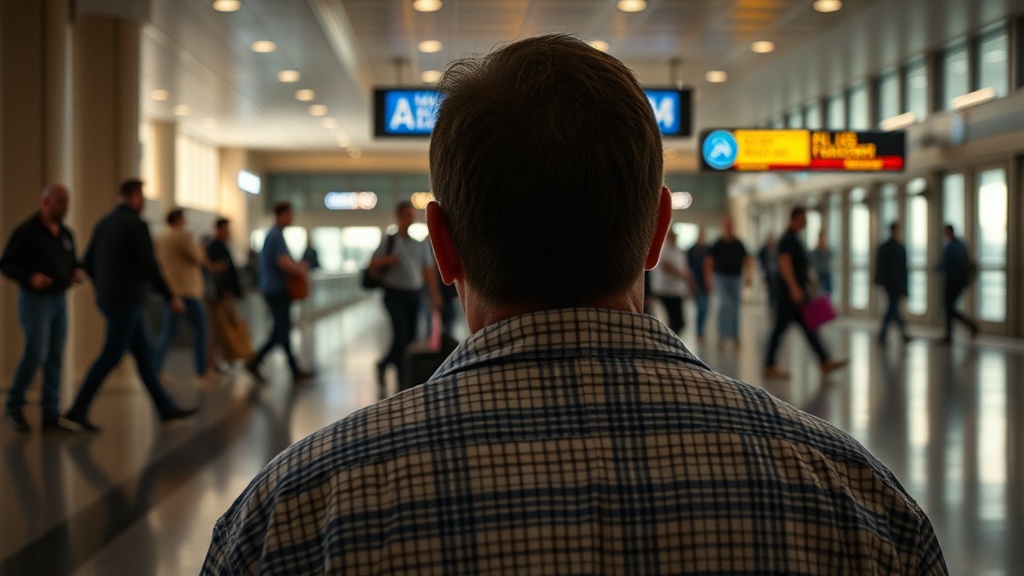
Parents File Lawsuit Following Son's Tragic Death at Salt Lake City Airport
Kyler Efinger's parents sue Salt Lake City after their son died accessing an airplane's engine at the airport, citing security failures.

In a heartbreaking development, the parents of Kyler Efinger, a 30-year-old man from Park City, have filed a lawsuit against Salt Lake City over the tragic death of their son, who died after crawling into the engine of an airplane at Salt Lake City International Airport. The incident occurred on January 1, 2024, after Kyler, who struggled with bipolar disorder, wandered into a restricted area of the airport. The lawsuit claims that the airport failed to implement adequate safety measures that could have prevented this devastating incident.
According to the lawsuit filed by Judd and Lisa Efinger on Tuesday, Kyler was not only disoriented but was also in the midst of a manic episode when he wandered away from the terminal. Eyewitness reports indicated that he had attempted to open several locked doors at airport gates before ultimately exiting through an emergency door, which led him to the airport's outdoor ramp area at approximately 9:54 p.m. The lawsuit argues that Kyler’s access to the tarmac should have been prevented by proper security measures.
"If the police had found Kyler just 30 seconds earlier, he would still be alive," the lawsuit states, highlighting the urgency and the critical moments leading up to the accident. This statement emphasizes the family's belief that prompt intervention could have saved their son's life. The suit also points out that the pilot of the airplane was not made aware of Kyler's disoriented state, which further compounds the tragedy of the incident.
Kyler’s parents have expressed their deep sorrow and frustration over the lack of safeguards at the airport that allowed their son to wander into such a dangerous situation. "As parents, it is unimaginable to lose a child in such a preventable manner," Judd Efinger said. "We want to ensure that no other family has to go through what we have endured."
The lawsuit raises significant questions about airport security protocols and the responsibility of authorities to protect individuals who may be vulnerable, particularly those suffering from mental health issues. It underscores the necessity for airports to have comprehensive safety measures in place, such as better surveillance, quicker response times from security personnel, and improved communication systems between airport police and flight crews.
Experts in airport safety and mental health have weighed in on the case, noting that incidents involving individuals in crisis can pose unique challenges for airport security. Dr. Angela Collins, a mental health professional, stated, "Airports are high-stress environments, and individuals experiencing mental health crises may not have the ability to recognize danger. It’s crucial that airport authorities are trained to identify and assist vulnerable individuals before a situation escalates."
In light of this incident, industry observers are calling for a review and enhancement of safety measures at airports nationwide. This includes the implementation of mental health awareness training for security staff and better coordination with local law enforcement agencies to ensure timely interventions.
The Efinger family's tragic loss has reignited discussions about mental health and safety at public facilities. Many advocates argue that more needs to be done to protect individuals with mental health issues in public spaces, emphasizing the importance of creating inclusive and safe environments.
As this lawsuit unfolds, it is expected to draw considerable attention not only due to the tragic circumstances surrounding Kyler's death but also because it raises important issues about the intersection of mental health and public safety. The Efinger family hopes that their legal action will lead to meaningful changes in airport security policies and procedures, ultimately saving lives in the future.
In conclusion, the untimely death of Kyler Efinger serves as a harsh reminder of the vulnerabilities faced by individuals with mental health challenges. His parents' lawsuit against Salt Lake City highlights the need for increased safety measures and a more compassionate approach to mental health within public spaces, ensuring that tragedies like this one do not happen again.