Leaders of LDS Church Inspect Renovation at Salt Lake Temple
Top leaders of the LDS Church toured the Salt Lake Temple renovations, nearing completion.
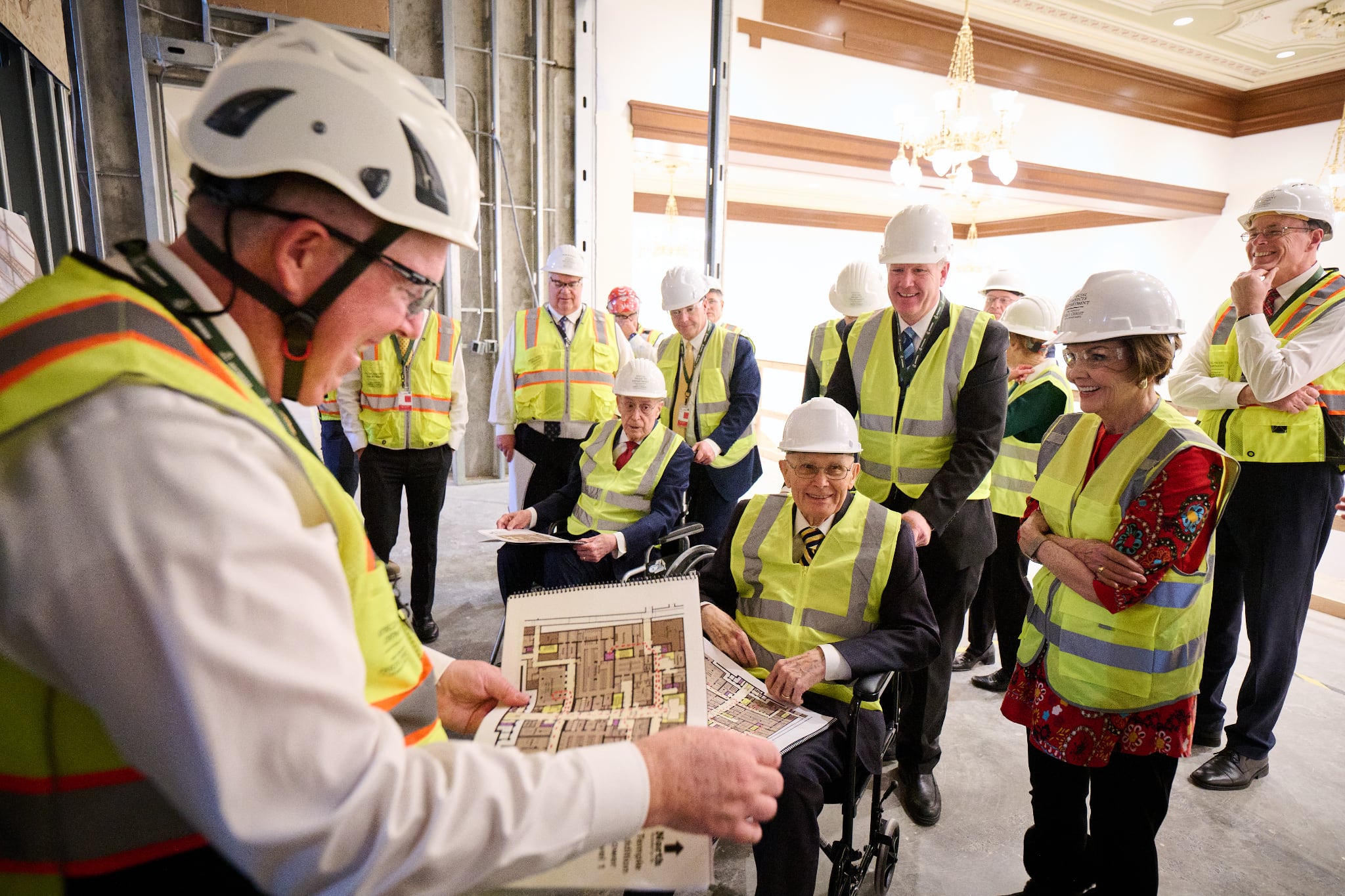
The top three leaders of The Church of Jesus Christ of Latter-day Saints recently conducted a tour of the Salt Lake Temple, which is currently undergoing significant renovations. Dressed in formal work attire, including suits and ties, the leaders donned white hard hats and yellow vests as they examined the ongoing restoration efforts. This visit comes as the church nears the completion of renovations that have been in progress for several years. The Salt Lake Temple, a historic and iconic structure in the heart of Salt Lake City, is one of the most recognized buildings affiliated with the church. The temple has served as a center for worship, community events, and various religious ceremonies for members of the church since its dedication in 1893. The renovations aim to preserve the temple's historical significance while updating its facilities to meet modern needs. The church has emphasized the importance of maintaining the temple's original architectural features during the renovation process. The leaders expressed their commitment to ensuring that the temple remains a sacred space for worship and reflection for future generations. The Salt Lake Temple is not only an architectural marvel but also a symbol of the faith and dedication of its members. As the renovation project moves closer to completion, the church plans to hold a public open house to allow members of the community to view the updated facilities. This event will provide an opportunity for the public to learn about the temple's history, its architectural design, and the significance of the renovations. The open house is expected to attract a large number of visitors, illustrating the continued interest in this historic site. Overall, the leaders' visit underscores the church's commitment to preserving its heritage while adapting to contemporary needs.