January Brings Supermoon and Meteor Shower to Summit County Skies
January 2026 offers Summit County residents a supermoon, meteor shower, and stunning constellations, making for exceptional stargazing.
PARK CITY, Utah — Residents of Summit County are in for a celestial treat this January as the skies above will showcase a rare supermoon, the annual Quadrantids meteor shower, and some of the most prominent constellations visible throughout the year. According to the Old Farmer’s Almanac, January 2026 is shaping up to be a spectacular month for stargazing enthusiasts and casual observers alike.
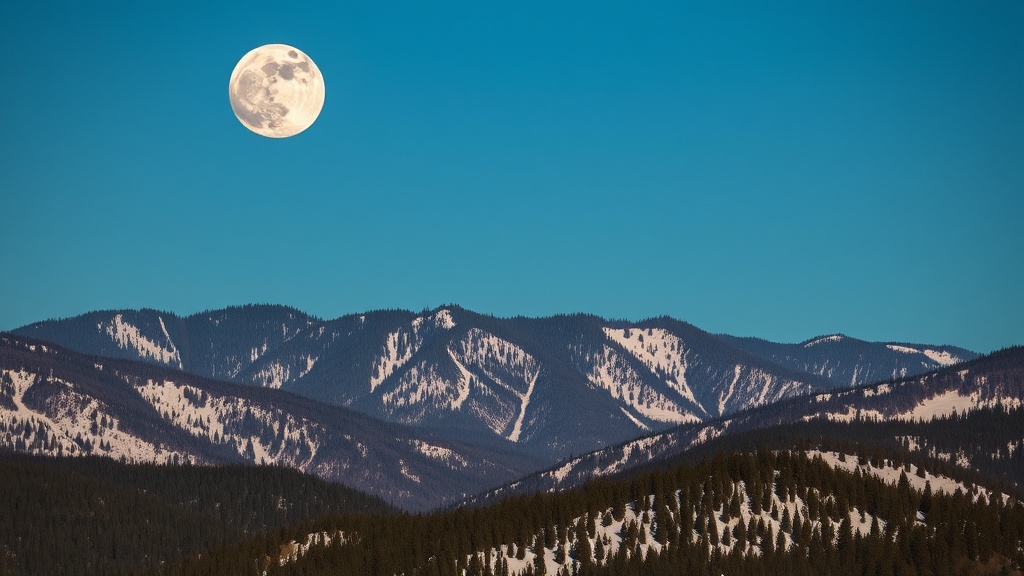
The month kicks off with the Wolf Moon, which will reach its peak illumination on January 3 at 5:03 a.m. EST. This full moon is particularly special because it coincides with the moon's perigee, the point in its orbit when it is closest to Earth. As a result, the Wolf Moon will appear significantly larger and brighter than a typical full moon, a phenomenon known as a supermoon. Residents are encouraged to step outside around sunset on January 3 to witness the spectacular rise of this luminous orb from the eastern horizon.
In addition to the supermoon, January 3 also marks an important event in Earth’s orbit: perihelion. On this day, Earth will be at its closest point to the sun, approximately 91,403,637 miles away. This unique cosmic event adds an additional layer of intrigue to the month’s skywatching opportunities, as the sun's light will be more intense during this period.
The excitement continues with the Quadrantids meteor shower, which is expected to reach its peak during the night of January 4 into the early morning of January 5. The meteor shower can produce up to 25 meteors per hour at its peak, making it one of the most prolific showers of the year. For the best viewing experience, astronomers recommend that stargazers venture outside between midnight and dawn, when the skies are darkest. The Quadrantids meteors originate from the asteroid 2003 EH1, a unique source that distinguishes this meteor shower from others.
Another noteworthy astronomical event this month is Jupiter's opposition on January 10. During opposition, Earth passes between Jupiter and the sun, causing the planet to appear exceptionally large and bright in the night sky. Jupiter will be visible all night long, presenting a fantastic opportunity for both amateur and seasoned astronomers to observe the gas giant. This alignment will not occur again until February 2027, making it a must-see for anyone interested in planetary observation.
The month of January is particularly favorable for stargazing, thanks to the crisp, clear winter nights typical of Summit County. The Old Farmer’s Almanac describes January as the brightest month for skywatching, with a wealth of constellations visible to the naked eye. Among the highlights is Orion the Hunter, recognized as the brightest constellation in the night sky. This iconic constellation features two of the top ten brightest stars: Betelgeuse, a red supergiant marking Orion's shoulder, and Rigel, a blue-white supergiant located at his knee.
Below Orion lies Sirius, the brightest star in the night sky, located in the constellation Canis Major. Sirius shines with a brilliance almost double that of any other star due to its proximity and intrinsic luminosity. The visibility of these stars adds to the allure of January's night skies.
Other prominent constellations that will be visible this month include Taurus the Bull, highlighted by the reddish star Aldebaran; the Pleiades star cluster, often referred to as the Seven Sisters; Gemini the Twins, featuring the stars Castor and Pollux; and Auriga the Charioteer. Each of these constellations offers unique stories and characteristics that enrich the experience of stargazing during the winter months.
For those looking to maximize their viewing experience, the Old Farmer’s Almanac advises that clear weather conditions and low light pollution are optimal for stargazing. Fortunately, Summit County typically boasts these favorable conditions during winter, making it an ideal location for both novice and experienced astronomers to revel in the celestial wonders above.
As January unfolds, residents and visitors alike are encouraged to take a moment to step outside and appreciate the beauty of the night sky. Whether it’s the supermoon lighting up the darkness or the swift trails of the Quadrantids meteor shower, January promises to be a month full of celestial delights that should not be missed. With the combination of awe-inspiring astronomical events and the picturesque winter landscape of Summit County, the month is set to be a memorable one for those looking to explore the cosmos from their own backyards.