Incarcerated Women Face Critical Shortages of Menstrual Products Nationwide
Incarcerated women face severe shortages of menstrual products, leading to health issues and emotional distress, as reform efforts struggle across states.
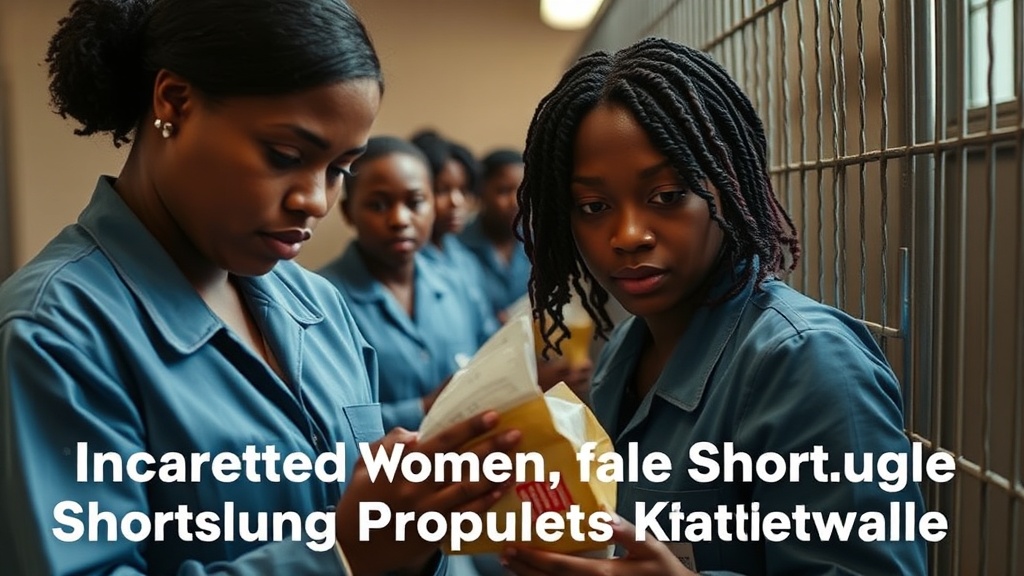
Incarcerated women across the United States are grappling with significant shortages of menstrual products, a pressing issue that highlights ongoing challenges within the correctional system. Recent accounts from women who have experienced incarceration reveal distressing stories of inadequate access to basic hygiene products, contributing to health complications and emotional distress. This problem is exacerbated by a patchwork of state laws and institutional policies that fail to provide consistent and adequate access to menstrual supplies.
Yraida Faneite, who spent over a decade in federal prison after being convicted on drug-related charges, recalls a harrowing experience during her trial when her period became so heavy that it disrupted court proceedings. "The judge had to stop everything because blood was running down my legs," she said. Once incarcerated, her situation did not improve. Faneite was only allotted a small number of menstrual products each month and could not afford to purchase additional supplies from the commissary. In desperate times, she resorted to improvising with torn T-shirts, which would often lead her to serious health issues. After being placed in solitary confinement for asking for medical help regarding her heavy bleeding, she discovered that cysts were the underlying cause of her condition.
Faneite's experiences echo concerns raised by researchers and advocates who point out that many prisons and jails across the country treat menstruation as a disciplinary issue rather than a health necessity. A recent report from the Prison Policy Initiative highlights that even where menstrual products are available, they are often of inferior quality, and strict rules can lead to punitive actions against those who menstruate. For instance, rules may classify having an excess number of menstrual products as contraband, resulting in confiscation or disciplinary write-ups.
The implications of these policies extend beyond mere inconvenience; they can affect incarcerated individuals' access to essential services and programming, as well as their chances for parole. Women now constitute a growing percentage of the prison population, a trend that has increased about 5% from 2022 to 2023, according to the latest data from the federal Bureau of Justice Statistics. As the number of incarcerated women continues to rise, the need for systemic reforms addressing their unique healthcare needs becomes increasingly urgent.
In response to this issue, some states have begun taking proactive measures to improve access to menstrual products. Recently, the Ohio legislature passed a bill aimed at ensuring that all incarcerated women in state facilities have free access to feminine hygiene products. This legislation, which is currently awaiting the governor's signature, mandates that facilities also provide designated disposal containers for used products and allow women to shower once per day during menstruation. Advocates for the bill, such as Kayelin Tiggs of the Ohio Coalition for Menstrual Equity, emphasize the importance of anti-discrimination clauses in the legislation, which aim to ensure that access is not denied based on race, income, or other protected characteristics.
Despite these advancements, many states remain lagging in their policies regarding menstrual hygiene. At least 24 states and Washington, D.C., currently require that incarcerated individuals have free access to menstrual products, but implementation remains inconsistent. In some facilities, the available products may still be of low-quality, offering inadequate protection. For instance, advocates in Maryland reported that even after a law was enacted to provide free menstrual products, women in some facilities continued to pay for tampons and received only flimsy pads. This inconsistency raises questions about the effectiveness of existing laws and the accountability measures in place to ensure compliance.
The need for reform extends beyond just the provision of products; it also encompasses the need for better training and awareness among correctional staff regarding the health needs of incarcerated women. Transgender individuals and nonbinary people, in particular, may face additional barriers when requesting menstrual products, often leading to misunderstandings and inadequate access. Furthermore, disciplinary actions related to menstruation can result in severe consequences, including loss of privileges or placement in segregated units.
As advocates continue to push for policy changes, the urgency of addressing menstrual product access in correctional facilities cannot be overstated. A holistic approach is essential, one that not only mandates access to menstrual products but also ensures their quality, addresses staff training, and eliminates punitive measures related to menstruation. Until then, the experiences of women like Yraida Faneite will remain a stark reminder of the systemic failures within the correctional system that fail to meet even the most basic needs of those incarcerated.
In conclusion, while some progress has been made in addressing the menstrual hygiene needs of incarcerated women, significant gaps remain. The need for ongoing advocacy, legislative reform, and comprehensive oversight is critical to ensure that all individuals, regardless of their circumstances, have access to the basic hygiene products that are essential for their health and dignity.