Habitat for Humanity Advocates for Enhanced Collaboration with Heber City on Affordable Housing
Habitat for Humanity seeks collaboration with Heber City to address affordable housing challenges amid rising land prices and zoning restrictions.
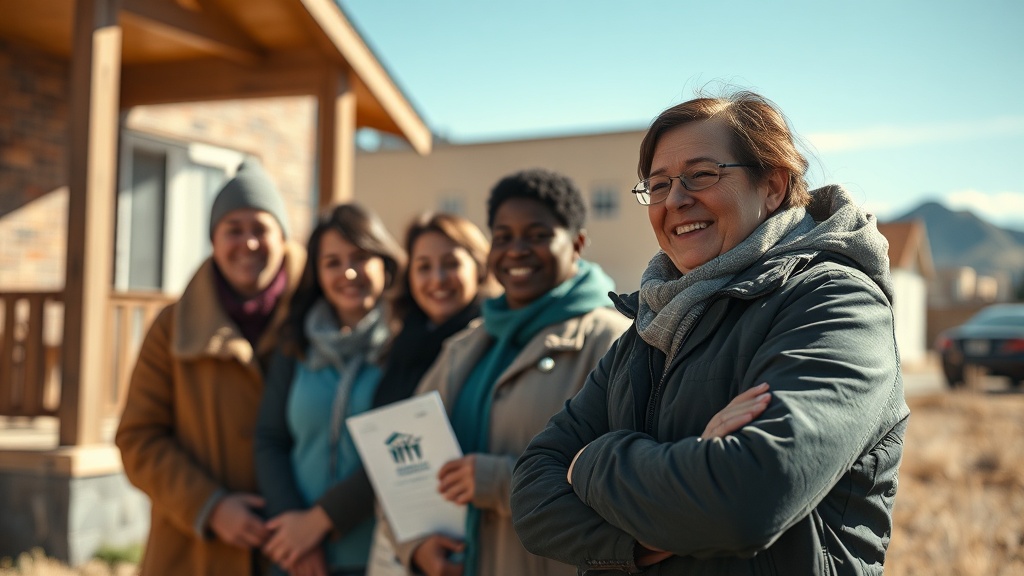
Habitat for Humanity of Summit and Wasatch Counties is seeking to revitalize its efforts in Heber City, where it has not built a home in nearly a decade. This proactive approach was discussed during a recent Heber City Council meeting, where Habitat representatives, led by Executive Director Shellie Barrus, aimed to foster greater collaboration to tackle the pressing issue of affordable housing in the rapidly growing municipality. The nonprofit housing organization, which has been serving the community for over 30 years, hopes to expand its role in addressing housing needs, especially for families earning between 30% and 80% of the Area Median Income (AMI).
In 2004, Habitat for Humanity constructed six homes in Heber Valley, but the organization halted developments in that area by 2016. During this period, the nonprofit decided to reevaluate its strategies, leading to a shift in focus towards multi-unit projects that could provide significant affordable housing solutions more efficiently. Barrus emphasized that the board's strategic planning in 2020 prompted the question, "Is one house at a time enough?" As a result, Habitat has been actively pursuing collaborations with developers rather than solely relying on its own resources to navigate the complex development process.
An illustrative example of this new direction is the ongoing project at Silver Creek Village, where Habitat is facilitating the development of 26 affordable units within a larger 1,300-unit property. This project, which includes a new 10-plex of townhomes set to open this year, has become a primary focus for Habitat, allowing them to allocate resources effectively while also keeping an eye on the Heber City landscape.
Despite the clear need for affordable housing in Heber, Barrus highlighted two significant challenges: escalating land prices and increasingly restrictive zoning regulations. The current zoning laws in Heber City have raised the bar for new developments, mandating larger homes and imposing stricter requirements on infrastructure and architectural designs. This shift has made it nearly impossible for Habitat to construct its ideal model of a single-story home, typically ranging from 1,100 to 1,200 square feet with a carport instead of a garage. Barrus noted, "When we built several homes in Heber, you had to have a detached, two-car garage. That’s just more expensive to build and takes up a lot more land."
The organization faces additional hurdles in targeting smaller lots suitable for multi-unit developments, as community concerns about density and parking continue to arise. Barrus explained, "We’re used to single-family lots with lots of space between us and our neighbors and big yards. It’s just a model that we’ve gotten really used to, and that we’ve lived amongst, so all of a sudden, it does feel maybe worrisome to have more people in a smaller space."
Parking and traffic concerns have historically impeded high-density projects in Heber City. For instance, a recent proposal from Garbett Homes aimed to build 40 townhomes on a 3.19-acre site, but faced substantial opposition from residents concerned about traffic impacts and parking availability. After community feedback, the number was reduced to 26 units priced around $500,000 each, with no designated affordable units due to the reduced density.
Barrus believes that involving a trusted third party like Habitat for Humanity in negotiations could alleviate some of the tension between developers and city officials. She stated, "Anytime you’re looking for density and trying to do affordability, the (City) Council is going to listen to it in a different way than just, ‘We’re trying to make money.’" This sentiment was echoed by City Councilor Yvonne Barney, who remarked that Habitat serves as a crucial intermediary in the negotiations, likening their role to "the mouse that talks to the elephant."
The nonprofit's outreach efforts in Heber City aim not only to facilitate immediate housing solutions but also to assist city leaders in identifying long-term strategies for affordable housing. Barrus indicated that Habitat might collaborate with developers to manage or fund affordable housing units and help meet the needs of essential workers. Michael Plowman, Habitat's development director, suggested that developers could benefit from integrating Habitat into their projects from the outset to ensure that a percentage of units is affordable.
While Summit County has a more established culture around affordable housing solutions, Barrus noted that Wasatch County's housing challenges have arisen more recently. "It felt so much faster for Wasatch County. It has always kind of been an issue for Park City and Summit County. It’s been happening longer, that sort of influx of people moving here, and then it just overflowed into Wasatch County," she explained.
Despite these challenges, Barrus expressed optimism about working with Heber City leaders, who have shown a willingness to engage in discussions about affordable housing. The recent adoption of the Central Heber Overlay Zone is a promising development, allowing for the infill of small lots and facilitating the construction of additional residential units on existing properties. Barrus praised the city's proactive approach: "I really appreciate their efforts to not put their heads in the sand and to really try to address it."
As Habitat for Humanity continues to advocate for affordable housing solutions, their collaboration with Heber City could play a pivotal role in addressing the critical housing needs of the community, ensuring that more families have access to safe and affordable homes in the region.