Egyptian Theatre Marks 100 Years of Cultural Significance in Park City
The Egyptian Theatre in Park City celebrates 100 years of arts and culture, planning a year of festivities to honor its legacy.
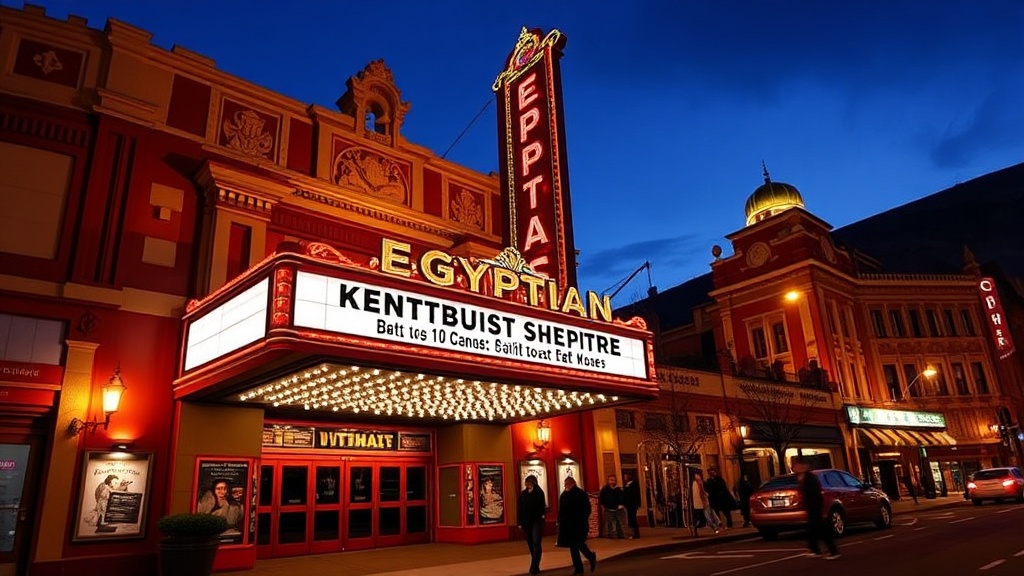
As the United States gears up to celebrate its 250th anniversary, Park City’s iconic Egyptian Theatre is commemorating a significant milestone of its own: 100 years of artistic expression and cultural enrichment. The theatre, located at 328 Main Street, has been a cornerstone of the community since its inception, and its management is planning an elaborate year of festivities to honor this centennial legacy.
Randy Barton, the theatre's manager and director, stated, "We are going all out with programming and celebration. We've already discussed things with the city, Chamber of Commerce, the Historical Society, and the Park City Rotary Club to be partners in planning a year of festivities. This is more than just ourselves; it’s a big community celebration that is going to last all year long."
The Egyptian Theatre's rich history is as layered as the performances it has hosted. Originally, Park City’s cultural scene flourished in the late 1800s with the Park City Opera House, which tragically burned down during the Great Fire of 1898. A new venue, the Dewey Theatre, emerged at the current site in 1916 but succumbed to a heavy snow load shortly thereafter. Following these setbacks, the Egyptian Theatre was built, inspired by the 1922 discovery of King Tutankhamun’s tomb, and officially opened its doors on Christmas Day in 1926.
Barton elaborated on the theatre’s historical significance, saying, "From when it opened until the 1940s, the capacity was more than 500 seats. Over the years, after numerous renovations, that number has fluctuated, reaching a current capacity of 357 seats."
The Egyptian Theatre has experienced a roller-coaster journey through the decades, mirroring the evolution of Park City itself—from a mining town to a ski resort destination. In the 1960s, the venue was known as the Silver Wheel Theatre, and Barton first graced its stage in the mid-1970s as part of the Kimball Players, later renamed Park City Players.
"Unfortunately or fortunately, I've been here for half of those 100 years," Barton remarked with a chuckle, reflecting on his long-standing connection to the venue. In 1981, the theatre was purchased and refurbished by Debbie and Randy Fields of Mrs. Fields Cookies, who revitalized it as a home for local performances. Barton noted, "If it weren’t for the Fieldses, we wouldn’t have had a home."
The Egyptian Theatre also played a pivotal role in the early years of what would become the Sundance Film Festival, providing a venue for the U.S. Film and Video Festival. Barton, who has been involved with the festival since its inception, stated, "I've had a strong connection with Sundance being the house manager during its first decade and selling concessions. So, I've had the keys to the theatre since 1981."
In addition to hosting film screenings, the theatre has evolved to include concert series, such as Wooden Dog and Mountain Town Stages, the latter of which still thrives today with over 400 free concerts annually in Summit County.
After a turbulent period in the early 1990s when the theatre was reclaimed by the federal government, a community initiative called Save Our Stage successfully raised the funds to repurchase it. Barton said, "They bought the theatre from the government and saved it."
In 2009, Barton took on the role of venue manager and director, leading a board that initiated the Pharaoh Club, a membership program aimed at supporting the theatre's programming. This initiative has garnered approximately 1,500 member households, significantly contributing to the theatre's financial sustainability.
Barton emphasized the importance of community involvement: "We began the club to engage the community in keeping the theatre strong, bigger, and brighter than ever. Memberships supplement ticket sales and donations, which are crucial given the federal budget cuts impacting the arts."
The Egyptian Theatre has become a beacon of resilience in Park City, a testament to the community's commitment to maintaining its cultural heartbeat. As it enters its second century, Barton reflects on the journey with pride, noting, "It makes me proud to be the Egyptian Theatre’s manager during its 100th anniversary. It’s really thanks to the community as a team. If it weren’t for its location on Main Street and support from local media like The Park Record and KPCW, we wouldn’t be here. We understand there will be booms and busts, so we’re celebrating while we’re in these good times."
With a year of celebrations planned, the Egyptian Theatre looks to not only honor its past but also pave the way for a vibrant future, reinforcing its role as a vital cultural venue in Park City.